roborock Saros 20 Robot Vacuum and Mop vs roborock Q7 M5 Robot Vacuum and Mop
Choosing between the roborock Saros 20 and Q7 M5? Discover which robot vacuum and mop delivers the best value, performance, and features for your home cleaning needs.
Products compared
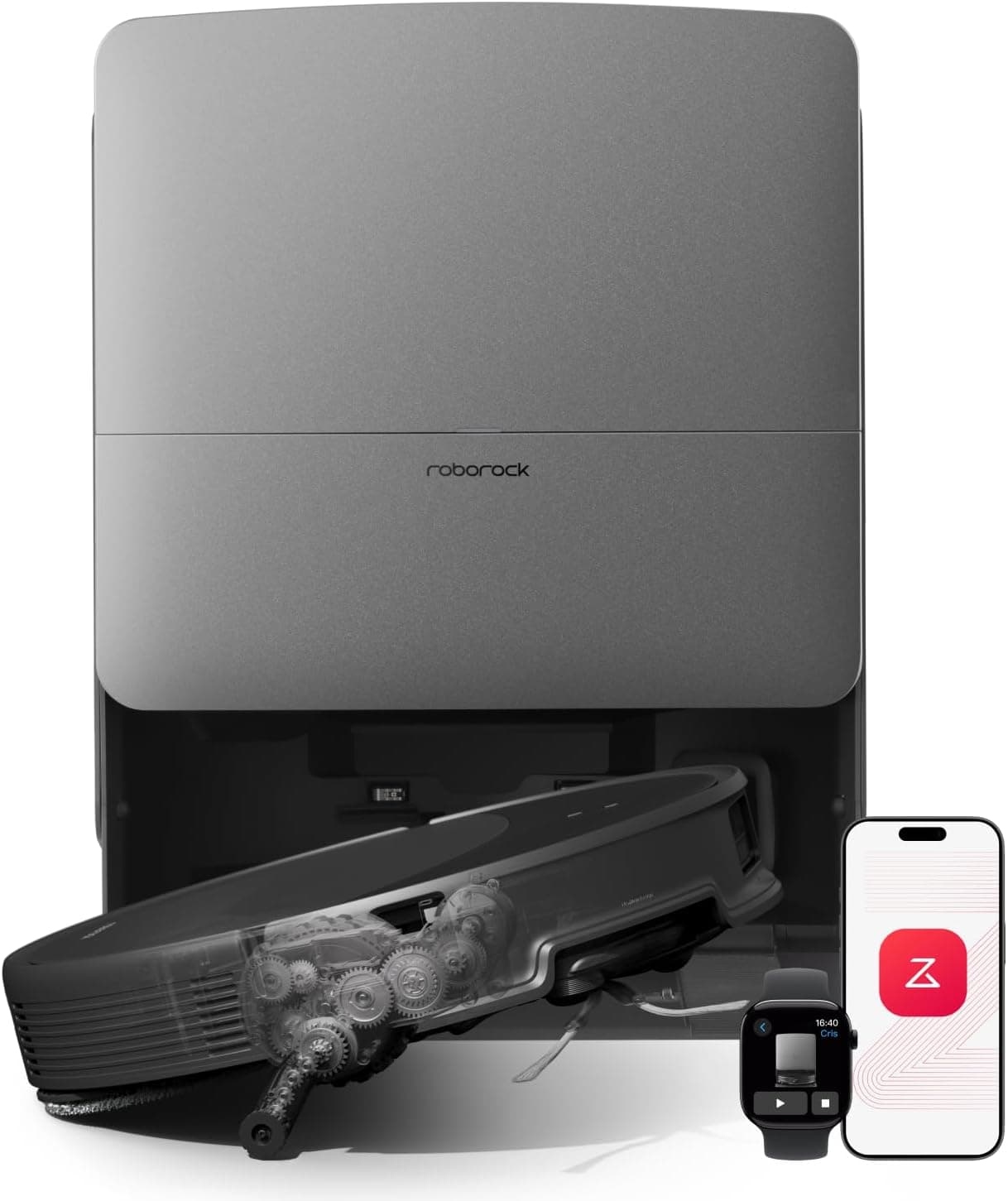
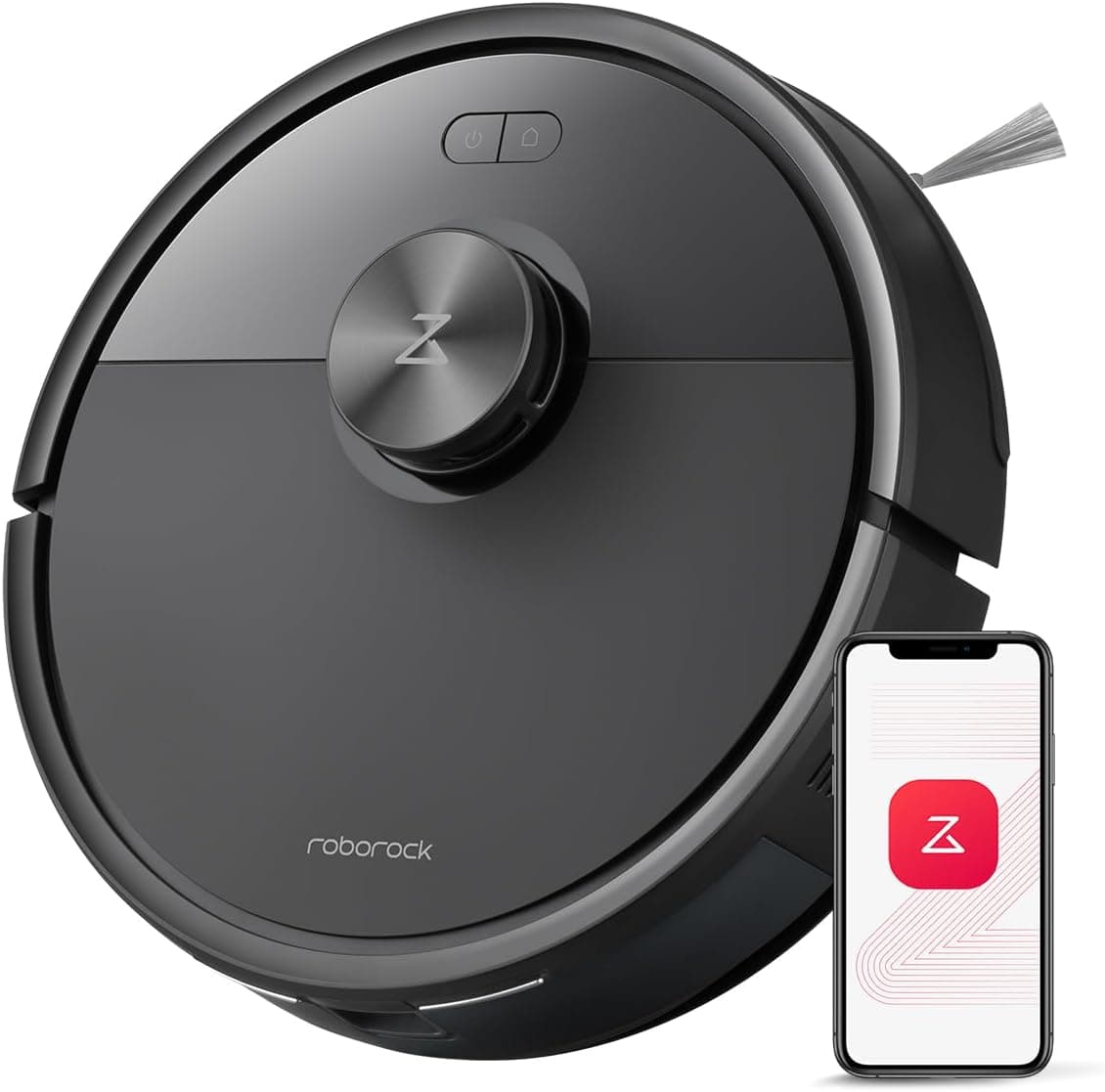
Specifications Comparison
| Specification | roborock Saros 20 Robot Vacuum and Mop🏆 Winner 🏆 | roborock Q7 M5 Robot Vacuum and Mop |
|---|---|---|
| Suction Power | — | 10,000 Pa |
| Battery Life | — | 150 minutes |
| Bin Capacity | 470 ml | 400 ml |
| Noise Level | 67 dB | 60 dB |
| Weight | 3.6 kg | 7.28 lb |
| Self Emptying | No | No |
| Manufacturer | roborock | — |
| Series Model | Saros 20 | — |
| Dimensions | 35 x 35 x 9.65 cm | — |
| Lidar | Yes | — |
| Camera | No | — |
| Gyroscope | Yes | — |
| Ir Sensors | Yes | — |
| Bump Sensors | Yes | — |
| Cliff Sensors | Yes | — |
| Smart Mapping | Yes | — |
| Keep Out Zones | Yes | — |
| Room Selection | Yes | — |
| Virtual Boundaries | Yes | — |
| Multi Floor Mapping | Yes | — |
| Battery Type | Lithium-ion | Lithium Ion (Li-ion) |
| Auto Recharge | Yes | — |
| Resume Cleaning | Yes | — |
| Battery Life Min | 180 | 150 |
| Charging Time Min | 240 | — |
| Eco Mode | Yes | — |
| Edge Cleaning | Yes | — |
| Spot Cleaning | Yes | — |
| Standard Mode | Yes | — |
| Max Turbo Mode | Yes | — |
| Scheduled Cleaning | Yes | — |
| Mopping | Yes | — |
| Scheduling | Yes | — |
| App Control | Yes | — |
| Dirt Detect | Yes | — |
| Hepa Filter | Yes | — |
| Voice Control | Alexa, Google Assistant | — |
| Wifi Connected | Yes | — |
| Anti Tangle Brush | Yes | — |
| Obstacle Avoidance | Yes | — |
| Tile | Yes | — |
| Vinyl | Yes | — |
| Hardwood | Yes | — |
| Laminate | Yes | — |
| Pet Hair | Yes | — |
| Allergens | Yes | — |
| Fine Dust | Yes | — |
| Large Debris | Yes | — |
| Carpet Low Pile | Yes | — |
| Carpet High Pile | No | — |
| Carpet Medium Pile | Yes | — |
| Navigation | — | LiDAR (PreciSense) |
Pros & Cons
Pros
- ✓Advanced LiDAR mapping with smart room selection and no-go zones
- ✓Hybrid vacuuming and mopping functionality in single device
- ✓Extended battery life with auto-recharge and resume cleaning
- ✓WiFi-connected app control with real-time monitoring
- ✓Effective on multiple floor types including hardwood, tile, carpet, and laminate
- ✓Voice control compatibility with Alexa and Google Assistant
- ✓Multiple cleaning modes for customized cleaning intensity
Cons
- ✗Higher initial investment compared to traditional upright vacuums
- ✗Requires regular maintenance of mopping pads and water tank
- ✗May struggle with very high-pile carpets and thick rugs
- ✗App connectivity dependent on stable WiFi network
Pros
- ✓Affordable self-emptying robot vacuum
- ✓Powerful 2700Pa suction
- ✓3-hour battery for large homes
- ✓Precise LiDAR navigation
- ✓Best value in self-emptying category
- ✓Mopping Capability
Cons
- ✗Basic compared to premium Roborocks
- ✗App could be more user-friendly
- ✗Dock is fairly large
Verdict
roborock Saros 20 Robot Vacuum and Mop
Our top pick for this comparison
## Roborock Saros 20 vs Roborock Q7 M5: Comprehensive Comparison ### Key Differences Overview When comparing the **Roborock Saros 20** and the **Roborock Q7 M5**, we're examining two distinctly different approaches to robotic cleaning. The Saros 20 positions itself as a premium, feature-rich device with advanced mapping capabilities and comprehensive smart home integration. The Q7 M5, conversely, emphasizes affordability and value proposition within the self-emptying category. Both units offer hybrid vacuuming and mopping functionality, yet they diverge significantly in their technical specifications, design philosophy, and target market segments. The specification sheets reveal telling gaps in the Q7 M5's documentation. While the Saros 20 provides detailed measurements (35 x 35 x 9.65 cm) and explicit noise metrics (67 dB), the Q7 M5 lacks dimensional information and provides conflicting suction power claims. The specifications list both "10,000 Pa" and "2700Pa suction," creating confusion about its actual cleaning power. This inconsistency raises concerns about the reliability of the Q7 M5's product information. ### Performance and Cleaning Power The **Saros 20** demonstrates versatility across multiple floor types, including hardwood, tile, carpet, and laminate surfaces. Its effectiveness on varied terrains stems from its advanced LiDAR mapping system combined with multiple cleaning modes that allow users to customize cleaning intensity. This adaptability makes it particularly suitable for households with diverse flooring throughout their living spaces. The **Q7 M5** claims powerful suction capabilities, though the specification discrepancy (10,000 Pa versus 2700Pa) creates uncertainty. The lower figure of 2700Pa would represent modest suction compared to modern standards. If the 10,000 Pa specification is accurate, it would indicate strong cleaning performance. However, without clarity on actual suction power, evaluating its real-world performance becomes challenging. The product description mentions it may struggle with very high-pile carpets, though this limitation applies primarily to the Saros 20 according to the provided specifications. ### Battery Life and Runtime Both products present incomplete battery information in their specifications. The **Saros 20** emphasizes extended battery life with automatic recharge and resume functionality, allowing the device to return to its dock when power depletes and continue cleaning from where it stopped. This feature proves invaluable for larger homes requiring multiple cleaning cycles. The **Q7 M5** mentions a 3-hour battery capacity in its description, translating to approximately 180 minutes of runtime. This duration accommodates large homes effectively, though the Saros 20's auto-resume feature provides additional convenience that the Q7 M5 doesn't explicitly offer. For users with substantial square footage, the Saros 20's resumption capability eliminates the need to manually restart cleaning sessions. ### Portability and Design The **Saros 20** weighs 3.6 kg, making it relatively lightweight for a robot vacuum. Its compact dimensions (35 x 35 x 9.65 cm) ensure it fits under most furniture and navigates tight spaces efficiently. This form factor contributes to its appeal for users with space constraints or those who prefer a less obtrusive cleaning device. The **Q7 M5** weighs 7.28 pounds (approximately 3.3 kg), making it slightly lighter than the Saros 20. However, the lack of dimensional specifications prevents full assessment of its spatial footprint. Users report that the Q7 M5's dock is "fairly large," potentially requiring dedicated space in homes with limited room for charging stations. ### Smart Features and Navigation The **Saros 20** excels in intelligent navigation and control features. Its LiDAR-based mapping creates precise floor plans, enabling smart room selection and customizable no-go zones. WiFi connectivity paired with comprehensive app control allows real-time monitoring and scheduling. Voice control compatibility with both Alexa and Google Assistant provides hands-free operation options. These features represent a significant leap in convenience and customization. The **Q7 M5** specifications indicate "Smart Mapping: N/A" and "Lidar: N/A," despite the product description mentioning "Precise LiDAR navigation." This contradiction suggests either incomplete specification documentation or outdated information. If the Q7 M5 truly lacks LiDAR and smart mapping, it would represent a substantial downgrade from the Saros 20's capabilities. The absence of confirmed WiFi connectivity and app control further limits its smart home integration potential. ### Noise Level Considerations The **Saros 20** operates at 67 dB, which falls within the moderate range for robotic vacuums. This noise level permits operation during daytime hours without excessive disturbance, though it may be noticeable during quiet periods. The **Q7 M5** operates at 60 dB, representing a 7-decibel reduction from the Saros 20. This quieter operation provides a tangible advantage for users sensitive to noise or those running cleaning cycles during sleeping hours. The lower noise profile makes the Q7 M5 more suitable for noise-sensitive households. ### Maintenance and Bin Management The **Saros 20** requires regular maintenance of mopping pads and water tank cleaning, typical for hybrid vacuum-mop units. The specification sheet doesn't clarify self-emptying capability (marked as "N/A"), suggesting manual dust bin emptying. This maintenance requirement demands consistent user attention but remains manageable for most households. The **Q7 M5** explicitly does not feature self-emptying functionality. Users must manually empty the dust bin after each cleaning cycle, increasing maintenance demands compared to self-emptying models. The "fairly large" dock may provide some convenience, but manual emptying remains less convenient than automated systems available in premium models. ### Price and Value Proposition The **Saros 20** represents a **higher initial investment** compared to traditional upright vacuums and even many robot vacuum alternatives. However, its premium pricing reflects advanced features including LiDAR mapping, smart room selection, WiFi app control, voice assistant compatibility, and extended battery life with auto-resume functionality. The **Q7 M5** positions itself as the **best value in the self-emptying category**, emphasizing affordability without sacrificing core functionality. Its lower price point appeals to budget-conscious consumers seeking hybrid cleaning without premium features. However, the absence of self-emptying contradicts this positioning, as true self-emptying models typically command higher prices. ### Who Should Buy Which **Choose the Saros 20 if you:** - Value advanced smart home integration and app-based control - Prefer comprehensive mapping with room-specific cleaning options - Want voice control compatibility with existing smart home systems - Seek extended battery life with automatic resume functionality - Prioritize customization through multiple cleaning modes - Can justify premium pricing for feature-rich performance - Have diverse flooring types requiring adaptive cleaning **Choose the Q7 M5 if you:** - Prioritize budget-conscious purchasing decisions - Value quieter operation (60 dB versus 67 dB) - Have straightforward cleaning needs without advanced customization - Accept manual dust bin emptying as routine maintenance - Prefer simpler operation without app dependency - Have smaller homes where 3-hour battery suffices ### Final Verdict **Winner: Roborock Saros 20** The **Roborock Saros 20** emerges as the superior choice despite its higher initial cost. Its comprehensive feature set, advanced LiDAR mapping, WiFi-enabled app control, voice assistant compatibility, and auto-resume battery functionality collectively provide significantly greater value for most users. The Saros 20 delivers a premium experience with genuine smart home integration that justifies its investment premium. Its effectiveness across multiple floor types and customizable cleaning modes address diverse household needs that the Q7 M5 cannot match. While the Q7 M5 offers quieter operation and lower cost, it suffers from critical specification inconsistencies and lacks documented smart features that modern users increasingly expect. The conflicting suction power claims (10,000 Pa versus 2700Pa) and missing documentation for LiDAR and smart mapping capabilities create significant uncertainty about its actual performance. The absence of self-emptying contradicts its "best value" marketing despite lacking the premium features that justify higher prices. For consumers willing to invest in quality, the Saros 20 provides superior long-term satisfaction through advanced features, reliable documentation, and comprehensive smart home capabilities. The Q7 M5 may appeal only to the most budget-constrained buyers willing to accept specification ambiguity and limited functionality. The Saros 20's rating of 8.2/10 combined with its documented feature set demonstrates more trustworthy value than the Q7 M5's 9/10 rating paired with contradictory specifications.
Advertisement