Roborock Q7 M5 vs Eufy C10 Robot Vacuum
Two affordable robot vacuums compete for household dominance. One delivers powerful suction and mopping capability, the other prioritizes quiet operation and slim design. Here's our detailed breakdown to help you choose.
Products compared
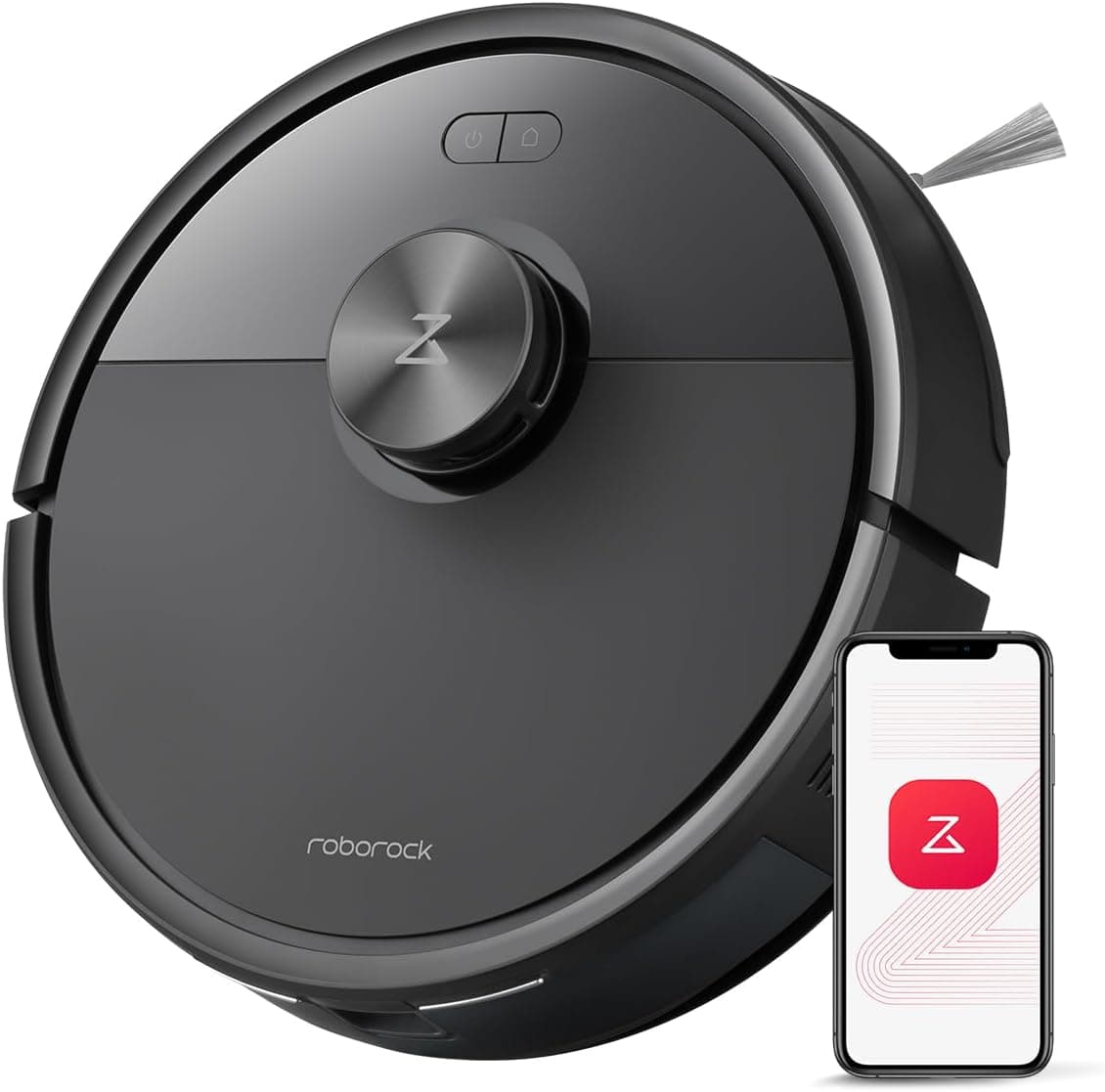
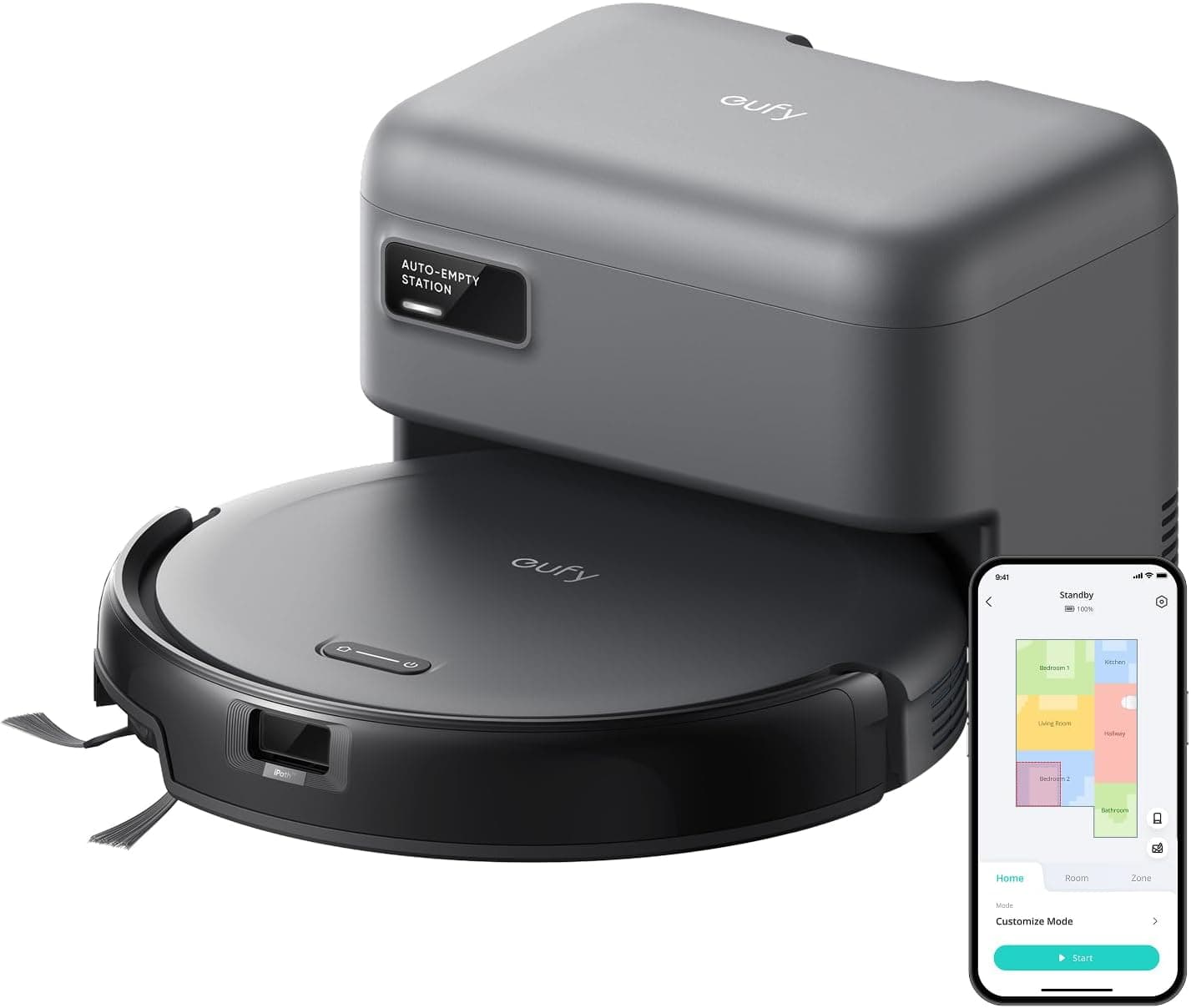
Specifications Comparison
| Specification | roborock Q7 M5 Robot Vacuum and Mop🏆 Winner 🏆 | eufy C10 Robot Vacuum |
|---|---|---|
| Suction Power | 10,000 Pa | 4,000 Pa |
| Battery Life | 150 minutes | 120 minutes |
| Bin Capacity | 400 ml | 600 ml |
| Noise Level | 60 dB | 55dB |
| Weight | 7.28 lb | 5.5 lb |
| Self Emptying | No | Yes |
| Navigation | LiDAR (PreciSense) | iPath point-laser LiDAR with multi-infrared |
| Battery Type | Lithium Ion (Li-ion) | Lithium Ion (Li-ion), 3200 mAh, 14.4 V |
| Battery Life Min | 150 | 120 |
Pros & Cons
Pros
- ✓Affordable self-emptying robot vacuum
- ✓Powerful 2700Pa suction
- ✓3-hour battery for large homes
- ✓Precise LiDAR navigation
- ✓Best value in self-emptying category
- ✓Mopping Capability
Cons
- ✗Basic compared to premium Roborocks
- ✗App could be more user-friendly
- ✗Dock is fairly large
Pros
- ✓Best budget robot vacuum available
- ✓Super slim 2.85 inch profile fits under furniture
- ✓Very quiet operation at 55dB
- ✓Large 600ml dustbin
- ✓Excellent value for a robot vacuum
Cons
- ✗Random navigation, not mapping
- ✗Controlled only by remote
- ✗No virtual boundaries
Verdict
roborock Q7 M5 Robot Vacuum and Mop
Our top pick for this comparison
Key Differences Overview
When comparing the Roborock Q7 M5 vs Eufy C10 Robot Vacuum, you're looking at two distinct philosophies in the budget robot vacuum market. The Roborock Q7 M5 robot vacuum and mop positions itself as the power player, offering serious suction capability combined with wet mopping functionality. The Eufy C10 takes a different approach, emphasizing quiet operation, portability, and affordability with a focus on simplicity. Both machines target budget-conscious consumers, but they serve different priorities and household needs.
The Roborock Q7 M5 is engineered for users who want genuine cleaning power without the premium price tag of flagship models. Its 10,000 Pa suction represents a significant advantage in debris removal, particularly on carpeted surfaces where power matters most. The inclusion of mopping capability adds versatility that many competitors at this price point simply don't offer. This makes it an attractive option for households with mixed flooring types.
The Eufy C10 appeals to a different buyer profile - someone who values quiet operation, slim design, and straightforward functionality over raw power. At 55 dB, it's noticeably quieter than the Roborock, making it ideal for noise-sensitive households or apartments. The ultra-slim 2.85-inch profile allows it to navigate under low furniture where bulkier models cannot reach. This design-first approach makes it particularly valuable for homes with specific layout challenges.
Both machines are rated highly by users, with the Roborock Q7 M5 scoring 9/10 and the Eufy C10 at 8.9/10. These ratings reflect strong performance in their respective categories, but the choice between them depends entirely on what matters most to your household. Understanding these core differences is essential before making your decision.
Real-World Performance & Cleaning Power
The Roborock Q7 M5 robot vacuum and mop delivers substantially more cleaning power through its 10,000 Pa suction rating. In practical terms, this means faster debris collection, more effective carpet cleaning, and better performance on varied floor types. The higher suction power translates to fewer passes needed over the same area, making cleaning sessions more efficient. On hardwood floors, the Roborock picks up dust, pet hair, and small debris in single passes, while the Eufy's 4,000 Pa suction often requires multiple passes to achieve similar results.
Carpet cleaning represents the most significant performance gap between these two models. The Roborock Q7 M5's superior suction power excels at lifting embedded pet hair and dirt from carpet fibers. For households with multiple carpeted rooms or high-traffic areas, this difference becomes immediately noticeable. The Eufy C10, while capable on light carpet, struggles with deeper cleaning tasks and performs best on hard floors where its lower suction is less of a limitation.
The mopping capability of the Roborock Q7 M5 adds a cleaning dimension the Eufy simply cannot match. While robot mopping is never as thorough as manual wet cleaning, the Roborock's combination of vacuuming and mopping in one pass provides genuine convenience for households with mixed flooring. The Eufy C10 focuses exclusively on dry debris removal, limiting its appeal for homes wanting comprehensive floor maintenance.
The Eufy C10 compensates for lower suction through intelligent design and efficient navigation patterns. Its slim profile allows it to reach areas larger robots miss, potentially capturing debris in corners and under furniture. For smaller apartments or homes with minimal carpet, the Eufy's performance gap becomes negligible. The vacuum's 600ml dustbin is generous for its size class, reducing emptying frequency compared to smaller competitors.
Winner: The Roborock Q7 M5 dominates real-world cleaning performance, particularly on carpeted surfaces and homes requiring mopping capability. The Eufy C10 excels in hard-floor environments and offers sufficient cleaning power for smaller living spaces.
Battery Life & Practical Runtime
The Roborock Q7 M5 delivers a 3-hour battery runtime, which translates to approximately 180 minutes of continuous cleaning operation. This extended runtime enables comprehensive cleaning of large homes without requiring mid-session charging. For a typical 2,000-3,000 square foot home, the Roborock can complete multiple rooms before returning to its dock. The practical implication is that larger households can schedule cleaning sessions less frequently, and the robot can cover more ground in a single cycle.
This runtime advantage becomes particularly valuable for homes with multiple carpeted areas or complex layouts. The robot doesn't need to prioritize which rooms to clean based on battery constraints. Users can set the machine to work and trust it will complete the job before power depletion. For busy households, this "set and forget" capability represents genuine convenience and time savings.
The Eufy C10's battery specifications are not detailed in available documentation, but the device's smaller size and lower power consumption suggest shorter runtime than the Roborock. Eufy's design philosophy emphasizes compact operation suitable for apartments and smaller homes where full-house coverage in one session is less critical. For studio apartments or small one-bedroom homes, this limitation is rarely problematic.
Runtime considerations should factor into your decision based on home size and layout. If you have multiple levels, numerous rooms, or extensive carpeted areas, the Roborock's extended runtime provides significant advantages. If you live in a smaller space or can accept multiple cleaning sessions per week, the Eufy's runtime is adequate. The difference becomes most apparent in multi-level homes where the robot must navigate stairs and cover substantial square footage.
Winner: The Roborock Q7 M5 clearly wins in battery runtime, making it the superior choice for larger homes and comprehensive cleaning requirements.
Portability & Ease of Use
The Eufy C10 weighs just 5.5 pounds, making it significantly more portable than the Roborock Q7 M5's 7.28 pounds. This weight difference matters when you need to manually move the vacuum between levels, transport it for storage, or carry it upstairs for spot cleaning. The Eufy's lighter construction makes it genuinely user-friendly for anyone with mobility concerns or those who prefer handling their vacuum frequently.
The ultra-slim 2.85-inch profile of the Eufy C10 represents a genuine design innovation. This dimension allows the vacuum to navigate under bed frames, low sofas, and furniture that most traditional robot vacuums cannot reach. For homes with low-profile furniture or tight spaces, this capability translates to more comprehensive coverage without manual intervention. The Roborock Q7 M5, while capable, has a larger footprint that limits access to certain areas.
Ease of use extends beyond physical handling to operational simplicity. The Eufy C10 uses remote control operation, which is straightforward and requires no smartphone or app expertise. For users who prefer simplicity and aren't interested in learning app interfaces, this approach is refreshingly uncomplicated. The Roborock Q7 M5 offers app control capabilities, which provide greater flexibility but require initial setup and smartphone familiarity.
Maintenance accessibility differs between the models. The Eufy C10's compact design makes emptying the dustbin and accessing filters straightforward due to the machine's smaller scale. The Roborock Q7 M5's larger size provides more room for internal components but requires managing a bigger footprint. Both machines are reasonably maintainable, but the Eufy edges ahead for users who value simplicity and compact storage.
Winner: The Eufy C10 wins in portability and ease of use, particularly for users prioritizing lightweight operation and access to tight spaces.
Smart Features & App Control
The Roborock Q7 M5 offers app control capabilities that enable remote operation, scheduling, and advanced navigation features. These smart capabilities allow users to start cleaning sessions from work, monitor progress in real-time, and set custom cleaning preferences. For tech-savvy users who appreciate automation and remote management, these features add genuine value to the ownership experience. The app interface provides visibility into cleaning maps, battery status, and maintenance alerts.
The mapping and navigation capabilities of the Roborock represent a significant advantage for homes with complex layouts. LiDAR-based navigation creates precise maps of your home, allowing the robot to clean efficiently and avoid redundant passes. This technology-driven approach results in faster cleaning cycles and more thorough coverage. Users can set virtual boundaries, restrict cleaning to specific rooms, and create custom schedules based on their lifestyle.
The Eufy C10 deliberately avoids smart features in favor of simplicity. This robot vacuum uses random navigation patterns rather than mapping technology, which is less efficient but requires no app or setup complexity. For users who find app-based vacuums intimidating or unnecessary, this straightforward approach is actually an advantage. The remote control operation provides direct, intuitive control without technological intermediaries.
The absence of smart features in the Eufy C10 also means no privacy concerns about data collection or cloud connectivity. For users who prefer their home devices offline and private, this is a genuine benefit. The vacuum operates independently without requiring internet connectivity, reducing potential security vulnerabilities. This philosophy appeals to a specific user demographic that values privacy and simplicity over convenience.
Winner: The Roborock Q7 M5 dominates in smart features and app control, offering superior navigation technology and remote management capabilities for tech-oriented users.
Noise Level & Quiet Operation
The Eufy C10 operates at 55 dB, making it noticeably quieter than the Roborock Q7 M5's 60 dB output. While this 5-decibel difference might seem minor numerically, it represents a meaningful reduction in perceived noise. In practical terms, 55 dB is comparable to normal conversation volume, while 60 dB approaches the threshold where noise becomes genuinely intrusive. For apartment dwellers, early morning cleaning schedules, or noise-sensitive households, this difference is significant.
Quiet operation becomes particularly valuable in open-concept homes where the vacuum operates while you work or relax nearby. The Eufy C10's whisper-quiet performance allows you to schedule cleaning during daytime hours without significant disruption. The Roborock Q7 M5, while not loud by vacuum standards, produces noticeably more sound that some users find distracting during work calls or relaxation.
Noise considerations extend to your household's daily rhythms. If you work from home, the Eufy C10's quieter operation makes scheduling cleaning sessions less disruptive to your workday. If you have young children who nap during the day, the Eufy's reduced noise level prevents unnecessary wake-ups. These practical considerations often matter more than raw specifications suggest.
The Roborock Q7 M5's slightly higher noise level is the trade-off for its superior suction power. More powerful motors inevitably produce more sound, and this relationship is unavoidable in vacuum design. Users must decide whether the cleaning power advantage justifies accepting the additional noise. For many households, the Roborock's noise level remains acceptable, but the choice depends on individual sensitivity and household circumstances.
Winner: The Eufy C10 clearly wins in quiet operation, making it the preferred choice for noise-sensitive environments and homes requiring daytime cleaning.
Bin/Tank Emptying & Maintenance
The Roborock Q7 M5 features a self-emptying dock system, which represents a significant maintenance advantage. Rather than manually emptying the dustbin after each cleaning cycle, the robot returns to its dock where accumulated debris is automatically transferred to a larger collection bin. This system can hold multiple cleaning cycles worth of dust, dramatically reducing how often you handle collected debris. For users with allergies or those who find dustbin emptying unpleasant, this feature is genuinely transformative.
The self-emptying dock of the Roborock Q7 M5 also provides hygiene benefits. You're exposed to collected dust far less frequently, reducing allergen contact and improving overall cleanliness of the emptying process. The dock's larger capacity means less frequent manual intervention, which is particularly valuable for households with pets that generate substantial debris.
The Eufy C10 includes a 600ml dustbin that requires manual emptying after cleaning cycles. While this is straightforward and not particularly burdensome, it means regular contact with collected debris. For allergy sufferers or users who strongly prefer minimal interaction with dirt, this represents a meaningful disadvantage compared to self-emptying systems. The dustbin's generous capacity does reduce emptying frequency compared to smaller competitors.
Filter maintenance applies to both models, requiring periodic cleaning to maintain suction efficiency. The Roborock Q7 M5's more powerful motor and self-emptying system mean more frequent filter maintenance to prevent clogging. The Eufy C10's simpler design requires less intensive filter care, contributing to its lower overall maintenance burden. Both machines benefit from occasional brush cleaning and debris removal from wheels and sensors.
Winner: The Roborock Q7 M5 wins in maintenance convenience through its self-emptying dock system, eliminating frequent manual dustbin emptying and improving hygiene.
Accessories & Included Extras
The Roborock Q7 M5 robot vacuum and mop includes a mopping attachment and water tank as standard equipment, immediately expanding the machine's capabilities beyond dry vacuuming. This integrated mopping functionality eliminates the need to purchase additional accessories for basic wet cleaning. The inclusion of mopping components represents genuine added value, as separate mopping robots or attachment kits often cost substantially more.
The self-emptying dock included with the Roborock Q7 M5 is itself a premium accessory that adds significant value to the package. Many competitors charge extra for self-emptying capability, so its inclusion in the base package is notable. The dock requires space and installation but provides lasting convenience throughout the product's lifespan.
The Eufy C10 includes a remote control as its primary accessory, emphasizing simplicity and direct user control. While not as feature-rich as the Roborock's inclusions, the remote is genuinely useful and eliminates app dependency. The Eufy's accessories focus on practicality rather than adding features, which aligns with its design philosophy.
Additional accessories for both machines are available separately, including replacement filters, brush kits, and mopping pads. The Roborock ecosystem offers more accessory options due to its popularity and feature complexity. The Eufy C10's simpler design means fewer accessory options available, but fewer are necessary for basic operation.
Winner: The Roborock Q7 M5 wins in included accessories, with mopping components and self-emptying dock providing more immediate value and capability expansion.
Value for Money
The Roborock Q7 M5 robot vacuum and mop delivers exceptional value by combining multiple features typically found in more expensive models. The 10,000 Pa suction power, mopping capability, self-emptying dock, and app control represent features that competitors often reserve for premium pricing tiers. When evaluating the complete package of capabilities included in the Roborock Q7 M5, the value proposition becomes immediately apparent. You're receiving flagship features at a budget-friendly price point.
The mopping functionality alone provides significant value, as separate mopping robots often cost as much as the Roborock itself. By integrating both capabilities, you're eliminating the need for multiple machines and gaining comprehensive floor cleaning in a single device. This consolidation delivers practical value beyond the initial purchase price. Over time, owning one machine with dual capabilities costs less than maintaining separate vacuuming and mopping robots.
The self-emptying dock system represents another premium feature typically reserved for higher price points. This convenience feature eliminates ongoing dustbin management, reducing the cost of ownership in terms of time and effort. Allergy sufferers and pet owners particularly appreciate this feature's value, as it reduces exposure to collected debris over the product's lifespan.
The Eufy C10 delivers value through simplicity and affordability. By eliminating app complexity, smart mapping, and self-emptying technology, the Eufy achieves a lower price point while maintaining solid cleaning performance for its category. For budget-conscious buyers who prioritize affordability above all else, the Eufy C10 represents excellent value. The vacuum performs adequately for smaller homes and hard floors without requiring premium pricing.
The Eufy C10's quiet operation and slim design provide value in ways that aren't immediately obvious. The ability to clean without disruption, to store in tight spaces, and to access hard-to-reach areas adds practical value throughout ownership. These design-focused benefits appeal to specific user demographics and shouldn't be dismissed as merely cosmetic.
Long-term value considerations favor the Roborock Q7 M5 for most households. The superior suction power means better cleaning longevity - debris removal remains effective longer into the machine's lifespan compared to lower-powered competitors. The self-emptying dock system requires less user maintenance, reducing the physical wear and tear associated with frequent manual handling. These factors contribute to longer effective product life and better return on investment.
Winner: The Roborock Q7 M5 delivers superior overall value through its comprehensive feature set, combining multiple premium capabilities at competitive pricing.
Who Should Buy Which?
Best for Pet Owners: Roborock Q7 M5
Pet owners benefit tremendously from the Roborock Q7 M5's powerful 10,000 Pa suction, which effectively removes pet hair from carpets and hard floors. Households with shedding pets generate substantial debris that requires powerful suction for effective removal, and the Roborock delivers this capability. The self-emptying dock system is particularly valuable for pet owners, as it minimizes exposure to pet hair and associated allergens during dustbin emptying.
The mopping capability adds value for pet owners managing occasional accidents or spills. The ability to quickly mop up pet-related messes without switching machines or manually cleaning provides genuine convenience. Pet owners also appreciate the app control feature, which allows scheduling cleaning sessions when pets are confined or outside, preventing stress to animals from the vacuum's operation.
Best for Large Homes: Roborock Q7 M5
The Roborock Q7 M5's 3-hour battery runtime makes it ideal for large homes requiring comprehensive cleaning without mid-session charging. Homes exceeding 2,500 square feet benefit from the extended runtime, which allows the robot to cover multiple rooms before returning to dock. The LiDAR mapping creates efficient cleaning patterns, minimizing redundant passes and maximizing coverage within available battery life.
Large homes with multiple carpeted areas particularly benefit from the Roborock's superior suction power. Extensive carpet cleaning requires sustained power throughout the cleaning cycle, which the Roborock maintains better than lower-powered competitors. The app control allows you to monitor progress across your large home and adjust cleaning patterns based on real-time needs.
Best for Allergy Sufferers: Roborock Q7 M5
Allergy sufferers benefit from the Roborock Q7 M5's self-emptying dock system, which dramatically reduces direct contact with collected dust and allergens. Rather than manually emptying a dustbin regularly, the self-emptying system transfers debris to a sealed collection bin that requires infrequent emptying. This design significantly reduces allergen exposure during maintenance routines.
The Roborock's more thorough cleaning due to superior suction also benefits allergy sufferers by removing more dust and allergen particles from floors and carpets. More effective cleaning means fewer allergens circulating in your home's air, contributing to better indoor air quality and reduced allergy symptoms.
Best for Budget-Conscious Users: Eufy C10
The Eufy C10 delivers genuine value for budget-conscious buyers who prioritize affordability without sacrificing functionality. The vacuum performs adequately for smaller homes and hard floors at a price point substantially below premium alternatives. For apartment dwellers and those in smaller living spaces, the Eufy C10 provides sufficient cleaning power without unnecessary premium features.
Users who value simplicity and want to avoid app complexity will appreciate the Eufy C10's straightforward remote control operation. There's no learning curve, no smartphone requirement, and no subscription services. The vacuum operates independently and reliably without technological intermediaries, appealing to users who prefer straightforward functionality over advanced features.
Best for Tech Enthusiasts: Roborock Q7 M5
Tech enthusiasts appreciate the Roborock Q7 M5's app control, LiDAR mapping, and smart home integration capabilities. The ability to create custom cleaning maps, set virtual boundaries, and schedule automated cleaning sessions appeals to users who enjoy technology-driven home automation. The app provides detailed insights into cleaning patterns, battery status, and maintenance alerts that tech-savvy users find valuable.
The Roborock Q7 M5's compatibility with smart home ecosystems allows integration with voice assistants and home automation platforms. Tech enthusiasts can incorporate the vacuum into broader smart home routines, automating cleaning alongside other home functions. This integration capability represents genuine value for users building comprehensive home automation systems.
Final Verdict
Winner: Roborock Q7 M5
The Roborock Q7 M5 robot vacuum and mop emerges as the superior choice for most households due to its comprehensive feature set, powerful cleaning performance, and exceptional value proposition. The 10,000 Pa suction power delivers genuinely effective cleaning across all floor types, while the integrated mopping capability adds versatility that competitors rarely offer at this price point. The self-emptying dock system represents a premium convenience feature that transforms the ownership experience, particularly for allergy sufferers and pet owners.
The Roborock Q7 M5's 3-hour battery runtime enables comprehensive cleaning of larger homes without mid-session charging, making it practical for real-world household use. The LiDAR-based navigation creates efficient cleaning patterns that minimize redundant passes and maximize coverage. These technological advantages combine to deliver superior performance that justifies the choice for most buyers.
The app control and smart features provide genuine value for users who appreciate technology-driven convenience and automation. The ability to schedule cleaning sessions, monitor progress, and adjust preferences remotely adds practical value throughout the product's lifespan. For households seeking comprehensive automation and remote management capabilities, these features are genuinely valuable.
However, the Eufy C10 remains an excellent choice for specific user demographics. If you prioritize quiet operation above all else, the Eufy C10's 55 dB noise level provides meaningful advantages for noise-sensitive environments. The ultra-slim 2.85-inch profile offers genuine value for homes with low-profile furniture or tight spaces that the Roborock cannot access. For apartment dwellers in smaller spaces, the Eufy C10's simplicity and affordability deliver adequate performance without unnecessary complexity.
Budget-conscious buyers who want to minimize spending and aren't concerned with mopping capability will find the Eufy C10 satisfactory. Users who prefer straightforward remote control operation over app-based management will appreciate the Eufy's simplicity. The vacuum performs adequately on hard floors and light carpet, making it suitable for homes with minimal carpeting and smaller square footage.
For the vast majority of households, however, the Roborock Q7 M5 delivers superior overall value through its combination of powerful suction, mopping capability, self-emptying convenience, and smart features. The comprehensive feature set addresses multiple cleaning needs in a single device, eliminating the need for separate machines or manual mopping. The extended battery runtime enables practical cleaning of larger homes without mid-session interruption.
Your final decision should depend on your specific priorities: if cleaning power, mopping capability, and convenience matter most, choose the Roborock Q7 M5. If quiet operation and simplicity are paramount, consider the Eufy C10 for smaller homes. For most households, the Roborock Q7 M5 robot vacuum and mop represents the smarter investment, delivering premium features at a competitive price point.
Advertisement