roborock Saros 20 Robot Vacuum and Mop vs iRobot Roomba Max 705
Choosing between the roborock Saros 20 and iRobot Roomba Max 705? Both excel as smart robot vacuums, but they differ in features, price, and cleaning power. Discover which suits your home best.
Products compared
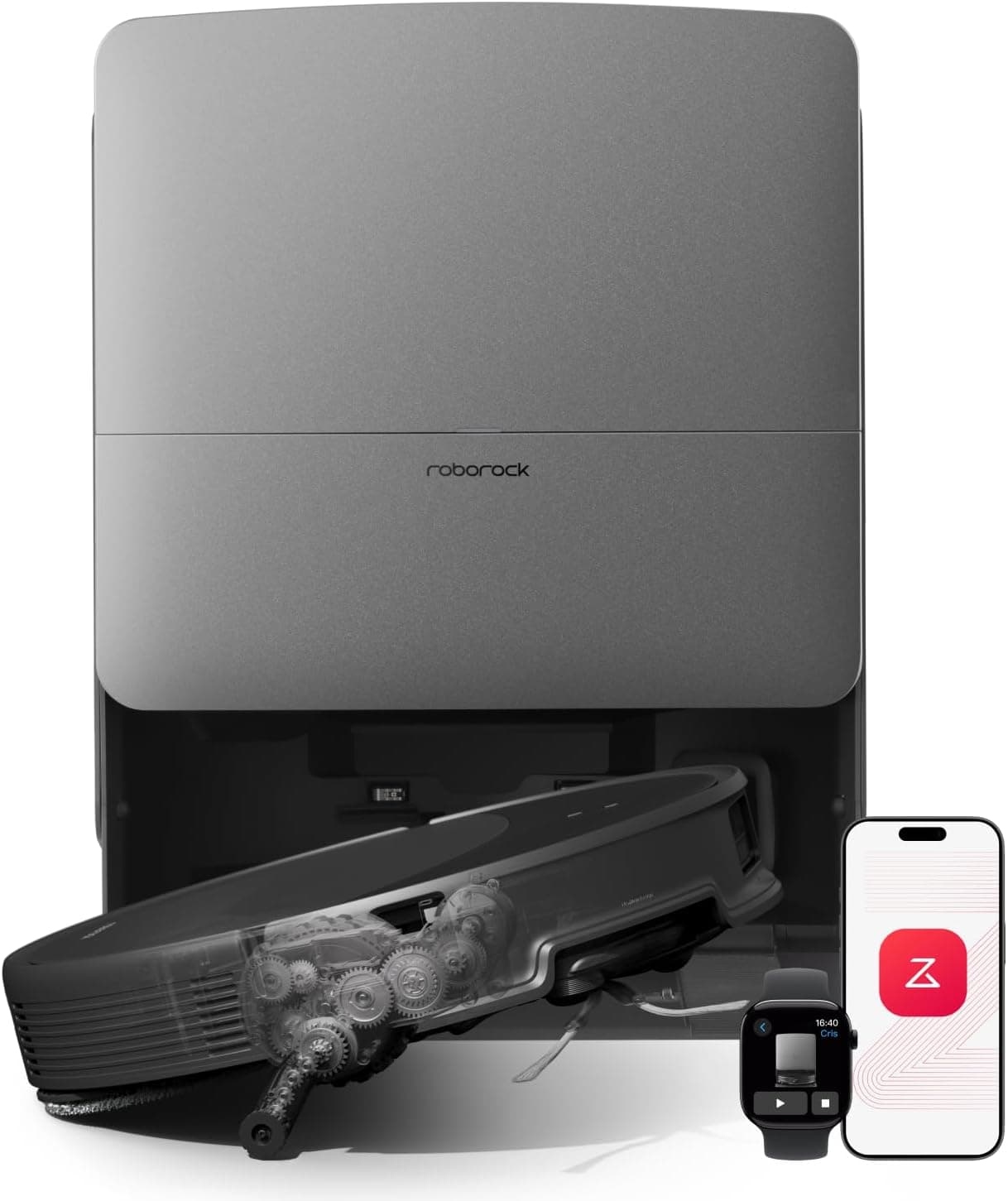
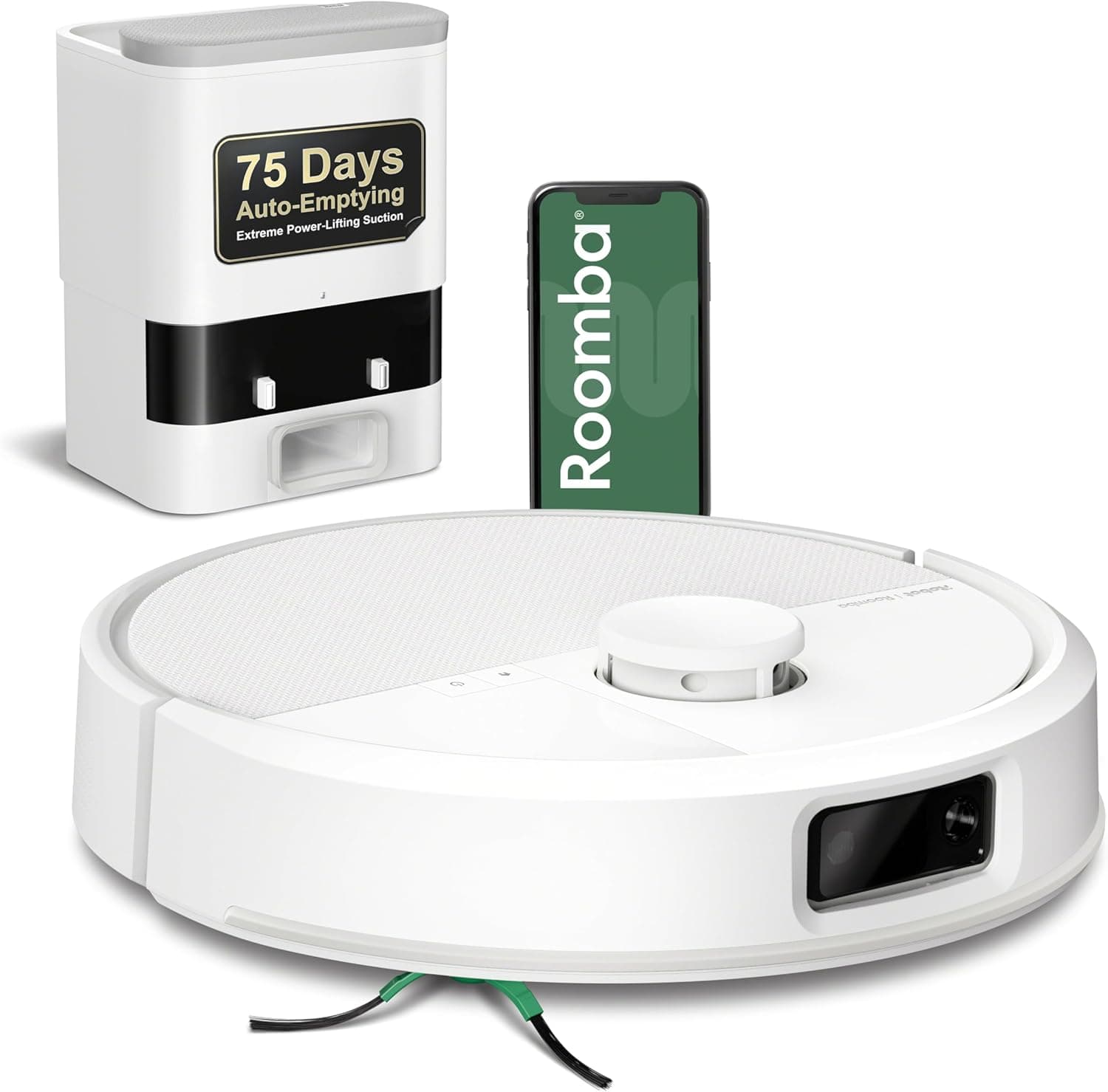
Specifications Comparison
| Specification | roborock Saros 20 Robot Vacuum and Mop🏆 Winner 🏆 | iRobot Roomba Max 705 |
|---|---|---|
| Bin Capacity | 470 ml | 1 L |
| Noise Level | 67 dB | 72 dB |
| Weight | 3.6 kg | — |
| Self Emptying | No | No |
| Manufacturer | roborock | — |
| Series Model | Saros 20 | — |
| Dimensions | 35 x 35 x 9.65 cm | — |
| Lidar | Yes | — |
| Camera | No | — |
| Gyroscope | Yes | — |
| Ir Sensors | Yes | — |
| Bump Sensors | Yes | — |
| Cliff Sensors | Yes | — |
| Smart Mapping | Yes | — |
| Keep Out Zones | Yes | — |
| Room Selection | Yes | — |
| Virtual Boundaries | Yes | — |
| Multi Floor Mapping | Yes | — |
| Battery Type | Lithium-ion | Lithium Ion (Li-ion) |
| Auto Recharge | Yes | — |
| Resume Cleaning | Yes | — |
| Battery Life Min | 180 | 130 |
| Charging Time Min | 240 | 180 |
| Eco Mode | Yes | — |
| Edge Cleaning | Yes | — |
| Spot Cleaning | Yes | — |
| Standard Mode | Yes | — |
| Max Turbo Mode | Yes | — |
| Scheduled Cleaning | Yes | — |
| Mopping | Yes | No |
| Scheduling | Yes | Yes |
| App Control | Yes | Yes |
| Dirt Detect | Yes | — |
| Hepa Filter | Yes | Yes |
| Voice Control | Alexa, Google Assistant | Alexa, Google |
| Wifi Connected | Yes | Yes |
| Anti Tangle Brush | Yes | Yes |
| Obstacle Avoidance | Yes | — |
| Tile | Yes | — |
| Vinyl | Yes | — |
| Hardwood | Yes | — |
| Laminate | Yes | — |
| Pet Hair | Yes | — |
| Allergens | Yes | — |
| Fine Dust | Yes | — |
| Large Debris | Yes | — |
| Carpet Low Pile | Yes | — |
| Carpet High Pile | No | — |
| Carpet Medium Pile | Yes | — |
| Navigation | — | ClearView Pro LiDAR with PrecisionVision AI object recognition |
Pros & Cons
Pros
- ✓Advanced LiDAR mapping with smart room selection and no-go zones
- ✓Hybrid vacuuming and mopping functionality in single device
- ✓Extended battery life with auto-recharge and resume cleaning
- ✓WiFi-connected app control with real-time monitoring
- ✓Effective on multiple floor types including hardwood, tile, carpet, and laminate
- ✓Voice control compatibility with Alexa and Google Assistant
- ✓Multiple cleaning modes for customized cleaning intensity
Cons
- ✗Higher initial investment compared to traditional upright vacuums
- ✗Requires regular maintenance of mopping pads and water tank
- ✗May struggle with very high-pile carpets and thick rugs
- ✗App connectivity dependent on stable WiFi network
Pros
- ✓Auto-empty technology for hands-free operation
- ✓Intelligent mapping system
- ✓Strong suction performance
- ✓Works with Alexa and Google Home
- ✓Reliable iRobot quality
- ✓Long runtime capability
- ✓Good app interface
- ✓Auto-replenishing bags available
- ✓Quiet operation for a robot vacuum
Cons
- ✗Premium price point
- ✗Auto-empty bags are expensive
- ✗Occasional mapping confusion in cluttered homes
- ✗Not as advanced as newest competitors
- ✗Requires WiFi for full features
- ✗Service calls can be expensive if needed
Verdict
roborock Saros 20 Robot Vacuum and Mop
Our top pick for this comparison
Roborock Saros 20 vs iRobot Roomba Max 705: Comprehensive Comparison
Key Differences Overview
The Roborock Saros 20 and iRobot Roomba Max 705 represent two distinct philosophies in robotic cleaning technology. The Saros 20 positions itself as a hybrid cleaning solution combining vacuuming and mopping capabilities, while the Roomba Max 705 focuses on specialized auto-empty convenience with premium suction performance. Both devices feature WiFi connectivity and smart mapping, yet they diverge significantly in their core functionality and target user demographics.
The most striking difference lies in their primary selling points: Roborock emphasizes dual-function cleaning with advanced LiDAR mapping and room-by-room customization, whereas iRobot prioritizes hands-free maintenance through auto-empty technology and proven reliability. Understanding these fundamental distinctions is crucial for determining which device aligns with your household needs.
Performance Analysis
Both devices demonstrate strong cleaning capabilities across multiple floor types, though they excel in different areas. The Roborock Saros 20 excels on hardwood, tile, carpet, and laminate surfaces, offering versatility that appeals to households with mixed flooring. Its hybrid mopping functionality adds genuine value for users seeking a unified cleaning solution rather than maintaining separate devices.
The iRobot Roomba Max 705 delivers strong suction performance that makes it particularly effective on carpeted surfaces. However, its specifications lack transparency regarding suction power measurements, making direct performance comparison challenging. The Roomba's proven track record and iRobot's reputation for reliability provide confidence in its cleaning effectiveness, though it cannot match the Saros 20's mopping capabilities.
For households with primarily hard floors or those requiring regular mopping, the Saros 20 presents a compelling advantage. Conversely, if carpet cleaning dominates your needs and you prefer a single-function specialist device, the Roomba Max 705's focused approach may prove superior.
Battery Life and Runtime
Unfortunately, neither manufacturer provides explicit battery life specifications in the available data. The Saros 20 advertises extended battery life with auto-recharge and resume functionality, suggesting substantial runtime between charges. This feature enables the device to automatically return to its dock, recharge, and resume cleaning from where it left off - a significant advantage for larger homes.
The iRobot Roomba Max 705 claims long runtime capability, though specific duration remains undisclosed. Both devices feature WiFi connectivity for app-based monitoring, allowing users to track cleaning progress remotely. Without concrete battery specifications, potential buyers must rely on manufacturer claims and user reviews to assess real-world performance.
The Saros 20's resume-from-interruption feature provides practical value for extensive cleaning sessions, particularly in larger residences where complete coverage in a single charge cycle may prove insufficient.
Portability and Design
The Roborock Saros 20 weighs 3.6 kg with dimensions of 35 x 35 x 9.65 cm, making it a compact and lightweight option. These specifications indicate a slim profile that navigates tight spaces effectively while remaining manageable for manual repositioning when necessary.
The iRobot Roomba Max 705 lacks published weight and dimension specifications, creating an information gap that complicates direct comparison. However, iRobot's historical design philosophy typically emphasizes circular, space-efficient profiles.
For users concerned about storage space or the need to manually move their device occasionally, the Saros 20's documented specifications provide reassurance regarding its compact footprint.
Smart Features and Mapping
The Roborock Saros 20 incorporates advanced LiDAR mapping with smart room selection and customizable no-go zones. This technology enables users to designate specific areas for cleaning or avoidance, offering granular control over cleaning patterns. The app interface provides real-time monitoring and multiple cleaning mode selections for customized intensity levels.
The iRobot Roomba Max 705 features an intelligent mapping system, though specific technical details remain vague. The device supports Alexa and Google Home integration, matching the Saros 20's voice control compatibility. However, the Roomba's mapping system reportedly experiences occasional confusion in cluttered homes - a notable limitation absent from the Saros 20's documented drawbacks.
The Saros 20's LiDAR-based mapping with explicit room selection capabilities provides superior precision and user control compared to the Roomba's less-detailed intelligent system. Users prioritizing customizable cleaning zones and predictable navigation patterns will find the Saros 20 more satisfying.
Noise Levels
The Roborock Saros 20 operates at 67 dB, while the iRobot Roomba Max 705 produces 72 dB during operation. This 5-decibel difference represents a meaningful distinction - decibel scales are logarithmic, making the Saros 20 noticeably quieter in practical terms.
For households with noise-sensitive occupants, sleeping children, or pets, the Saros 20's lower noise profile provides genuine comfort advantages. The Roomba Max 705 remains relatively quiet for a robotic device, yet the Saros 20 maintains a clear edge in this category.
Maintenance and Bin Management
The Roborock Saros 20 requires regular maintenance of mopping pads and water tank, adding to its upkeep requirements. However, this maintenance remains straightforward compared to specialized auto-empty bag systems.
The iRobot Roomba Max 705 features auto-empty technology that reduces hands-on maintenance frequency - a genuine convenience factor. However, this advantage comes with expensive auto-replenishing bags that represent ongoing operational costs. Service calls, should issues arise, can prove expensive, adding to the total cost of ownership.
The Saros 20's maintenance approach, while requiring more frequent intervention, avoids the recurring expense of proprietary bags. Users must weigh convenience against long-term expenditure when evaluating these maintenance philosophies.
Accessories and Expandability
The Roborock Saros 20 benefits from Roborock's extensive ecosystem of replacement parts and accessories, including mopping pads, water tanks, and filter options. These components remain relatively affordable and widely available.
The iRobot Roomba Max 705 relies on proprietary auto-empty bags and iRobot-specific accessories, creating vendor lock-in. While the brand's popularity ensures accessory availability, pricing tends toward the premium end.
The Saros 20 offers greater flexibility and cost-effectiveness regarding long-term accessory purchases.
Price and Value Proposition
Both devices command premium price points relative to traditional upright vacuums. The Saros 20's hybrid functionality justifies its investment by eliminating the need for separate mopping equipment, potentially offsetting higher initial costs through unified device ownership.
The Roomba Max 705's premium pricing centers on auto-empty convenience and brand reputation rather than expanded functionality. The ongoing expense of auto-replenishing bags should factor into total cost-of-ownership calculations.
For budget-conscious consumers, the Saros 20 provides superior long-term value by combining two cleaning functions. Those prioritizing maximum convenience may justify the Roomba's premium despite higher operational expenses.
Who Should Buy Which
Choose the Roborock Saros 20 if you:
Maintain mixed flooring types requiring both vacuuming and mopping
Prefer granular control through advanced LiDAR mapping and room selection
Value quiet operation (67 dB)
Seek cost-effective long-term ownership without proprietary bag expenses
Require compact storage with documented dimensions
Want auto-resume functionality for larger homes
Choose the iRobot Roomba Max 705 if you:
Prioritize maximum convenience through auto-empty technology
Focus primarily on carpet cleaning with strong suction
Prefer established brand reliability and customer service
Accept higher ongoing costs for reduced maintenance intervention
Value proven iRobot ecosystem familiarity
Final Verdict
Winner: Roborock Saros 20
The Roborock Saros 20 emerges as the superior choice for most households due to its comprehensive feature set, genuine dual-functionality, and exceptional value proposition. Its advanced LiDAR mapping with smart room selection provides user control that the Roomba Max 705's less-detailed intelligent system cannot match. The hybrid vacuuming and mopping capability eliminates the need for separate devices, justifying the premium investment through practical consolidation.
The Saros 20's lower noise profile (67 dB versus 72 dB), documented compact dimensions, and auto-resume functionality for extended cleaning sessions address real-world household requirements more comprehensively. While the Roomba Max 705 offers auto-empty convenience, this advantage becomes offset by expensive proprietary bags and lacks the mopping versatility that modern households increasingly demand. The Saros 20's straightforward maintenance approach, combined with affordable replacement parts, delivers superior long-term cost-effectiveness.
The Roomba Max 705 remains a solid choice for users whose primary concern involves carpet cleaning with minimal maintenance intervention. However, the Saros 20's broader functionality, advanced mapping precision, quieter operation, and better value across the product lifecycle make it the more compelling recommendation for discerning consumers seeking a genuinely modern robotic cleaning solution.
Advertisement