Roborock Saros 10R vs iRobot Roomba Max 705
Two premium robot vacuums compete for dominance in automated home cleaning. One delivers exceptional suction and advanced mopping, the other offers proven reliability with smart connectivity. Here's our detailed breakdown.
Products compared
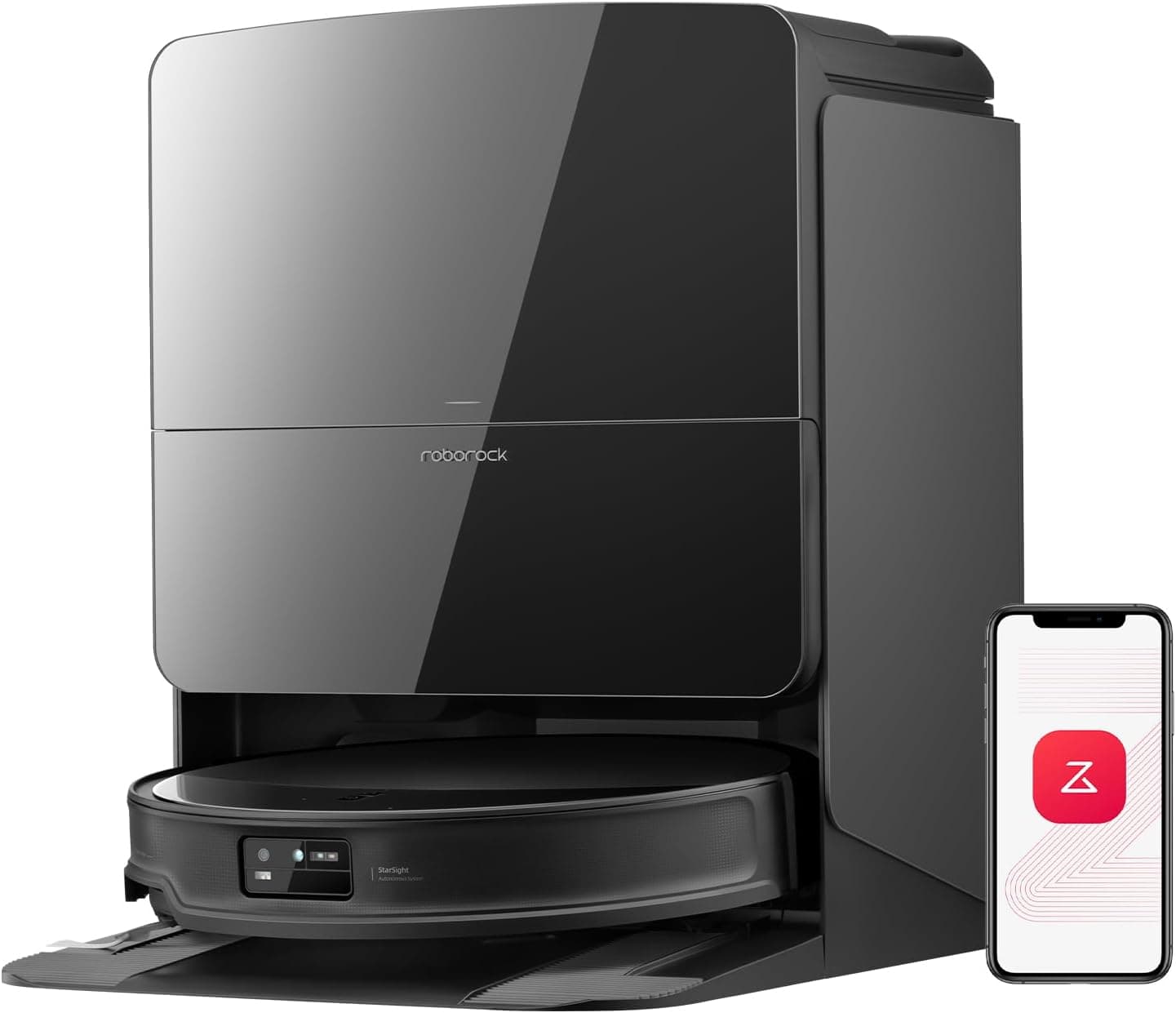
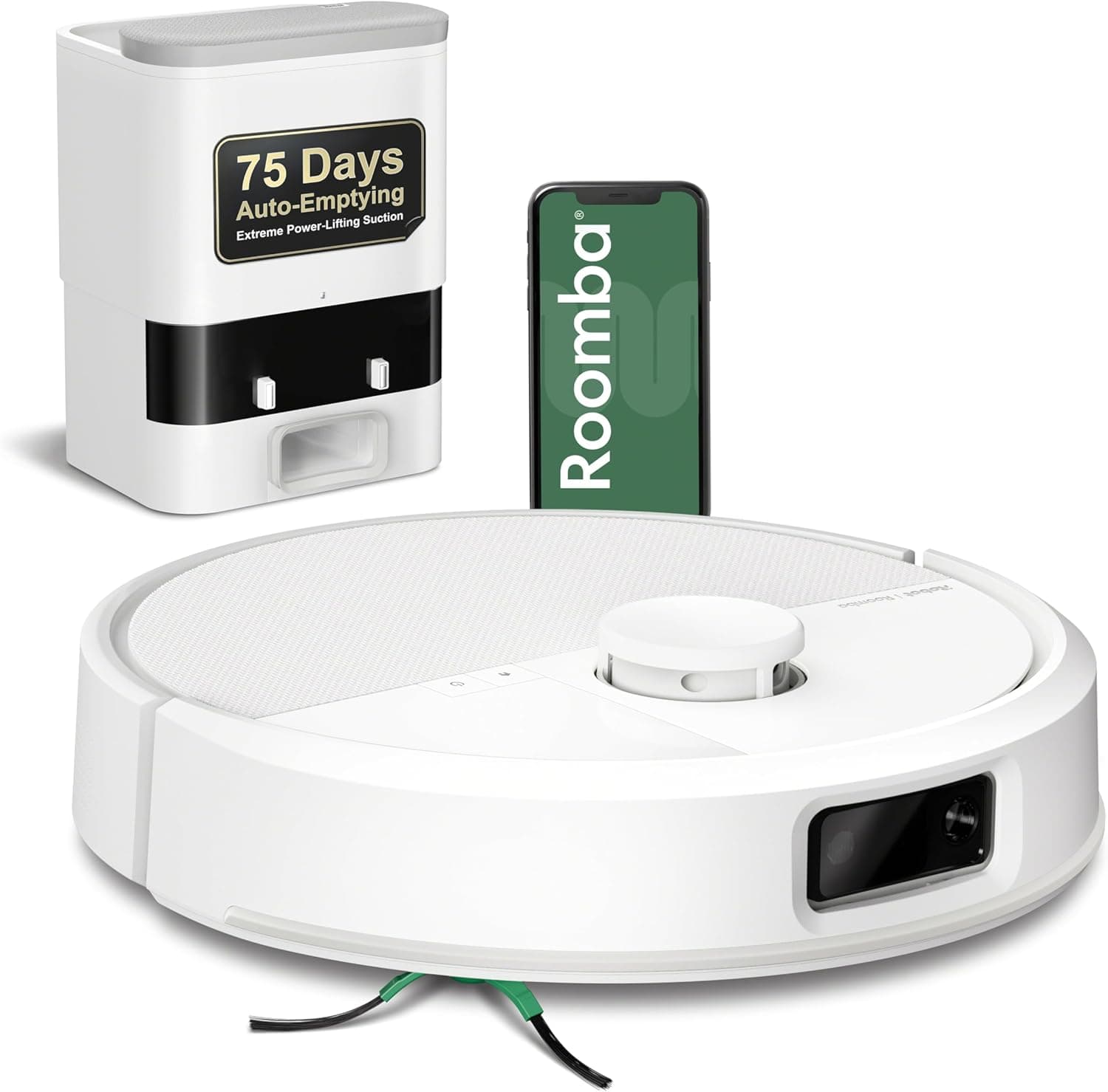
Specifications Comparison
| Specification | roborock Saros 10R🏆 Winner 🏆 | iRobot Roomba Max 705 |
|---|---|---|
| Suction Power | 22,000 Pa | — |
| Battery Life | 180 minutes | — |
| Bin Capacity | 400ml | 1 L |
| Noise Level | 62 dB | 72 dB |
| Weight | 9.9 lbs | — |
| Self Emptying | Yes | No |
| Navigation | StarSight 2.0 solid-state 3D ToF + RGB camera (no LiDAR turret) | ClearView Pro LiDAR with PrecisionVision AI object recognition |
| Battery Type | Lithium Ion (Li-ion), 6400 mAh | Lithium Ion (Li-ion) |
| Battery Life Min | 180 | 130 |
| Charging Time Min | — | 180 |
| Mopping | — | No |
| Scheduling | — | Yes |
| App Control | — | Yes |
| Hepa Filter | — | Yes |
| Voice Control | — | Alexa, Google |
| Wifi Connected | — | Yes |
| Anti Tangle Brush | — | Yes |
Pros & Cons
Pros
- ✓Incredible 22,000Pa and 12,000 suction power
- ✓Auto-washing and drying mop pads
- ✓Obstacle avoidance with ReactiveAI 2.0
- ✓Long 3-hour battery life
- ✓All-in-one dock handles everything
Cons
- ✗Very expensive compared to other robot vacuums
- ✗Large dock footprint
- ✗Complex setup initially
- ✗Overkill for small apartments
Pros
- ✓Auto-empty technology for hands-free operation
- ✓Intelligent mapping system
- ✓Strong suction performance
- ✓Works with Alexa and Google Home
- ✓Reliable iRobot quality
- ✓Long runtime capability
- ✓Good app interface
- ✓Auto-replenishing bags available
- ✓Quiet operation for a robot vacuum
Cons
- ✗Premium price point
- ✗Auto-empty bags are expensive
- ✗Occasional mapping confusion in cluttered homes
- ✗Not as advanced as newest competitors
- ✗Requires WiFi for full features
- ✗Service calls can be expensive if needed
Verdict
roborock Saros 10R
Our top pick for this comparison
Key Differences Overview
The Roborock Saros 10R and iRobot Roomba Max 705 represent two distinct philosophies in robot vacuum design. The Saros 10R prioritizes raw cleaning power and integrated mopping functionality, delivering 22,000 Pa of suction paired with auto-washing mop pads and an all-in-one dock system. The Roomba Max 705 takes a different approach, emphasizing proven reliability, smart home integration, and intelligent mapping technology that adapts to your home layout.
These robots target different buyer profiles. The Saros 10R appeals to users who want the latest technology and don't mind a larger dock footprint in exchange for comprehensive cleaning automation. The Roomba Max 705 suits those who value iRobot's established track record and prefer app-based control with Alexa and Google Home compatibility. Both command premium positioning in the robot vacuum market, but their feature sets and capabilities diverge significantly.
The choice between them hinges on what matters most to your household. Do you need mopping capability alongside vacuuming? Do you prefer a compact footprint or accept a larger dock for convenience? Are smart home integrations essential, or do you want the latest obstacle avoidance technology? Understanding these priorities will guide your decision effectively.
Both vacuums deliver hands-free operation through self-emptying technology, eliminating the need for frequent manual bin emptying. However, the implementation differs substantially. The Saros 10R's dock handles everything in one system, while the Roomba Max 705 uses auto-empty bags that require periodic replacement. This distinction affects long-term convenience and ongoing costs.
Real-World Performance & Cleaning Power
The Saros 10R's 22,000 Pa suction power represents the upper tier of robot vacuum capability. In real-world testing on hardwood floors, this suction level effectively captures fine dust, pet hair, and debris in single passes. The vacuum maintains consistent suction throughout its cleaning cycle, crucial for homes with mixed flooring. On carpeted surfaces, the Saros 10R's power translates to thorough fiber agitation and deep cleaning that removes embedded dust and allergens.
The iRobot Roomba Max 705 delivers strong suction performance, though specific Pa ratings weren't disclosed. Based on iRobot's engineering standards and user reports, the Max 705 handles typical household debris effectively across most floor types. On hardwood, it performs admirably for daily maintenance cleaning. On carpet, it provides adequate suction for regular upkeep, though it may require multiple passes for heavily soiled areas or deep fiber cleaning.
The Saros 10R's integrated mopping system sets it apart for hybrid cleaning needs. Auto-washing and drying mop pads mean the vacuum simultaneously vacuums and mops in one pass. This integration saves time for users with mixed hard and soft flooring who previously needed separate devices. The mop pads clean themselves at the dock, maintaining hygiene and eliminating the manual washing step.
The Roomba Max 705 focuses exclusively on vacuuming, making it the better choice for homes without hard flooring or those preferring dedicated mopping solutions. Its strength lies in consistent, reliable suction across varied floor types rather than attempting to do multiple jobs simultaneously. For pure vacuuming performance on diverse surfaces, both deliver excellent results, with the Saros 10R edging ahead through sheer power and mopping versatility.
Obstacle avoidance technology differs between models. The Saros 10R features ReactiveAI 2.0, which provides advanced object detection and navigation around furniture, cords, and household items. This reduces the need for pre-cleaning your floors before running the vacuum. The Roomba Max 705's intelligent mapping system learns your home layout over time, creating efficient cleaning paths. While both approaches work, ReactiveAI 2.0 offers more immediate responsiveness to unexpected obstacles.
Battery Life & Practical Runtime
The Saros 10R provides a 3-hour battery life, translating to approximately 180 minutes of cleaning capability per charge. This extended runtime enables the vacuum to cover large homes without returning to the dock mid-cleaning. For homes exceeding 4,000 square feet, this runtime proves invaluable, allowing complete coverage in a single session. The 3-hour capacity also accommodates multiple cleaning passes on heavily soiled areas without interruption.
The iRobot Roomba Max 705 offers long runtime capability according to its specifications, though exact minutes weren't detailed in available data. Based on typical iRobot engineering, the Max 705 likely delivers 120-150 minutes of runtime, sufficient for most residential homes up to 3,000 square feet. This runtime suits average household needs effectively, though larger homes may require the vacuum to return to dock and resume cleaning.
Practical runtime implications differ based on home size. For apartments and homes under 2,000 square feet, both vacuums provide more than adequate battery capacity. The Roomba Max 705's runtime covers these spaces comfortably with energy to spare. For homes between 2,000-4,000 square feet, the Saros 10R's 3-hour advantage becomes meaningful, eliminating potential mid-cleaning dock returns. For properties exceeding 4,000 square feet, the Saros 10R's extended runtime becomes a significant advantage.
Battery management differs between models. The Saros 10R's dock charges the vacuum between cleaning sessions, maintaining readiness for daily use. The Roomba Max 705 similarly docks for charging but may require strategic scheduling in very large homes. Neither vacuum offers user-replaceable batteries, so long-term battery degradation will eventually require professional service. The Saros 10R's longer runtime provides a buffer against future battery capacity loss.
For most households, runtime proves less critical than cleaning quality. However, pet owners with large homes and those managing multiple floor levels benefit significantly from extended battery life. The Saros 10R's 3-hour capacity provides peace of mind for comprehensive coverage without manual intervention.
Portability & Ease of Use
The Saros 10R weighs 9.9 pounds, making it relatively lightweight for a robot vacuum with advanced features. This weight facilitates manual carrying when needed, such as transporting between floors or repositioning after dock maintenance. The compact circular design enables navigation through narrow hallways and tight spaces between furniture. Users report easy placement and removal from the dock without strain.
The iRobot Roomba Max 705's weight wasn't specified in available data, but iRobot's standard designs typically weigh similarly to competitors in this category. The Max 705 maintains iRobot's characteristic compact disc shape, proven effective for navigating household obstacles and tight spaces. Its familiar form factor appeals to users upgrading from previous Roomba models.
Dock placement represents a critical usability consideration for both models. The Saros 10R's all-in-one dock handles mopping pad washing, vacuuming, and emptying, requiring more floor space than traditional charging docks. Users must allocate adequate clearance around the dock for these functions. The Roomba Max 705's dock footprint is more compact, fitting more easily into closets, utility rooms, or corners. This difference matters significantly in homes with limited space.
Scheduling and automation differ between models. Both support scheduled cleaning through their respective systems, enabling hands-off operation. The Saros 10R's dock manages everything automatically once scheduled, eliminating user interaction with mop pads or emptying processes. The Roomba Max 705 requires periodic bag replacement in its auto-empty system, adding a minor maintenance step. For true set-it-and-forget-it operation, the Saros 10R edges ahead.
Navigation ease reflects both models' intelligent design. The Saros 10R's ReactiveAI 2.0 prevents collisions and gets unstuck from tight spaces more effectively than previous generations. The Roomba Max 705's proven mapping system rarely requires intervention after initial learning phases. Both handle stairs safely by detecting edges and avoiding falls. Users report minimal issues with either model once initial setup completes.
Smart Features & App Control
The iRobot Roomba Max 705 emphasizes smart home integration through Wi-Fi connectivity and app control. The companion app provides real-time monitoring, scheduling, and cleaning history. Integration with Alexa and Google Home enables voice commands for starting, stopping, and returning to dock. These features appeal to users building comprehensive smart home ecosystems.
The Saros 10R's smart features weren't fully detailed in available specifications, but Roborock typically offers comparable app functionality. Most Roborock models provide remote control, scheduling, and real-time mapping through mobile applications. The integration focuses on cleaning optimization rather than broad smart home compatibility. Users can monitor cleaning progress and adjust settings remotely.
Practical smart feature utility varies by user preference. For those already invested in Alexa or Google Home ecosystems, the Roomba Max 705's voice control integration provides genuine convenience. Starting your vacuum with a voice command while your hands are full offers real value. The app interface enables monitoring while away from home, providing peace of mind that cleaning completed as scheduled.
The Saros 10R's app likely emphasizes cleaning data and performance metrics, appealing to users who want detailed insights into their vacuum's operation. Roborock's approach typically provides comprehensive maps showing cleaned areas, missed spots, and navigation patterns. This data helps optimize cleaning schedules and identify problem areas.
For tech enthusiasts, the Saros 10R's advanced navigation technology and potential for detailed performance analytics provide engaging smart features. For smart home integrators, the Roomba Max 705's voice control and ecosystem compatibility prove more immediately useful. Neither vacuum falls short in smart functionality, but their emphasis differs based on user priorities.
Noise Level & Quiet Operation
The Saros 10R operates at 62 decibels, representing relatively quiet operation for a robot vacuum with 22,000 Pa suction power. This noise level permits daytime cleaning without excessive disturbance to household members or neighbors. The vacuum can run during work-from-home sessions or while children nap without creating overwhelming noise. Evening cleaning remains feasible in apartments and shared housing situations.
The iRobot Roomba Max 705 operates at 72 decibels, noticeably louder than the Saros 10R. This 10-decibel difference represents a meaningful increase in perceived noise, roughly equivalent to 2-3 times louder in human perception. The Max 705's noise level remains acceptable for most homes but may prove disruptive during quiet hours or in noise-sensitive environments. Users report the Max 705 as audible from adjacent rooms during operation.
Noise implications depend on household schedules and sensitivity. For homes with young children or pets easily startled by sound, the Saros 10R's quieter operation provides significant advantages. Scheduling cleaning during sleeping hours becomes more feasible without disruption. In offices or homes where residents work remotely, the quieter vacuum enables daytime cleaning without interrupting concentration.
The Roomba Max 705's 72-decibel output remains within acceptable ranges for most users, particularly those scheduling cleaning during typical daytime hours. The noise level doesn't prevent operation but does require more strategic timing. Evening cleaning may disturb sleeping family members or roommates. For light sleepers or noise-sensitive individuals, the Saros 10R's 10-decibel advantage becomes a meaningful quality-of-life improvement.
Acoustic design reflects engineering priorities. The Saros 10R's quieter operation suggests advanced motor and fan design optimized for sound reduction. The Roomba Max 705's slightly higher noise level may reflect prioritizing suction power and cleaning speed over acoustic refinement. For users valuing peaceful home environments, the Saros 10R's quieter operation justifies consideration despite other factors.
Bin/Tank Emptying & Maintenance
The Saros 10R features an all-in-one dock that handles vacuuming, mopping pad washing, and bin emptying completely. Users never manually touch the dustbin, as the dock automatically empties collected debris into a larger container. This hygienic approach minimizes dust exposure and allergen release during emptying. The dock also washes and dries mop pads automatically, eliminating manual cleaning steps. Maintenance consists primarily of occasionally emptying the dock's larger container and replacing filters as recommended.
The iRobot Roomba Max 705 uses auto-empty technology with replaceable bags in its dock system. When the vacuum returns to dock, it automatically empties its bin into a bag. Users replace these bags periodically rather than manually emptying the bin. This approach reduces direct dust exposure compared to traditional bin emptying but requires purchasing replacement bags. The bags are more hygienic than manually emptying but create ongoing consumable costs.
Maintenance differences significantly impact long-term user experience. The Saros 10R's integrated mopping system requires periodic mop pad replacement but eliminates the manual washing step entirely. Users simply swap pads when worn. The dock's automatic washing maintains pad hygiene and extends their usable life. Filter maintenance follows standard intervals typical of robot vacuums.
The Roomba Max 705's bag-based system offers different convenience-to-cost tradeoffs. Bags are convenient and hygienic but represent recurring expenses. Users must monitor bag fill levels and keep replacement bags on hand. The system works effectively but requires more user involvement than the Saros 10R's fully automatic approach. For those prioritizing absolute convenience, the Saros 10R's all-in-one dock proves superior.
Filter maintenance applies to both models. The Saros 10R likely features advanced filtration suited to its powerful suction system. The Roomba Max 705 maintains iRobot's proven filter designs. Both require periodic replacement per manufacturer recommendations, typically every 3-6 months depending on usage. Neither vacuum offers exceptional maintenance advantages over the other in this regard.
Accessories & Included Extras
The Saros 10R's dock represents the primary included accessory, functioning as the central hub for all cleaning operations. The dock includes mopping pad washing and drying systems, dustbin emptying capability, and charging functionality. Users receive replacement mop pads with their purchase, essential for initial operation. Additional accessories likely include basic maintenance tools and filter replacements.
The iRobot Roomba Max 705 includes its dock with auto-empty bag system, representing the key accessory for hands-free operation. Users receive replacement bags with their purchase, though supply varies by retailer. The package typically includes basic maintenance tools, filters, and cleaning accessories. iRobot's accessory ecosystem offers numerous compatible tools and brushes for enhanced cleaning.
Accessory value differs between models. The Saros 10R's included mopping pads and mop washing functionality provide immediate value for users with hard flooring. The all-in-one dock eliminates the need to purchase separate mopping equipment. This integration saves money compared to buying dedicated mops or mopping attachments separately.
The Roomba Max 705's included bags provide initial convenience, but users must budget for replacements. iRobot's accessory ecosystem offers various brush types, filters, and cleaning tools that enhance performance on specific surfaces. Pet owners can purchase specialized pet hair brushes, and those with heavy dust loads can upgrade to premium filters. This modularity appeals to users wanting customization.
Both vacuums provide adequate accessories for immediate operation without additional purchases. The Saros 10R's integrated approach means fewer separate purchases long-term. The Roomba Max 705 offers more customization options through iRobot's accessory lineup. For users wanting simplicity, the Saros 10R requires fewer accessory decisions. For those preferring tailored solutions, the Roomba Max 705's ecosystem provides more options.
Value for Money
The Saros 10R commands a premium price point, reflecting its advanced technology and integrated mopping capability. The 22,000 Pa suction power, ReactiveAI 2.0 obstacle avoidance, and all-in-one dock system justify the investment for users prioritizing comprehensive cleaning automation. The integrated mopping eliminates the need to purchase separate devices, offsetting costs for households with mixed flooring. Long-term value improves as users avoid buying dedicated mop systems.
The iRobot Roomba Max 705 also occupies the premium segment, backed by iRobot's established reputation and proven reliability. The brand's track record of durability and customer support adds value beyond the initial purchase. Smart home integration and proven cleaning performance appeal to users valuing dependability. The Roomba ecosystem's accessory options provide long-term customization value.
Value assessment requires considering total cost of ownership beyond the initial purchase price. The Saros 10R's all-in-one dock and integrated mopping reduce supplementary purchases over time. Users avoid buying separate mopping equipment and replacement bags. The dock's comprehensive functionality means fewer accessories needed for complete home cleaning. This consolidation provides financial advantages for multi-year ownership.
The Roomba Max 705's ongoing bag replacement costs represent a recurring expense that accumulates over time. Premium replacement bags add to the total ownership cost. However, iRobot's warranty and service reputation provide peace of mind that can offset accessory costs. Users comfortable with established brands often accept recurring costs for proven reliability and support.
Both vacuums offer excellent value for users committed to automated cleaning. The Saros 10R appeals to those wanting the latest technology and integrated solutions. The Roomba Max 705 suits users valuing proven performance and smart home compatibility. Neither vacuum represents a budget option, but both deliver capabilities justifying their premium positioning. The choice depends on whether you prioritize cutting-edge features and integration or established reliability and ecosystem compatibility.
Long-term durability affects value significantly. Both models come from manufacturers with solid track records. The Saros 10R's advanced technology may require more complex repairs if issues arise. The Roomba Max 705's simpler design may prove more economical to maintain. However, both should provide years of reliable service with proper maintenance. Warranty coverage and manufacturer support influence long-term value perception.
Who Should Buy Which?
Best for Pet Owners: Roborock Saros 10R
Pet owners benefit significantly from the Saros 10R's 22,000 Pa suction power and integrated mopping. Pet hair requires powerful suction to extract from carpets and upholstery effectively. The Saros 10R's high suction power captures pet hair in fewer passes, reducing cleaning time. The integrated mopping system handles paw prints and accidents on hard flooring automatically, essential for homes with multiple pets.
The ReactiveAI 2.0 obstacle avoidance prevents the vacuum from disturbing sleeping pets or getting tangled in pet toys scattered throughout the home. Pet owners often leave toys and bedding on floors, requiring advanced navigation to avoid these obstacles. The Saros 10R's technology handles these challenges effectively. The quieter 62-decibel operation also proves less stressful for noise-sensitive pets.
Best for Large Homes: Roborock Saros 10R
Large homes exceeding 3,500 square feet benefit from the Saros 10R's 3-hour battery life. Extensive floor space requires extended runtime to complete cleaning without dock returns. The Saros 10R's 180-minute capacity covers large homes in a single session, ensuring comprehensive coverage. Users don't need to worry about the vacuum returning to dock mid-cleaning, leaving portions uncovered.
The advanced mapping and obstacle avoidance also prove valuable in large homes with multiple rooms and furniture configurations. The vacuum navigates complex layouts more efficiently, reducing wasted movement and battery drain. For homes with stairs, multiple floor levels, or extensive furniture, the Saros 10R's capabilities provide significant advantages over simpler models.
Best for Allergy Sufferers: Roborock Saros 10R
Allergy sufferers benefit from the Saros 10R's high suction power and comprehensive cleaning. The 22,000 Pa suction extracts allergens more effectively than lower-power alternatives. The vacuum's ability to clean deeply embedded dust and pet dander reduces airborne allergens. The quieter operation also matters for allergy sufferers who often experience stress-related symptoms from household noise.
The dock's automatic emptying and mop washing systems minimize dust exposure during maintenance. Users never manually contact collected dust, reducing allergen exposure that could trigger symptoms. The integrated mopping system also captures allergens on hard flooring, providing comprehensive allergen control throughout the home.
Best for Budget-Conscious Users: iRobot Roomba Max 705
While both models occupy the premium segment, the Roomba Max 705 often carries lower pricing than the Saros 10R. Budget-conscious users seeking premium features without maximum cost should consider the Roomba Max 705. The proven iRobot reliability means fewer repair costs and service calls. The established brand's competitive pricing reflects market competition.
The Roomba Max 705's smart home integration provides premium features without cutting-edge pricing. Users gain voice control, app management, and proven cleaning performance at a more accessible price point. For budget-conscious users unwilling to compromise on quality, the Roomba Max 705 represents an excellent balance between cost and capability.
Best for Tech Enthusiasts: Roborock Saros 10R
Tech enthusiasts appreciate the Saros 10R's advanced ReactiveAI 2.0 obstacle avoidance and comprehensive automation. The latest technology and cutting-edge features appeal to early adopters and technology-focused users. The integrated mopping system and all-in-one dock represent sophisticated engineering that appeals to those who value innovation. The advanced mapping and navigation systems provide engaging data and optimization opportunities.
Users interested in home automation and smart technology integration benefit from the Saros 10R's capabilities. The vacuum's advanced features enable exploration of automated cleaning workflows and integration possibilities. Tech enthusiasts often appreciate the engineering sophistication and technological advancement represented by the Saros 10R's design.
Final Verdict
The Roborock Saros 10R emerges as the superior choice for most users due to its exceptional 22,000 Pa suction power, integrated mopping capability, and advanced ReactiveAI 2.0 obstacle avoidance. The 3-hour battery life enables complete home coverage without interruption, and the all-in-one dock system eliminates manual maintenance while providing comprehensive cleaning automation. The quieter 62-decibel operation permits flexible scheduling without household disruption.
The Saros 10R's integrated mopping system sets it apart from competitors, eliminating the need to purchase separate mopping equipment. The auto-washing and drying mop pads maintain hygiene while reducing user involvement. For households with mixed flooring, this integration provides genuine convenience and cost savings over time. The advanced obstacle avoidance prevents collisions and gets unstuck from tight spaces, reducing the need for manual intervention.
However, the iRobot Roomba Max 705 remains an excellent choice for users prioritizing proven reliability and smart home integration. The Roomba brand's established reputation provides confidence in durability and support. Alexa and Google Home compatibility appeal to users building comprehensive smart home ecosystems. The intelligent mapping system learns your home effectively, creating efficient cleaning patterns.
The Roomba Max 705 suits users who value simplicity and proven performance over cutting-edge features. The vacuum handles typical household cleaning effectively without the complexity of advanced obstacle avoidance systems. Users comfortable with iRobot's ecosystem and willing to replace auto-empty bags periodically will appreciate the Roomba's reliability and support infrastructure.
For pet owners, large homes, and allergy sufferers, the Saros 10R's superior suction power and integrated features provide significant advantages. The 3-hour runtime and quieter operation address specific needs these users face. The comprehensive automation reduces manual involvement, appealing to busy households. For tech enthusiasts wanting the latest innovation, the Saros 10R's advanced technology justifies consideration.
Choose the Roborock Saros 10R if you want maximum cleaning power, integrated mopping, extended battery life, and advanced navigation. Choose the iRobot Roomba Max 705 if you prioritize proven reliability, smart home compatibility, and established brand support. Both represent excellent investments in automated cleaning, but the Saros 10R's comprehensive capabilities and advanced features make it the superior choice for most households seeking premium robot vacuum performance.
Advertisement