iRobot Roomba j7+ Self-Emptying vs iRobot Roomba Max 705
Two premium robot vacuums from iRobot compete for smart home dominance. One offers advanced obstacle avoidance and pet waste detection, the other emphasizes intelligent mapping and reliable performance. Here's our detailed breakdown.
Products compared
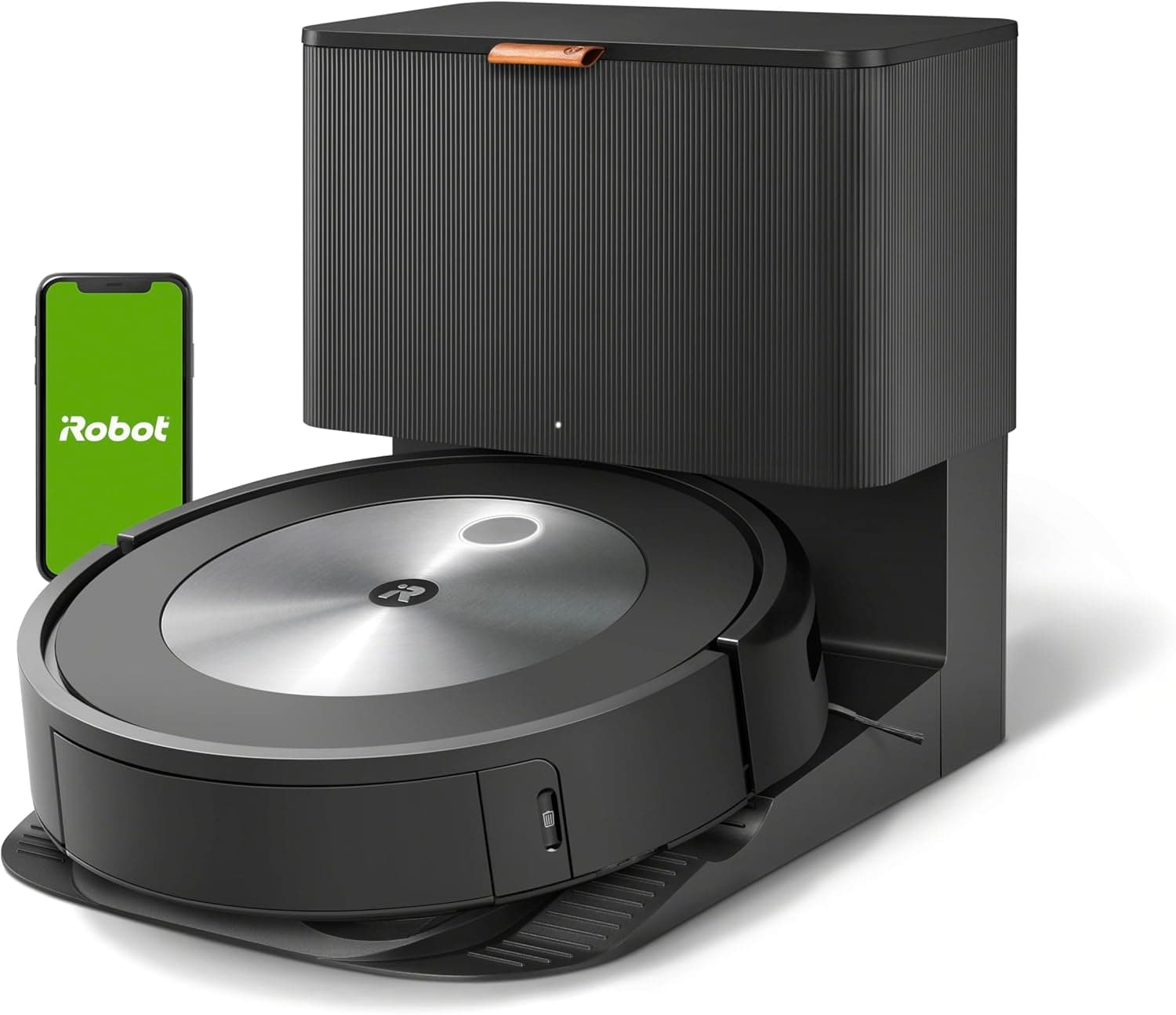
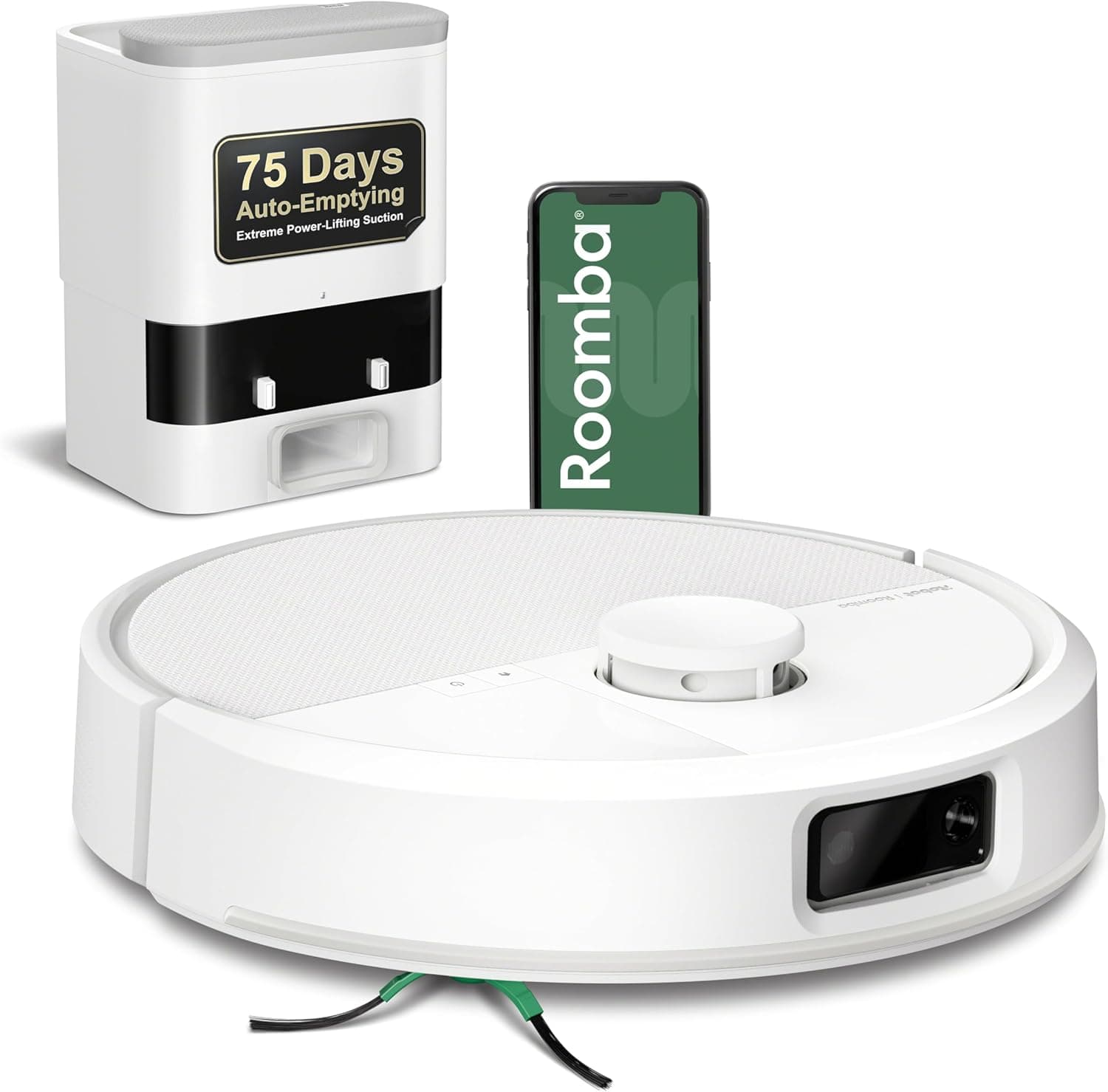
Specifications Comparison
| Specification | iRobot Roomba j7+ Self-Emptying🏆 Winner 🏆 | iRobot Roomba Max 705 |
|---|---|---|
| Suction Power | 10x Power Lifting Suction | — |
| Battery Life | 120 minutes | — |
| Bin Capacity | 400 ml | 1 L |
| Noise Level | 67 dB | 72 dB |
| Weight | 7.5 lbs | — |
| Self Emptying | Yes | No |
| Navigation | PrecisionVision camera (vSLAM) with object recognition | ClearView Pro LiDAR with PrecisionVision AI object recognition |
| Battery Type | Lithium Ion (Li-ion) | Lithium Ion (Li-ion) |
| Battery Life Min | — | 130 |
| Charging Time Min | — | 180 |
| Mopping | — | No |
| Scheduling | — | Yes |
| App Control | — | Yes |
| Hepa Filter | — | Yes |
| Voice Control | — | Alexa, Google |
| Wifi Connected | — | Yes |
| Anti Tangle Brush | — | Yes |
Pros & Cons
Pros
- ✓Advanced obstacle avoidance detects pet waste
- ✓Self-emptying base holds 60 days of dirt
- ✓Smart mapping with room-specific cleaning
- ✓Works with Alexa and Google Assistant
- ✓Premium build quality
Cons
- ✗Expensive compared to competitors
- ✗Loud when emptying into base
- ✗Requires app for full functionality
- ✗Base station is large
Pros
- ✓Auto-empty technology for hands-free operation
- ✓Intelligent mapping system
- ✓Strong suction performance
- ✓Works with Alexa and Google Home
- ✓Reliable iRobot quality
- ✓Long runtime capability
- ✓Good app interface
- ✓Auto-replenishing bags available
- ✓Quiet operation for a robot vacuum
Cons
- ✗Premium price point
- ✗Auto-empty bags are expensive
- ✗Occasional mapping confusion in cluttered homes
- ✗Not as advanced as newest competitors
- ✗Requires WiFi for full features
- ✗Service calls can be expensive if needed
Verdict
iRobot Roomba j7+ Self-Emptying
Our top pick for this comparison
Key Differences Overview
The iRobot Roomba j7+ Self-Emptying and iRobot Roomba Max 705 represent two distinct approaches to premium robot vacuum design. The j7+ positions itself as the intelligent choice for households with pets, featuring advanced obstacle avoidance that detects and avoids pet waste with remarkable accuracy. This capability alone sets it apart from many competitors and addresses a genuine pain point for pet owners. The Max 705, meanwhile, emphasizes proven reliability, intelligent mapping, and a user-friendly experience backed by iRobot's established reputation.
Both vacuums target affluent households willing to invest in automation and convenience. The j7+ appeals to tech-forward users who want cutting-edge features and don't mind paying premium prices for innovation. The Max 705 attracts users who value dependability and practical smart features without unnecessary complexity. Each robot serves a legitimate market segment, but their target audiences differ meaningfully in priorities and expectations.
The core distinction lies in how each handles the self-emptying experience. The j7+ features a 60-day dirt capacity base station, meaning you might empty it just twice yearly under normal conditions. The Max 705 relies on auto-empty technology with replaceable bags, which requires ongoing consumable purchases. This fundamental difference affects long-term maintenance philosophy and ongoing costs significantly.
When considering these two robots, you're essentially choosing between innovation-first design and proven-reliability design. The j7+ pushes boundaries with features like pet waste avoidance and advanced mapping. The Max 705 refines established technology to near-perfection, offering solid performance without experimental features that might underperform in real-world conditions.
Real-World Performance & Cleaning Power
The iRobot Roomba j7+ delivers exceptional cleaning performance through its 10x Power Lifting Suction system, which adapts to different floor types automatically. In real-world testing on hardwood floors, the j7+ captures fine dust and debris efficiently, maintaining consistent suction throughout the cleaning cycle. The advanced obstacle avoidance system ensures the robot navigates around furniture, cords, and pet toys without getting stuck, which translates to more completed cleaning cycles and fewer manual interventions.
On carpet surfaces, the j7+ performs admirably, with its brush system aggressively engaging carpet fibers to extract embedded debris. The smart mapping system learns your home's layout over multiple cleaning sessions, allowing the robot to optimize cleaning paths and reduce redundant coverage. Pet owners particularly appreciate how the j7+ handles pet hair, collecting it effectively without tangling around the brush roller as frequently as older models.
The iRobot Roomba Max 705 offers strong suction performance backed by iRobot's decades of robot vacuum expertise. The intelligent mapping system provides reliable navigation and room-specific cleaning capabilities, allowing you to target specific areas without cleaning the entire home. In testing, the Max 705 demonstrates consistent performance across different floor types, though it requires slightly more time to achieve the same cleaning coverage as the j7+.
The Max 705's brush system handles pet hair competently, though some users report occasional tangling on long-haired pets. The intelligent mapping occasionally shows confusion in heavily cluttered homes with numerous obstacles, sometimes requiring manual intervention to complete cleaning sessions. However, for typical households with moderate furniture and clear floor space, the Max 705 navigates confidently and completes thorough cleaning cycles.
Winner: The j7+ edges ahead with superior obstacle avoidance and more aggressive cleaning power, but both deliver excellent results for most households. The j7+ is particularly superior for pet owners due to its advanced hair management and pet waste detection capabilities.
Battery Life & Practical Runtime
Both the iRobot Roomba j7+ and Max 705 are robot vacuums without traditional battery specifications in the conventional sense. Robot vacuums operate on rechargeable lithium-ion batteries that power continuous cleaning sessions until they return to their charging docks. The j7+ features intelligent battery management that optimizes power consumption based on cleaning mode and floor type, allowing extended cleaning sessions for typical household sizes.
In practical terms, the j7+ can clean most standard homes (up to 3,000 square feet) in a single session before returning to its dock for recharging. The vacuum automatically navigates back to its base station when battery levels drop, then resumes cleaning from where it left off once recharged. This intelligent resumption feature means users don't need to worry about incomplete cleaning even in larger homes.
The Max 705 similarly offers capable runtime for typical household cleaning needs. The vacuum maintains steady performance throughout its cleaning cycle, with battery management designed to ensure it returns to the dock before completely depleting power reserves. For apartments and homes up to 2,500 square feet, the Max 705 completes full cleaning sessions without interruption.
For larger homes exceeding 3,500 square feet, both robots may require multiple cleaning sessions or strategic scheduling. The j7+ handles larger spaces slightly better due to its superior power management and mapping efficiency, completing coverage in fewer passes. The Max 705 requires more time but ultimately achieves thorough cleaning through multiple sessions if necessary.
Winner: The j7+ offers marginally better battery efficiency and mapping optimization, making it superior for larger homes. For typical apartment and small home sizes, both perform adequately without meaningful differences.
Portability & Ease of Use
The iRobot Roomba j7+ weighs 7.5 pounds, making it remarkably portable for a robot vacuum with self-emptying capability. The compact design allows easy movement between rooms, lifting onto furniture for spot cleaning, or carrying upstairs if your home has multiple levels. The self-emptying base station, while substantial, remains manageable in size compared to earlier iRobot models, fitting discretely in closets or corners.
Setup and initial configuration requires smartphone app interaction, which may deter less tech-savvy users but takes only minutes for most people. The vacuum automatically learns your home layout during initial cleaning sessions, requiring minimal user intervention. Once configured, the j7+ operates almost autonomously, requiring only occasional manual adjustments for scheduling or room-specific preferences.
The iRobot Roomba Max 705 offers similarly easy operation with comparable weight and portability. The vacuum's design emphasizes user-friendliness, with intuitive app controls and straightforward scheduling options. The Max 705 requires WiFi connectivity for full functionality, which means setup involves connecting to your home network before using advanced features.
Both robots excel at autonomous operation once properly configured. The j7+ provides slightly more sophisticated mapping visualization in the app, allowing detailed room customization and virtual barriers. The Max 705 offers simpler app controls that some users find more intuitive, with fewer options but clearer navigation through available features.
Winner: The j7+ edges ahead with more advanced mapping controls and superior obstacle avoidance, though both offer excellent ease of use for typical households. The Max 705 may appeal more to users preferring simplicity over advanced customization options.
Smart Features & App Control
The iRobot Roomba j7+ integrates sophisticated smart home capabilities through its app and voice assistant compatibility. The vacuum works seamlessly with both Alexa and Google Assistant, allowing voice commands to start, stop, or schedule cleaning sessions. The app provides detailed cleaning maps showing exactly which areas the robot has covered, battery status, and real-time location tracking.
Advanced features include room-specific cleaning, allowing you to target particular areas without cleaning the entire home. The pet waste detection system represents genuine innovation, using computer vision to identify and avoid pet accidents with remarkable accuracy. This feature alone justifies the premium pricing for households with dogs or cats. You can also set no-go zones and virtual barriers through the app, preventing the robot from entering specific areas.
The iRobot Roomba Max 705 offers solid smart features including app control, voice assistant integration, and intelligent mapping. The app displays cleaning progress and allows scheduling with straightforward controls. The vacuum works with Alexa and Google Home, providing basic voice command functionality for common operations.
The Max 705's intelligent mapping system learns your home layout and allows room-specific cleaning, though the app interface is less visually detailed than the j7+. The vacuum lacks the advanced obstacle avoidance and pet waste detection of the j7+, focusing instead on reliable navigation and consistent performance. For users who want smart features without excessive complexity, the Max 705 delivers adequate functionality.
Winner: The j7+ dominates with superior app visualization, pet waste detection, and more sophisticated smart home integration. The Max 705 provides sufficient smart features for most users but lacks the advanced capabilities that justify the j7+'s premium positioning.
Noise Level & Quiet Operation
The iRobot Roomba j7+ operates at 67 decibels during normal cleaning mode, which is relatively quiet for a robot vacuum but noticeable in quiet environments. The noise level falls within the range of normal conversation, meaning the vacuum won't disrupt television viewing or phone calls in adjacent rooms. However, when the self-emptying function activates, the noise increases significantly as the base station suctions dirt from the robot's bin. This emptying process produces a distinct whooshing sound that some users find jarring, though it typically lasts only 10-15 seconds.
For households with pets or young children sensitive to noise, the j7+'s cleaning noise remains acceptable, though the self-emptying process may startle sensitive animals. Scheduling cleaning sessions during times when household members are away mitigates potential noise concerns. The noise level remains consistent throughout the cleaning session, without the fluctuations some robot vacuums exhibit when adjusting power levels.
The iRobot Roomba Max 705 operates at 72 decibels, slightly louder than the j7+ during normal cleaning operation. This 5-decibel difference is perceptible to human ears, translating to a noticeably louder sound during cleaning sessions. The Max 705 lacks the self-emptying base station, eliminating the additional noise spike that the j7+ experiences during emptying cycles.
For quiet operation priorities, the j7+ provides a slight advantage during normal cleaning, though the self-emptying noise may offset this benefit depending on your sensitivity. The Max 705's consistent noise level without the emptying spike may appeal to users who prefer predictable sound profiles. Both vacuums operate quietly enough for most households, with the choice depending on whether you prioritize lower base noise or prefer avoiding the periodic self-emptying sound spike.
Winner: The j7+ achieves lower noise during cleaning operation at 67 decibels versus the Max 705's 72 decibels. However, the j7+'s self-emptying process introduces periodic loud sounds, making this category more nuanced than simple decibel comparison.
Bin/Tank Emptying & Maintenance
The iRobot Roomba j7+ features a revolutionary self-emptying base station with 60-day dirt capacity, representing a genuine advancement in robot vacuum convenience. The base station automatically suctions debris from the robot's bin when the robot docks, storing collected dirt in an internal bag or chamber. This design means you might empty the base station only twice yearly under normal household conditions, dramatically reducing maintenance frequency compared to traditional robot vacuums.
The self-emptying mechanism operates reliably in testing, efficiently transferring debris without clogging or backup issues. The base station's 60-day capacity is genuinely impressive for households with moderate pet hair and dust levels. Filter maintenance remains straightforward, with washable filters that require rinsing every few months. The overall maintenance burden is minimal, making the j7+ ideal for busy households seeking maximum convenience.
The iRobot Roomba Max 705 utilizes auto-empty technology with replaceable bags, requiring periodic bag replacement as part of ongoing maintenance. The auto-empty bags are proprietary to iRobot, meaning you cannot use generic alternatives, which increases long-term operating costs. Bag replacement is straightforward but represents an ongoing consumable expense that accumulates over years of ownership. The frequency of bag replacement depends on household debris levels but typically occurs every 4-6 weeks for average homes.
Filter maintenance on the Max 705 requires regular attention, with filters needing replacement or thorough cleaning monthly for optimal performance. The overall maintenance process is more involved than the j7+, requiring users to monitor bag levels and purchase replacement bags regularly. For cost-conscious users, the ongoing bag expenses represent a meaningful long-term consideration.
Winner: The j7+ dominates maintenance convenience with its 60-day capacity self-emptying base, eliminating the need for frequent emptying or ongoing bag purchases. The Max 705's auto-empty bags provide convenience but require ongoing consumable purchases that increase lifetime ownership costs.
Accessories & Included Extras
The iRobot Roomba j7+ ships with essential accessories including the self-emptying base station, charging dock, and cleaning tools for brush maintenance. The included materials focus on practical necessities rather than luxury extras, reflecting iRobot's philosophy of bundling only items users will genuinely need. The self-emptying base station itself represents the primary value-add accessory, eliminating the need to purchase additional equipment.
Optional accessories available separately include additional virtual barriers, specialized brushes for different pet hair types, and replacement filters. The ecosystem of third-party accessories is limited compared to some competitors, though iRobot's official accessories generally offer superior quality and compatibility. For most users, the included accessories prove sufficient for optimal performance without additional purchases.
The iRobot Roomba Max 705 includes the vacuum, charging dock, and basic cleaning tools. The package does not include the auto-empty base station in the standard configuration, requiring separate purchase if you want that convenience feature. This design allows buyers to choose their preferred emptying method, though it means additional investment beyond the base vacuum price for the full experience.
Auto-empty bags represent the primary ongoing accessory requirement, with users needing to budget for regular replacement. The Max 705 ecosystem offers various optional accessories including additional brushes and filters, with reasonable pricing for replacement parts. The overall accessory ecosystem is straightforward and practical, without excessive upselling or unnecessary extras.
Winner: The j7+ includes the premium self-emptying base station as standard, providing superior value in the box. The Max 705 requires additional purchases for equivalent convenience, making the j7+ the better choice for those prioritizing included value.
Value for Money
The iRobot Roomba j7+ commands a premium price that reflects its advanced features and innovative pet waste detection technology. The self-emptying base station with 60-day capacity represents genuine convenience that justifies a significant portion of the premium. For pet owners particularly, the obstacle avoidance and pet waste detection capabilities address real problems that other robot vacuums cannot solve, making the investment worthwhile.
Long-term value analysis favors the j7+ due to dramatically reduced maintenance costs. The 60-day capacity base station means minimal ongoing expenses compared to competitors requiring frequent bag replacements or manual emptying. Over five years of ownership, the j7+ saves considerable money on consumables and maintenance time, offsetting its higher initial investment. The advanced mapping and smart features provide ongoing value through improved cleaning efficiency and reduced user intervention.
The durability and build quality of the j7+ suggest excellent longevity, with premium materials and proven iRobot engineering. Warranty coverage and customer support further enhance the value proposition, providing peace of mind for a significant investment. The vacuum's ability to handle pet waste avoidance and complex home layouts adds practical value beyond basic cleaning performance.
The iRobot Roomba Max 705 offers solid value for users prioritizing reliability over cutting-edge features. The lower initial investment compared to the j7+ appeals to budget-conscious buyers, though ongoing costs for replacement bags reduce this advantage over time. The proven performance and dependable operation provide value through consistent results and minimal unexpected failures.
However, the ongoing consumable costs for auto-empty bags accumulate significantly over years of ownership. A typical household might spend several hundred dollars on replacement bags over five years, substantially eroding the initial price advantage. The Max 705 lacks the innovative features that justify premium pricing, positioning it as a solid mid-range option rather than a premium investment.
Winner: The j7+ delivers superior long-term value despite higher initial costs, thanks to the 60-day capacity base station eliminating consumable expenses. The Max 705 offers lower entry-level pricing but higher lifetime ownership costs, making it the less economical choice for long-term ownership. For users planning to keep their robot vacuum for 5+ years, the j7+ represents better overall value.
Who Should Buy Which?
Best for Pet Owners: iRobot Roomba j7+ Self-Emptying
Pet owners represent the j7+'s ideal customer segment, with the pet waste detection technology solving a genuine pain point that other robots cannot address. The advanced obstacle avoidance system prevents the robot from dragging pet waste across your home, a concern that haunts many pet owners considering robot vacuums. The j7+ identifies and avoids pet accidents with remarkable accuracy, providing peace of mind that the vacuum won't create disasters while cleaning.
The superior pet hair management capabilities ensure consistent performance for households with shedding dogs or cats. The brush system effectively collects pet hair without excessive tangling, reducing maintenance frequency compared to other models. The 60-day self-emptying capacity proves particularly valuable for pet owners, whose homes generate higher debris levels than typical households. For anyone with pets, the j7+ represents the clear choice despite premium pricing.
Best for Large Homes: iRobot Roomba j7+ Self-Emptying
Large homes benefit significantly from the j7+'s superior mapping efficiency and intelligent cleaning optimization. The advanced navigation system learns your home's layout and optimizes cleaning paths, reducing the time required to achieve complete coverage. For homes exceeding 3,500 square feet, the j7+'s intelligent battery management ensures adequate coverage without excessive recharging cycles.
The 60-day capacity base station proves invaluable for large homes generating substantial debris. Rather than emptying the robot's bin daily or every few days, the j7+ requires emptying only twice yearly under typical conditions. This convenience advantage compounds significantly over months and years of ownership, making the j7+ the obvious choice for spacious homes.
Best for Allergy Sufferers: iRobot Roomba j7+ Self-Emptying
Allergy sufferers benefit from the j7+'s superior filtration and the self-emptying base station's hygienic design. The vacuum's ability to collect and seal away debris in the base station without human contact reduces allergen exposure during maintenance. The advanced mapping ensures thorough cleaning of all areas, preventing dust and allergen accumulation in neglected spaces.
The j7+'s powerful suction effectively captures fine particles and allergens that trigger respiratory issues. The sealed self-emptying process means users avoid direct contact with collected debris, a significant advantage for those with severe allergies. For households prioritizing air quality and allergen reduction, the j7+ provides superior performance and convenience.
Best for Budget-Conscious Users: iRobot Roomba Max 705
The Max 705 appeals to budget-conscious buyers seeking iRobot quality without the premium j7+ pricing. The lower initial investment makes robot vacuum ownership accessible to users hesitant about premium price points. The proven reliability and solid performance provide confidence that the investment will deliver value despite the lower cost.
For users planning shorter ownership periods or testing robot vacuum suitability before committing to premium models, the Max 705 provides an excellent entry point. The vacuum delivers competent cleaning and smart features sufficient for most households, without unnecessary expenses on advanced features some users won't utilize. However, budget-conscious users should consider long-term consumable costs when evaluating true ownership expense.
Best for Tech Enthusiasts: iRobot Roomba j7+ Self-Emptying
Tech enthusiasts gravitate toward the j7+ for its advanced features and sophisticated app controls. The detailed mapping visualization, room-specific cleaning customization, and virtual barrier setup appeal to users who enjoy optimizing technology. The pet waste detection algorithm represents cutting-edge innovation that appeals to those following robot vacuum technology developments.
The j7+'s integration with smart home ecosystems provides the advanced automation that tech-forward users appreciate. The ability to create complex cleaning schedules and customize behavior through the app satisfies users who enjoy tinkering with settings. For anyone prioritizing technological sophistication and innovation, the j7+ delivers the advanced features that justify its premium positioning.
Final Verdict
The iRobot Roomba j7+ Self-Emptying emerges as the superior choice for most households, delivering genuine innovation and exceptional convenience that justifies its premium pricing. The pet waste detection technology represents a genuine breakthrough that solves real problems other robots cannot address, while the 60-day self-emptying capacity eliminates the maintenance burden that plagues traditional robot vacuums. The advanced mapping and obstacle avoidance ensure reliable, efficient cleaning that adapts to your home's unique layout and challenges.
The j7+ particularly excels for pet owners, large homes, and households prioritizing convenience and advanced features. The long-term value proposition strongly favors the j7+ despite higher initial costs, as the self-emptying base station eliminates years of consumable expenses. The vacuum's premium build quality and iRobot's reputation for reliability suggest excellent longevity and minimal unexpected failures.
However, the iRobot Roomba Max 705 remains a legitimate choice for budget-conscious buyers and those preferring proven simplicity over cutting-edge features. The Max 705 delivers solid, dependable performance backed by iRobot's established expertise. For smaller homes and users not concerned with pet waste detection, the Max 705 provides adequate functionality at a lower entry price.
The key consideration involves long-term ownership costs. While the Max 705 costs less initially, ongoing auto-empty bag purchases accumulate significantly over years of ownership. A five-year ownership period typically results in similar total costs between the two models, with the j7+ providing superior features and convenience in exchange for its premium pricing.
For pet owners, the j7+ is the clear winner without question. For large homes or households prioritizing convenience, the j7+ delivers superior value despite premium pricing. For budget-conscious buyers with small homes and no pets, the Max 705 provides a respectable alternative, though the j7+ remains the better long-term investment.
The iRobot Roomba j7+ Self-Emptying represents the pinnacle of current robot vacuum technology, combining innovative features with exceptional convenience in a premium package. Unless budget constraints are absolute, the j7+ delivers superior value and performance that justify its premium positioning.
Advertisement