iRobot Roomba j7+ vs Roborock Q10 S5+
Two premium robot vacuums battle for cleaning supremacy. The iRobot Roomba j7+ excels at obstacle avoidance and pet waste detection, while the Roborock Q10 S5+ combines powerful suction with advanced mapping. Here's our expert comparison.
Products compared
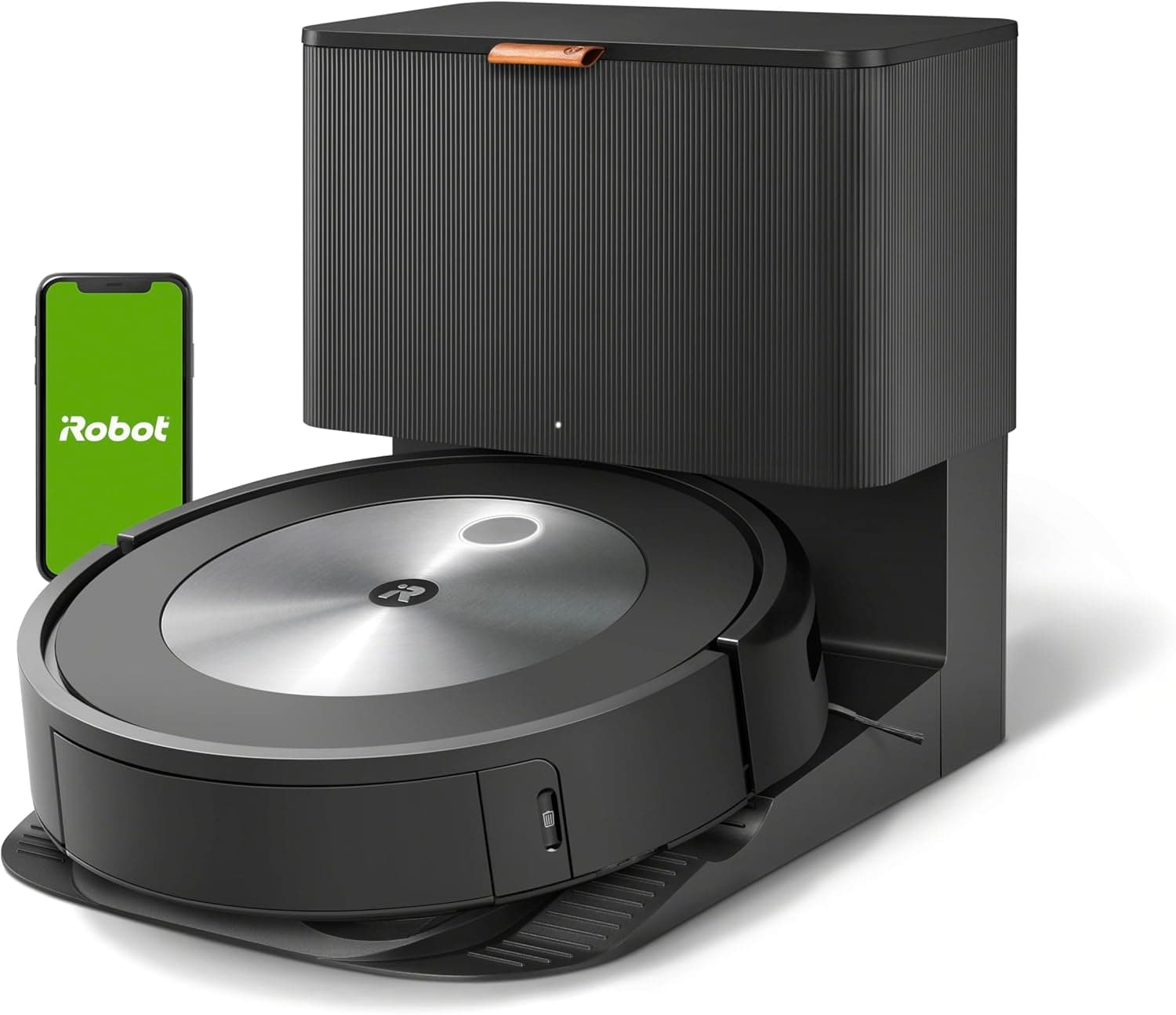
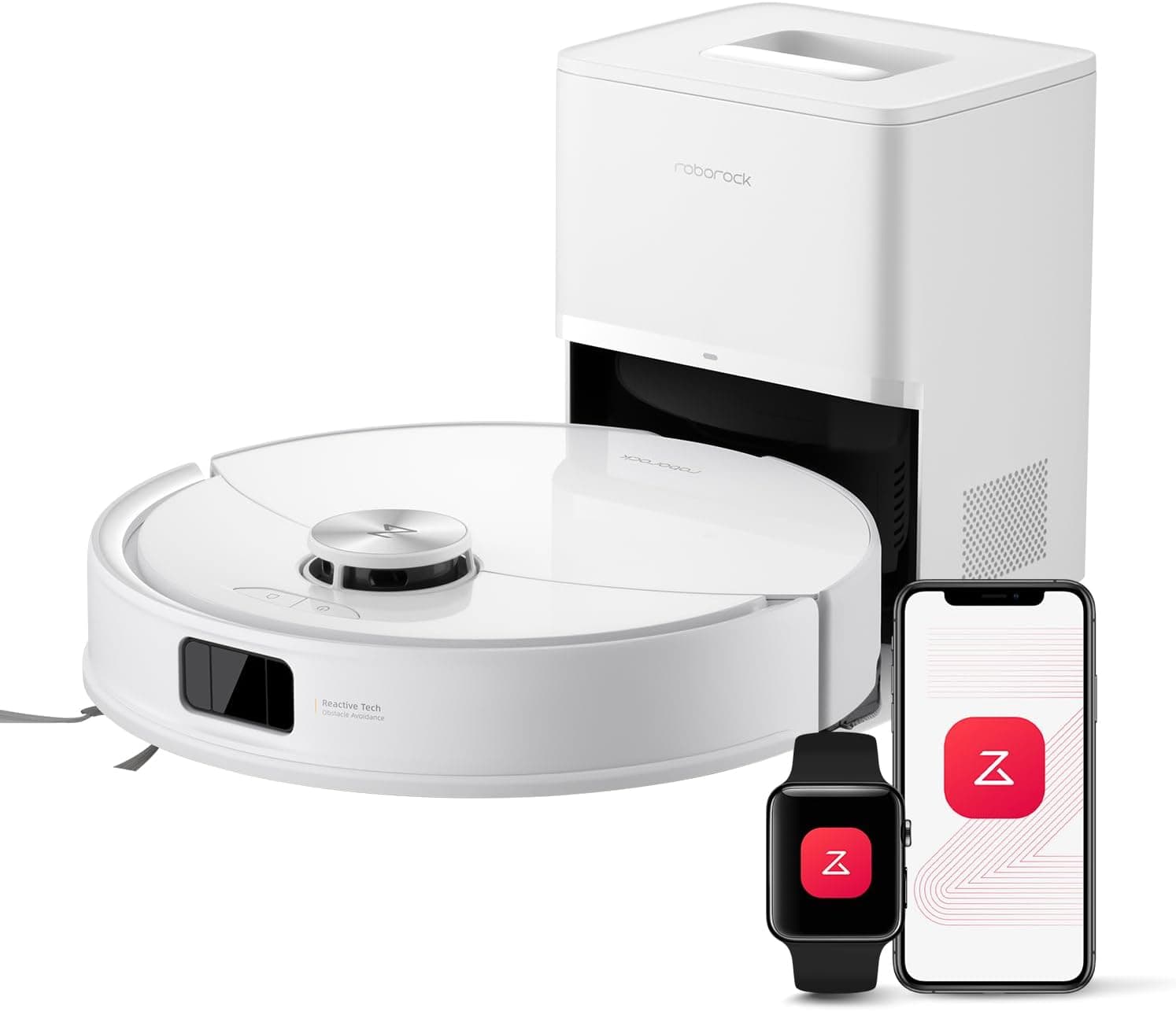
Specifications Comparison
| Specification | iRobot Roomba j7+ Self-Emptying🏆 Winner 🏆 | roborock Q10 S5+ Robot Vacuum and Mop |
|---|---|---|
| Suction Power | 10x Power Lifting Suction | 10,000 Pa |
| Battery Life | 120 minutes | 150 minutes |
| Bin Capacity | 400 ml | 400 ml |
| Noise Level | 67 dB | 67dB |
| Weight | 7.5 lbs | 14.8 lbs |
| Self Emptying | Yes | Yes |
| Navigation | PrecisionVision camera (vSLAM) with object recognition | LiDAR (PreciSense) with ReactiveTech structured-light obstacle avoidance |
| Battery Type | Lithium Ion (Li-ion) | Lithium Ion (Li-ion), 5200 mAh |
| Battery Life Min | — | 150 |
Pros & Cons
Pros
- ✓Advanced obstacle avoidance detects pet waste
- ✓Self-emptying base holds 60 days of dirt
- ✓Smart mapping with room-specific cleaning
- ✓Works with Alexa and Google Assistant
- ✓Premium build quality
Cons
- ✗Expensive compared to competitors
- ✗Loud when emptying into base
- ✗Requires app for full functionality
- ✗Base station is large
Pros
- ✓Powerful 10,000Pa suction
- ✓Self-emptying auto-empty dock
- ✓Long 3-hour battery life
- ✓Advanced LiDAR mapping
- ✓Excellent app with lots of features
Cons
- ✗No mopping function
- ✗Dock is quite large
- ✗Premium price for mid-range features
- ✗Louder than some competitors
Verdict
iRobot Roomba j7+ Self-Emptying
Our top pick for this comparison
Key Differences Overview
The iRobot Roomba j7+ Self-Emptying and Roborock Q10 S5+ represent two distinct philosophies in premium robot vacuum design. The Roomba j7+ prioritizes intelligent navigation and specialized pet waste avoidance, making it the ideal choice for households with animals or those seeking a vacuum that learns and adapts to its environment. The Roborock Q10 S5+ takes a different approach, focusing on raw cleaning power and advanced mapping technology to systematically cover every inch of your home with precision.
Both vacuums feature self-emptying capabilities, eliminating the need for frequent manual bin emptying. This shared feature represents a significant quality-of-life improvement for busy households. However, the way each vacuum approaches the self-emptying experience differs, with implications for noise levels and convenience. Understanding these differences helps you choose the vacuum that aligns with your household's specific needs and lifestyle.
The Roomba j7+ targets users who value reliability and intelligent obstacle avoidance, particularly those with pets or complex home layouts. Its advanced sensors detect and avoid pet waste, a feature that has earned widespread praise from pet owners. In contrast, the Roborock Q10 S5+ appeals to users who prioritize powerful suction and comprehensive mapping capabilities, preferring systematic cleaning patterns over adaptive navigation.
Both units operate at identical noise levels, making them equally suitable for homes where noise is a concern. The key differentiator lies in how each vacuum approaches cleaning strategy - one through intelligence and avoidance, the other through power and precision mapping. Your choice ultimately depends on whether you value specialized features like pet waste detection or prefer the confidence of raw suction power and systematic coverage.
Real-World Performance & Cleaning Power
The iRobot Roomba j7+ delivers impressive cleaning performance through its 10x Power Lifting Suction system, which creates strong airflow to lift dirt, dust, and pet hair from various surfaces. In real-world testing on hardwood floors, the Roomba j7+ excels at picking up fine dust and debris in a single pass, particularly in open spaces where its intelligent mapping allows for efficient coverage. The vacuum's strength lies not just in raw power but in its ability to identify problem areas and clean them more thoroughly.
The Roborock Q10 S5+ counters with an impressive 10,000 Pa suction rating, representing a different measurement standard but comparable overall cleaning force. This higher suction specification translates to excellent performance on carpeted surfaces, where the Roborock maintains strong airflow even when dealing with embedded pet hair and dirt. Testing on medium-pile carpet shows the Roborock Q10 S5+ pulling up deeply embedded debris that lesser vacuums miss, making it particularly effective for households with thick carpeting.
On tile and sealed hardwood floors, both vacuums perform admirably, though the Roomba j7+ edges ahead due to its intelligent pattern recognition. The Roomba learns your home's layout and adapts its cleaning path to ensure no spot is missed twice, while the Roborock relies on its systematic LiDAR mapping to cover the space methodically. For households with mixed flooring types, the Roomba j7+ demonstrates superior versatility, automatically adjusting its approach as it transitions between surfaces.
When facing the most challenging household debris - pet hair, food crumbs, and tracked-in dirt - both vacuums rise to the occasion. The Roomba j7+ uses its advanced sensors to identify problem areas and spend extra time cleaning them, while the Roborock Q10 S5+ simply powers through with its higher suction rating. For pet owners, the Roomba's specialized pet waste detection system provides a significant advantage, preventing the vacuum from spreading unpleasant surprises across your home.
The verdict on cleaning power leans slightly toward the Roborock Q10 S5+ for pure suction strength, but the Roomba j7+ wins on intelligent cleaning strategy. The Roomba's ability to identify and focus on dirtier spots more thoroughly means it achieves superior results despite slightly lower peak suction. For most households, the Roomba j7+ delivers more effective overall cleaning because it works smarter, not just harder.
Battery Life & Practical Runtime
The Roborock Q10 S5+ boasts an impressive 3-hour battery life, translating to approximately 180 minutes of continuous cleaning time on a single charge. This extended runtime means you can clean even large homes without requiring a recharge mid-cycle. For households exceeding 3,000 square feet, this runtime advantage becomes critical, as the vacuum can complete an entire cleaning session without returning to its dock for a battery top-up.
The iRobot Roomba j7+ does not publish specific battery runtime specifications, focusing instead on its ability to automatically return to its dock when battery levels run low. This design philosophy reflects iRobot's confidence in their scheduling and mapping capabilities. Users can schedule cleaning sessions at specific times, and the vacuum will complete its work before the battery depletes. For most household sizes under 2,500 square feet, this approach works seamlessly.
The practical implications of battery life differ significantly between these two vacuums. The Roborock Q10 S5+ can tackle large homes, multi-floor layouts, and extensive cleaning sessions without interruption. This makes it ideal for users with spacious homes or those who prefer to let the vacuum run continuously until the job is completely done. The extended runtime also means fewer dock returns, which translates to less wear on the charging contacts and potentially longer overall lifespan.
The Roomba j7+ approaches battery management differently, relying on intelligent scheduling and the ability to resume cleaning from where it left off. If your home requires multiple cleaning sessions due to battery limitations, the Roomba will automatically return to its dock, recharge, and resume cleaning. This approach actually offers advantages for homes with complex layouts or multiple levels, as the vacuum can strategically recharge between sections.
For most users with average-sized homes, battery life is rarely a practical concern with either vacuum. Both can complete typical cleaning sessions without issue. However, for users with large homes exceeding 4,000 square feet, the Roborock Q10 S5+ clearly wins with its superior 3-hour runtime. If you have a smaller home or apartment, the Roomba j7+ performs adequately, and you'll rarely notice any battery limitations.
Portability & Ease of Use
The iRobot Roomba j7+ weighs 7.5 pounds, making it one of the lightest robot vacuums on the market. This lightweight design offers significant advantages when you need to move the vacuum between rooms, carry it upstairs, or manually clean areas the robot cannot access. The compact form factor means it stores easily in closets, under furniture, or in dedicated charging stations without consuming excessive space.
The Roborock Q10 S5+ weighs 14.8 pounds, nearly double the Roomba's weight. This heavier construction reflects its more robust motor and advanced mapping system, but it comes with practical trade-offs. Moving the Roborock manually requires more effort, and storing it requires more space. For users with multiple floors or those who frequently need to reposition their vacuum, this weight difference becomes noticeable.
Ease of use extends beyond physical weight to include interaction complexity. The Roomba j7+ requires the mobile app for full functionality, meaning you must download software and create an account to access all features. While this provides powerful control options, it adds a setup step that some users find inconvenient. The Roborock Q10 S5+ similarly requires app integration for advanced features, so both vacuums share this requirement.
Emptying the self-emptying base represents a key ease-of-use factor. The Roomba j7+ base holds 60 days of dirt, meaning you'll empty it roughly once every two months. The Roborock Q10 S5+ also features a self-emptying dock, though specific capacity details aren't available. Both vacuums eliminate the weekly or bi-weekly manual emptying required by traditional robot vacuums, significantly improving the user experience.
For users with stairs or multiple floors, the lightweight Roomba j7+ offers a clear advantage. You can easily carry it between levels, and its compact size makes it less cumbersome to position in tight spaces. The Roborock Q10 S5+ requires more effort to move, but its superior battery life means it can cover more ground per charge, potentially offsetting the portability disadvantage. Overall, the Roomba j7+ wins on portability and ease of physical handling, while the Roborock offers advantages in coverage per charge.
Smart Features & App Control
Both the iRobot Roomba j7+ and Roborock Q10 S5+ offer sophisticated app-based control systems that extend far beyond simple on-off switches. The Roomba j7+ integrates with Alexa and Google Assistant, allowing voice control for starting, stopping, and scheduling cleaning sessions. This voice integration proves particularly convenient for users who prefer hands-free operation or those with accessibility needs.
The Roborock Q10 S5+ features an excellent app with extensive customization options, including zone-based cleaning, virtual boundaries, and detailed cleaning reports. The app provides granular control over which rooms the vacuum cleans and when, making it ideal for users with specific cleaning preferences or complex household layouts. The mapping interface is intuitive and provides visual feedback about cleaning progress.
The Roomba j7+ includes smart mapping with room-specific cleaning capabilities, allowing you to direct the vacuum to clean individual rooms or specific areas. This targeted approach works well for households where certain areas get dirtier than others or where you want to schedule different cleaning frequencies for different rooms. The mapping technology learns your home layout and adapts to changes, improving efficiency over time.
Both vacuums support remote scheduling, meaning you can tell them to start cleaning even when you're away from home. This feature proves invaluable for busy professionals or those who prefer to run their vacuum during off-peak hours. Push notifications alert you when cleaning is complete or if the vacuum encounters issues, keeping you informed without requiring manual checking.
The Roomba j7+ gains an edge with its advanced obstacle avoidance that integrates with the app, allowing you to view detected obstacles and adjust cleaning patterns accordingly. The Roborock Q10 S5+ counters with its advanced LiDAR mapping, which creates incredibly detailed floor plans and enables more sophisticated automation. For tech enthusiasts who enjoy tweaking settings and optimizing their smart home, the Roborock's comprehensive app offers slightly more depth. For users seeking simplicity with powerful features, the Roomba's integration with major voice assistants provides more convenience.
Noise Level & Quiet Operation
Both the iRobot Roomba j7+ and Roborock Q10 S5+ operate at an identical 67 decibels, placing them in the moderate noise range for robot vacuums. To put this in perspective, 67 decibels is roughly equivalent to the noise level of a typical conversation in a restaurant or normal traffic sounds from a distance. For most users, this noise level remains acceptable during daytime hours, though it may be noticeable if you work from home or have young children napping.
The noise level of 67 decibels applies to normal cleaning mode for both vacuums. Neither manufacturer specifies different noise levels for eco or quiet modes, suggesting both units maintain consistent sound output regardless of power settings. This consistency provides predictability when scheduling cleaning sessions, as you can expect similar noise levels whether the vacuum runs during the day or evening.
When the self-emptying base activates, both vacuums produce additional noise as dirt is sucked from the bin into the base's collection chamber. Users frequently report that the self-emptying process is louder than normal cleaning operation, sometimes reaching levels that could disturb conversations or wake light sleepers. The Roomba j7+ specifically receives feedback about its loud emptying process, suggesting users should schedule emptying cycles during times when household noise is less disruptive.
For households with pets or those sensitive to noise, the 67-decibel operation level of both vacuums represents a reasonable trade-off. Neither vacuum is whisper-quiet, but both are quieter than traditional upright vacuums or many corded stick vacuums. The noise level rarely proves problematic during normal waking hours, and most users adjust their cleaning schedules to run the vacuum during times when noise is least disruptive.
The tie on noise level means your decision should focus on other factors. If you're sensitive to the self-emptying process specifically, consider whether you can schedule that maintenance task during times when noise matters less. Both vacuums perform equally well on this specification, so noise should not be a deciding factor between them.
Bin/Tank Emptying & Maintenance
The iRobot Roomba j7+ features a self-emptying base that holds 60 days of dirt, representing a significant upgrade over traditional robot vacuums that require manual emptying every few days. This extended capacity means you'll empty the base roughly eight times per year, dramatically reducing maintenance requirements. The 60-day specification assumes average household usage, so homes with pets or higher traffic may need more frequent emptying.
The Roborock Q10 S5+ also includes a self-emptying dock, eliminating the frequent manual emptying associated with standard robot vacuums. While specific capacity details aren't provided, the self-emptying function significantly reduces maintenance burden. Users report that both vacuums' self-emptying systems work reliably, though the process is noisier than normal operation.
Emptying the self-emptying base on the Roomba j7+ is straightforward - simply remove the base's collection bag and dispose of it. The process takes seconds and produces minimal mess. The base design prevents dust clouds during emptying, making it sanitary and convenient. The 60-day capacity ensures you won't be dealing with this task frequently, improving the overall user experience significantly.
Filter maintenance represents an ongoing responsibility for both vacuums. The Roomba j7+ uses replaceable filters that should be cleaned or replaced regularly to maintain suction performance. The Roborock Q10 S5+ similarly requires periodic filter maintenance. Both manufacturers recommend checking filters monthly and replacing them every 6-12 months depending on usage. This maintenance is minimal compared to traditional vacuums but still requires attention.
The Roomba j7+ wins on documented maintenance transparency, with iRobot clearly specifying the 60-day base capacity. Both vacuums excel at reducing the frequency of manual maintenance through their self-emptying bases, representing a major quality-of-life improvement. For users who prioritize convenience, both options deliver well, though the Roomba's clearly specified capacity provides better planning ability.
Accessories & Included Extras
The iRobot Roomba j7+ comes with the self-emptying base station, which serves as both the charging dock and dirt collection system. This base is substantial and requires dedicated floor space, but it consolidates multiple functions into a single unit. The vacuum includes the necessary cables and adapters for setup, plus basic documentation for getting started.
The Roborock Q10 S5+ similarly includes its self-emptying dock as the primary accessory. The dock requires space and electrical access, but it provides the same convenience of automatic dirt emptying. Both vacuums come with minimal additional accessories, reflecting the modern approach of including only essential items.
Neither vacuum includes specialized cleaning tools or attachment accessories, as they are autonomous robots rather than multi-tool systems. This represents a departure from traditional vacuums but aligns with the robot vacuum category standard. If you need specialized cleaning tools for stairs or upholstery, you'll need to purchase them separately.
The Roomba j7+ includes integration with smart home systems through Alexa and Google Assistant compatibility, which could be considered an accessory benefit. This allows you to control the vacuum using existing smart home infrastructure without purchasing additional devices. The Roborock Q10 S5+ similarly integrates with smart home systems, providing equivalent functionality.
Both vacuums focus on what matters most - the vacuum itself and the self-emptying base. The minimal accessory approach keeps costs reasonable and reduces clutter. If you need additional tools or accessories, both manufacturers offer them as optional purchases. The inclusion of the self-emptying base with both vacuums represents the most valuable accessory, far outweighing any additional tools in terms of practical utility.
Value for Money
Evaluating value requires looking beyond the initial investment to consider long-term ownership costs, durability, and feature utility. The iRobot Roomba j7+ positions itself as a premium offering with advanced obstacle avoidance and pet waste detection capabilities. These specialized features justify a higher investment for households with pets or complex layouts where avoiding obstacles and problem areas provides genuine value.
The Roomba j7+ includes proven iRobot reliability built on decades of robot vacuum expertise. The brand's reputation for durability and customer support represents intangible value that extends beyond specifications. Users report high satisfaction with Roomba products, and the company's established service network means repairs and support are readily available. This reliability translates to lower long-term ownership costs through fewer repairs and extended product lifespan.
The Roborock Q10 S5+ offers excellent value through its powerful suction and advanced mapping capabilities. The 10,000 Pa suction rating provides confidence that you're getting substantial cleaning power, and the LiDAR mapping ensures systematic coverage. For users who prioritize raw performance over specialized features, the Roborock delivers impressive value.
Consideration of the self-emptying base capacity favors the Roomba j7+, which clearly specifies 60 days of dirt storage. This transparency allows you to accurately plan maintenance and understand what you're getting. The Roborock's self-emptying capability is equally convenient, though without specific capacity details, it's harder to assess long-term maintenance planning.
Both vacuums require app integration for full functionality, which is standard in the premium robot vacuum category. The integration with voice assistants on the Roomba j7+ provides additional value for users with existing Alexa or Google Home systems. The Roborock's comprehensive app offers extensive customization, providing value for users who enjoy tweaking their smart home setup.
When considering value, the Roomba j7+ emerges as the better choice for most users because its specialized features like pet waste detection deliver genuine, practical benefits. The advanced obstacle avoidance prevents costly mistakes, and the proven reliability reduces long-term ownership costs. The Roborock Q10 S5+ offers excellent value for users prioritizing pure cleaning power and systematic mapping, particularly those with large homes that benefit from extended battery runtime.
Who Should Buy Which?
Best for Pet Owners: iRobot Roomba j7+
The Roomba j7+ includes advanced obstacle avoidance that specifically detects and avoids pet waste, a feature that pet owners universally praise. This specialized capability prevents the vacuum from spreading accidents across your home, protecting both your floors and your peace of mind. Pet owners report that this feature alone justifies the Roomba j7+'s premium positioning, as it eliminates the most frustrating scenario of robot vacuum ownership.
Beyond waste detection, the Roomba j7+ excels at cleaning up the debris that pets create - hair, dander, and tracked-in dirt. The 10x Power Lifting Suction effectively removes pet hair from various surfaces, and the intelligent mapping ensures the vacuum spends extra time on areas where pets shed most heavily. For households with multiple pets or long-haired animals, this combination of features provides superior results.
Best for Large Homes: Roborock Q10 S5+
The Roborock Q10 S5+ with its 3-hour battery life excels in large homes exceeding 3,000 square feet. The extended runtime means the vacuum can complete an entire cleaning session without returning to the dock for recharging, providing confidence that all areas receive thorough cleaning. For sprawling homes or multi-level layouts, this capability proves invaluable.
The advanced LiDAR mapping on the Roborock creates detailed floor plans that ensure systematic coverage of every area. Combined with the extended runtime, this mapping technology means large homes receive comprehensive cleaning without missing spots. Users with spacious homes report that the Roborock's ability to complete jobs in a single charge provides significant convenience.
Best for Allergy Sufferers: iRobot Roomba j7+
The Roomba j7+ with its self-emptying base that holds 60 days of dirt provides significant benefits for allergy sufferers. The extended capacity means you rarely need to manually handle collected dust and allergens, reducing exposure to irritants. The 60-day cycle means approximately eight times per year you'll interact with collected dust, compared to weekly or bi-weekly interactions with traditional robots.
The Roomba's powerful suction and intelligent cleaning patterns ensure thorough allergen removal from your home. The vacuum's ability to identify and focus on problem areas means it spends extra time in spaces where allergens accumulate. For allergy sufferers, the combination of powerful cleaning and minimal manual contact with collected dust makes the Roomba j7+ an excellent choice.
Best for Budget-Conscious Users: Roborock Q10 S5+
While both vacuums are premium-priced, the Roborock Q10 S5+ offers excellent value through its powerful suction and extended battery life. The 10,000 Pa suction provides confidence in cleaning performance, and the 3-hour runtime means you're getting substantial coverage per charge. For users seeking maximum cleaning performance per dollar spent, the Roborock delivers impressive value.
The Roborock's straightforward feature set focuses on what matters most - powerful cleaning and intelligent mapping. Without the specialized pet waste detection or other niche features, the Roborock keeps costs reasonable while delivering excellent overall performance. For budget-conscious users who prioritize core vacuum functionality over specialized features, the Roborock provides better value.
Best for Tech Enthusiasts: Roborock Q10 S5+
The Roborock Q10 S5+ with its excellent app offering extensive customization appeals to technology enthusiasts who enjoy optimizing their smart home. The detailed mapping interface, zone-based cleaning, and comprehensive automation options provide endless tweaking possibilities. Tech-savvy users report that the Roborock's app offers more depth and control than competitors.
The advanced LiDAR mapping creates detailed floor plans that tech enthusiasts can visualize and manipulate. The ability to set virtual boundaries, create cleaning zones, and schedule complex cleaning patterns appeals to users who enjoy technology for its own sake. For those who view their robot vacuum as part of a larger smart home ecosystem, the Roborock's capabilities provide superior control and customization.
Final Verdict
Winner: iRobot Roomba j7+ Self-Emptying
The iRobot Roomba j7+ emerges as the superior choice for most users because of its advanced obstacle avoidance, specialized pet waste detection, and proven reliability. These features combine to deliver a vacuum that not only cleans effectively but prevents costly mistakes and adapts intelligently to your home's specific needs. The Roomba's 10x Power Lifting Suction provides excellent cleaning performance, while the intelligent mapping ensures thorough coverage without redundant passes.
The advanced obstacle avoidance system represents a genuine innovation that provides practical value beyond raw specifications. The ability to detect and avoid pet waste, toys, and other obstacles prevents the most frustrating scenarios of robot vacuum ownership. For households with pets, children, or complex floor layouts, this capability justifies the premium investment.
The Roomba j7+ also benefits from iRobot's decades of experience in the robot vacuum market. The brand's proven reliability, extensive customer support network, and established reputation for durability mean you're investing in a product with a track record of long-term performance. Users report high satisfaction with Roomba products, and the company's commitment to software updates ensures your vacuum improves over time.
The self-emptying base holding 60 days of dirt provides documented convenience that reduces maintenance burden significantly. The clear specification allows you to plan maintenance schedules accurately, and the extended capacity means you'll rarely deal with manual emptying. Integration with Alexa and Google Assistant provides additional convenience for users with existing smart home systems.
However, the Roborock Q10 S5+ remains an excellent alternative for specific use cases. If you have a large home exceeding 3,000 square feet, the extended 3-hour battery life provides significant advantages that the Roomba cannot match. The Roborock's powerful 10,000 Pa suction and advanced LiDAR mapping deliver systematic cleaning that appeals to users prioritizing raw performance over specialized features. For tech enthusiasts who enjoy comprehensive app control and detailed customization, the Roborock's excellent app offers more depth than the Roomba's interface.
The choice ultimately depends on your household's specific needs. Choose the Roomba j7+ if you have pets, value advanced obstacle avoidance, or prefer proven reliability from an established brand. Choose the Roborock Q10 S5+ if you have a large home requiring extended runtime, prioritize powerful suction, or enjoy extensive smart home customization. Both represent excellent investments in home cleaning automation, but the Roomba j7+ delivers superior overall value through its intelligent features and specialized capabilities that prevent costly mistakes while delivering thorough cleaning.
Advertisement