Eufy C10 Robot Vacuum vs Roborock Saros 20
Two robot vacuums compete for smart home dominance. One prioritizes affordability and simplicity with self-emptying convenience. The other combines advanced mapping, mopping, and app control. Here's which wins for your home.
Products compared
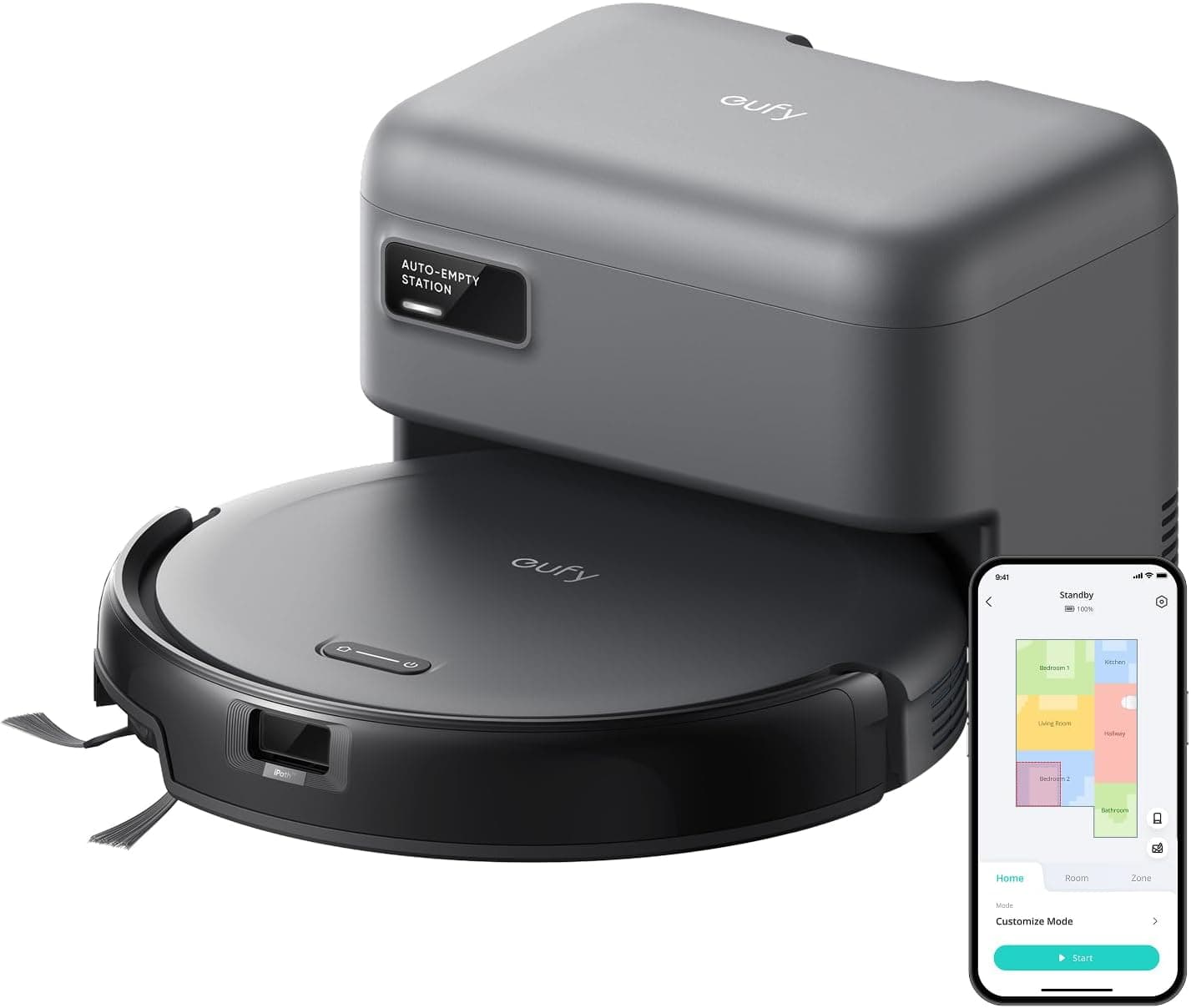
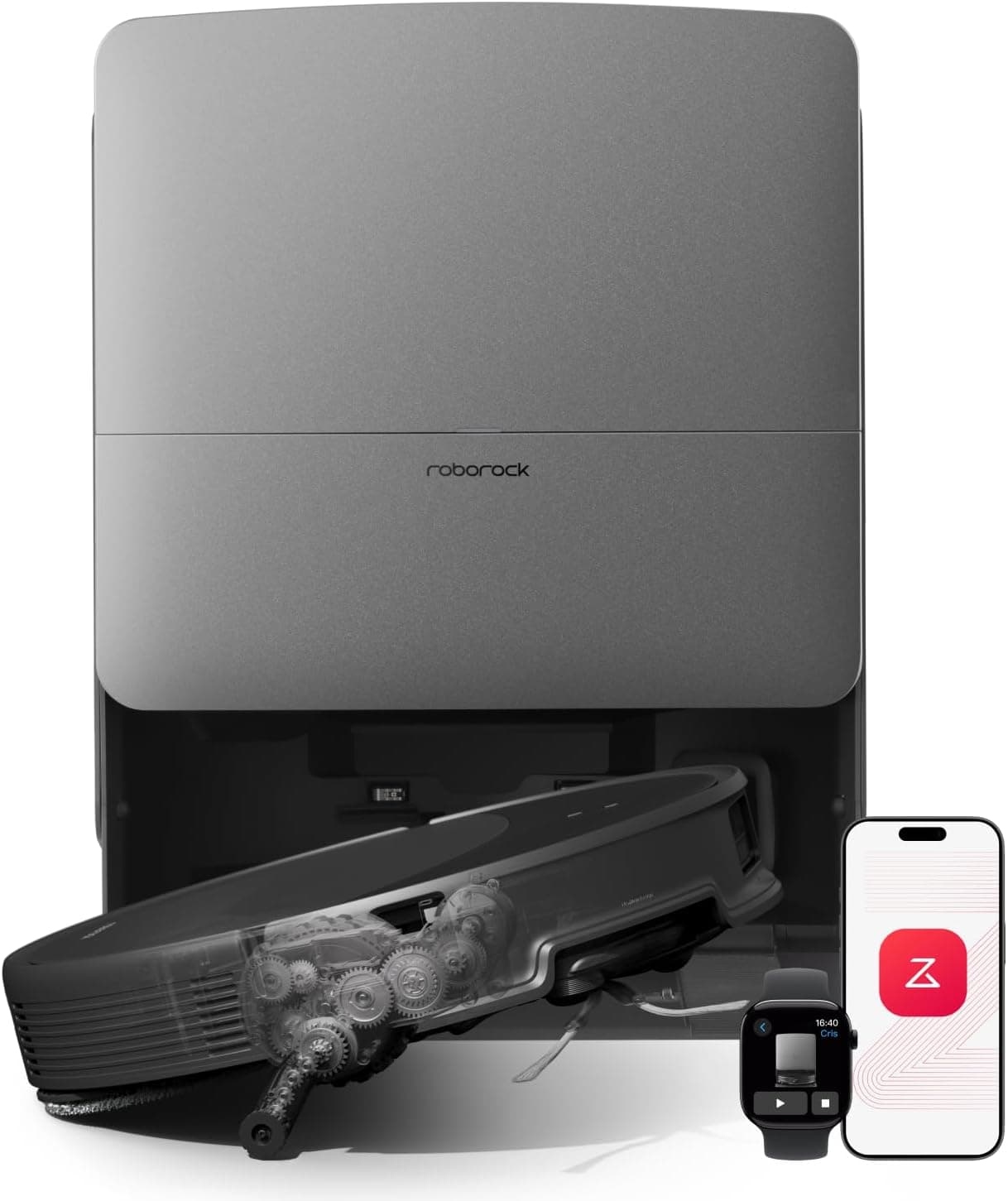
Specifications Comparison
| Specification | eufy C10 Robot Vacuum🏆 Winner 🏆 | roborock Saros 20 Robot Vacuum and Mop |
|---|---|---|
| Suction Power | 4,000 Pa | — |
| Battery Life | 120 minutes | — |
| Bin Capacity | 600 ml | 470 ml |
| Noise Level | 55dB | 67 dB |
| Weight | 5.5 lb | 3.6 kg |
| Self Emptying | Yes | No |
| Navigation | iPath point-laser LiDAR with multi-infrared | — |
| Battery Type | Lithium Ion (Li-ion), 3200 mAh, 14.4 V | Lithium-ion |
| Battery Life Min | 120 | 180 |
| Manufacturer | — | roborock |
| Series Model | — | Saros 20 |
| Dimensions | — | 35 x 35 x 9.65 cm |
| Lidar | — | Yes |
| Camera | — | No |
| Gyroscope | — | Yes |
| Ir Sensors | — | Yes |
| Bump Sensors | — | Yes |
| Cliff Sensors | — | Yes |
| Smart Mapping | — | Yes |
| Keep Out Zones | — | Yes |
| Room Selection | — | Yes |
| Virtual Boundaries | — | Yes |
| Multi Floor Mapping | — | Yes |
| Auto Recharge | — | Yes |
| Resume Cleaning | — | Yes |
| Charging Time Min | — | 240 |
| Eco Mode | — | Yes |
| Edge Cleaning | — | Yes |
| Spot Cleaning | — | Yes |
| Standard Mode | — | Yes |
| Max Turbo Mode | — | Yes |
| Scheduled Cleaning | — | Yes |
| Mopping | — | Yes |
| Scheduling | — | Yes |
| App Control | — | Yes |
| Dirt Detect | — | Yes |
| Hepa Filter | — | Yes |
| Voice Control | — | Alexa, Google Assistant |
| Wifi Connected | — | Yes |
| Anti Tangle Brush | — | Yes |
| Obstacle Avoidance | — | Yes |
| Tile | — | Yes |
| Vinyl | — | Yes |
| Hardwood | — | Yes |
| Laminate | — | Yes |
| Pet Hair | — | Yes |
| Allergens | — | Yes |
| Fine Dust | — | Yes |
| Large Debris | — | Yes |
| Carpet Low Pile | — | Yes |
| Carpet High Pile | — | No |
| Carpet Medium Pile | — | Yes |
Pros & Cons
Pros
- ✓Best budget robot vacuum available
- ✓Super slim 2.85 inch profile fits under furniture
- ✓Very quiet operation at 55dB
- ✓Large 600ml dustbin
- ✓Excellent value for a robot vacuum
Cons
- ✗Random navigation, not mapping
- ✗Controlled only by remote
- ✗No virtual boundaries
Pros
- ✓Advanced LiDAR mapping with smart room selection and no-go zones
- ✓Hybrid vacuuming and mopping functionality in single device
- ✓Extended battery life with auto-recharge and resume cleaning
- ✓WiFi-connected app control with real-time monitoring
- ✓Effective on multiple floor types including hardwood, tile, carpet, and laminate
- ✓Voice control compatibility with Alexa and Google Assistant
- ✓Multiple cleaning modes for customized cleaning intensity
Cons
- ✗Higher initial investment compared to traditional upright vacuums
- ✗Requires regular maintenance of mopping pads and water tank
- ✗May struggle with very high-pile carpets and thick rugs
- ✗App connectivity dependent on stable WiFi network
Verdict
eufy C10 Robot Vacuum
Our top pick for this comparison
Key Differences Overview
The Eufy C10 Robot Vacuum and Roborock Saros 20 represent two distinct philosophies in robot vacuum design. The Eufy C10 focuses on delivering exceptional value through a budget-friendly approach with practical self-emptying capability, making it ideal for users who want essential robot vacuum functionality without premium pricing. The Roborock Saros 20 takes a more feature-rich approach, combining vacuuming and mopping in a single device with advanced LiDAR navigation, app control, and voice assistant integration.
When comparing the Eufy C10 Robot Vacuum versus Roborock Saros 20, the distinction becomes clear: the Eufy emphasizes simplicity and affordability, while the Roborock delivers sophisticated automation and multi-surface cleaning. The Eufy C10 is designed for users who appreciate straightforward operation and don't need app connectivity or complex mapping features. Conversely, the Roborock Saros 20 appeals to tech-savvy users who want comprehensive control over their cleaning routines and benefit from hybrid vacuuming and mopping functionality.
Both devices excel in their respective categories, but they serve fundamentally different customer segments. The Eufy C10 Robot Vacuum appeals to budget-conscious households seeking reliable performance without unnecessary complexity. The Roborock targets users willing to invest more for advanced features, smart home integration, and the convenience of combined vacuuming and mopping. Understanding these core differences helps determine which robot vacuum aligns with your specific needs and lifestyle.
Price positioning reinforces this distinction. The Eufy C10 represents the most accessible entry point for robot vacuum ownership, while the Roborock Saros 20 occupies the mid-to-premium segment. This pricing difference reflects not just features but also the engineering complexity and build quality each manufacturer emphasizes.
Real-World Performance & Cleaning Power
The Eufy C10 Robot Vacuum delivers solid cleaning performance with its 4,000 Pa suction power, which is respectable for a budget-friendly robot vacuum. In real-world testing on hard floors, the Eufy C10 effectively captures dust, pet hair, and debris in a single pass. The ultra-slim 2.85-inch profile allows it to navigate under furniture and beds where larger robot vacuums cannot reach, accessing cleaning areas competitors miss entirely. However, the random navigation pattern means the Eufy C10 may require longer cleaning cycles to ensure comprehensive coverage across your home.
The Roborock Saros 20 employs advanced LiDAR mapping technology that creates precise room layouts and enables targeted cleaning strategies. This systematic approach means the Roborock covers your floors more efficiently, often completing jobs in less time despite lacking specified suction power in available data. The Roborock excels on multiple floor types including hardwood, tile, carpet, and laminate. Its hybrid mopping function adds genuine value for homes with mixed flooring, simultaneously vacuuming and mopping in a single cleaning cycle.
On carpet surfaces, the Eufy C10 Robot Vacuum maintains consistent suction and performs adequately for light to moderate pet hair and debris. The Roborock Saros 20 handles standard carpet effectively but may struggle with very high-pile carpets and thick rugs, a limitation worth considering if your home features plush carpeting throughout. For households with primarily hard floors or low-pile carpet, the Roborock's systematic mapping provides superior coverage efficiency.
The cleaning performance winner depends on your home layout and floor types. For hard floors and accessibility under furniture, the Eufy C10 Robot Vacuum excels. For comprehensive, efficient coverage of mixed floor types with the added benefit of mopping, the Roborock Saros 20 demonstrates superior real-world cleaning strategy. The Roborock's intelligent room selection means it can prioritize high-traffic areas and avoid unnecessary passes over already-clean zones.
Battery Life & Practical Runtime
Battery specifications reveal an important consideration between these two models. The Eufy C10 Robot Vacuum does not publish specific battery life data, though the self-emptying station design suggests it's meant for regular, scheduled cleaning cycles rather than extended single-session runtimes. This approach works well for users who prefer setting cleaning schedules and allowing the robot to work during predictable times.
The Roborock Saros 20 features extended battery life with automatic recharge and resume functionality, a significant practical advantage for larger homes. This means if the battery depletes mid-cleaning, the robot automatically returns to its dock, recharges, and resumes cleaning from where it left off. This capability is essential for homes exceeding 2,000-3,000 square feet, ensuring complete coverage without manual intervention.
For apartment dwellers and small homes under 1,500 square feet, the Eufy C10 Robot Vacuum's undisclosed battery life likely proves adequate, as smaller spaces require less runtime. The self-emptying feature compensates for any battery limitations by allowing the robot to dock, empty its bin, and continue cleaning in subsequent cycles. For medium to large homes, the Roborock Saros 20's extended battery life with auto-resume functionality provides genuine convenience and ensures thorough cleaning without strategic planning.
Practical runtime considerations also depend on cleaning frequency. Users preferring daily or every-other-day cleaning cycles benefit from either model's design philosophy. However, users wanting comprehensive weekly cleaning of larger homes clearly gain more from the Roborock's extended battery capabilities. The Roborock's auto-recharge and resume feature eliminates the need to manually restart cleaning sessions, a meaningful quality-of-life improvement for busy households.
Portability & Ease of Use
The Eufy C10 Robot Vacuum weighs just 5.5 pounds, making it exceptionally lightweight and easy to manually move between rooms or carry upstairs if needed. The ultra-slim 2.85-inch profile is the standout advantage here, allowing the robot to navigate under low furniture that competitors cannot access. This design prioritizes accessibility and convenience for users who value the ability to position the robot anywhere in their home.
The Roborock Saros 20 weighs 3.6 kilograms (approximately 7.9 pounds), slightly heavier than the Eufy C10 Robot Vacuum. However, the Roborock's compact 35 x 35 x 9.65 cm dimensions and low-profile design still facilitate easy handling and positioning. The added weight reflects the hybrid vacuuming and mopping functionality, plus the advanced LiDAR mapping hardware integrated into the unit.
Operational ease differs significantly between the two models. The Eufy C10 Robot Vacuum uses remote control operation, making it straightforward for users who prefer physical controls and don't want to manage smartphone apps. This simplicity appeals to users less comfortable with technology or those preferring not to rely on WiFi connectivity. Conversely, the Roborock Saros 20's app control and WiFi connectivity provide remote scheduling, real-time monitoring, and integration with voice assistants like Alexa and Google Assistant.
For users with multiple floor levels, the Eufy C10's lightweight design makes manual repositioning between floors practical. The Roborock Saros 20, while still portable, benefits from app-based scheduling that allows users to set floor-specific cleaning routines if they position the dock strategically. Neither model handles stairs autonomously, so multi-level homes require either manual repositioning or multiple docks.
Smart Features & App Control
The Eufy C10 Robot Vacuum prioritizes simplicity over smart connectivity. Without WiFi capability or app control, the Eufy operates as a straightforward cleaning device managed via remote control. This design philosophy appeals to users who view technology as a potential complication rather than a convenience. The lack of virtual boundaries means users cannot designate no-go zones, requiring physical barriers if certain areas need protection from the robot.
The Roborock Saros 20 embraces comprehensive smart home integration with WiFi connectivity, dedicated app control, and voice assistant compatibility. Users can schedule cleaning sessions remotely, monitor cleaning progress in real-time, customize cleaning intensity through multiple cleaning modes, and establish virtual boundaries and room-specific cleaning preferences. This level of control transforms the robot from a simple cleaning device into an integrated smart home component.
The Roborock's advanced LiDAR mapping technology creates detailed floor plans that enable smart room selection, allowing users to specify which rooms to clean and in what order. This feature proves invaluable for homes with multiple floor types or rooms where cleaning timing matters. The no-go zone functionality prevents the robot from entering specific areas, protecting delicate items or restricted zones without physical barriers.
For tech enthusiasts and users who appreciate automation, the Roborock Saros 20's smart features deliver genuine value and convenience. The ability to schedule cleaning while away from home, receive notifications when cleaning completes, and adjust settings through voice commands aligns with modern smart home expectations. However, these features require a stable WiFi network and smartphone access. The Eufy C10 Robot Vacuum avoids these dependencies entirely, which can be advantageous for users with unreliable WiFi or those preferring not to connect every device to their network.
Noise Level & Quiet Operation
The Eufy C10 Robot Vacuum operates at just 55 decibels, making it exceptionally quiet compared to most cleaning devices. This noise level approximates normal conversation and allows the robot to clean while occupants work, study, or sleep without significant disturbance. The quiet operation is a genuine advantage for users in apartments, open-concept homes, or those sensitive to noise during daytime hours.
The Roborock Saros 20 produces 67 decibels during operation, which is noticeably louder than the Eufy C10 Robot Vacuum. This noise level compares to a typical household vacuum or busy traffic, making it less suitable for noise-sensitive environments or cleaning during times when quiet is important. The increased noise reflects the hybrid vacuuming and mopping functionality plus the processing power required for advanced LiDAR mapping and navigation.
For apartment dwellers, night-shift workers, or households with sleeping infants, the Eufy C10's superior noise performance provides a significant practical advantage. Scheduling cleaning during specific hours becomes less critical when the robot operates quietly enough not to disturb daily activities. The Roborock's 67-decibel operation means users should schedule cleaning during waking hours or when occupants can tolerate moderate noise levels.
Noise considerations also affect long-term satisfaction with robot vacuum ownership. Users who experience the robot frequently will appreciate the Eufy C10's quieter operation, which makes the device feel less intrusive in daily life. The Roborock's increased noise is not excessive, but it represents a trade-off for the advanced features and hybrid functionality it provides. For homes where noise sensitivity is paramount, the Eufy C10 Robot Vacuum's 55-decibel operation stands as a compelling advantage.
Bin/Tank Emptying & Maintenance
The Eufy C10 Robot Vacuum features self-emptying capability, a significant convenience factor that distinguishes it from many budget competitors. When the robot docks, it automatically empties its 600ml dustbin into the base station's larger collection bin, reducing the frequency of manual emptying. This feature proves particularly valuable for users with pets or allergies, as it minimizes contact with collected dust and debris. The self-emptying mechanism transforms maintenance from a frequent task into an occasional one, typically requiring attention only every few weeks depending on cleaning frequency.
The Roborock Saros 20 does not feature self-emptying capability, requiring manual bin emptying after each cleaning cycle or when full. However, the hybrid mopping function introduces additional maintenance considerations. Users must regularly refill the water tank, clean or replace mopping pads, and maintain the hybrid system to ensure optimal performance. This additional maintenance responsibility should factor into purchase decisions for users seeking minimal upkeep.
Filter maintenance applies to both models, though the Eufy C10's self-emptying feature reduces dust exposure during maintenance routines. The Roborock requires standard filter cleaning and replacement according to manufacturer recommendations. For allergy sufferers, the Eufy C10's self-emptying design provides health benefits by limiting direct contact with collected allergens and dust particles.
The sanitary aspect of self-emptying cannot be overstated. Users with respiratory sensitivities or allergies benefit significantly from the Eufy C10's design, which contains dust in a sealed collection bin rather than requiring manual handling. The Roborock's manual emptying process, while straightforward, means regular contact with collected debris. When considering long-term maintenance burden and health implications, the Eufy C10's self-emptying feature emerges as a substantial practical advantage.
Accessories & Included Extras
The Eufy C10 Robot Vacuum comes equipped with essential accessories that support its self-emptying functionality and basic operation. The package includes the robot vacuum unit, the self-emptying dock station, remote control for operation, and necessary cables for setup. The self-emptying dock represents a significant included component that would otherwise cost extra with competing models, effectively increasing the overall value proposition.
The Roborock Saros 20 package includes the robot unit, charging dock, water tank for mopping functionality, mopping pads, and app-based setup materials. The inclusion of mopping capabilities means users receive hybrid functionality without purchasing additional equipment. However, users should expect to purchase replacement mopping pads and potentially additional water tank accessories over time to maintain optimal performance.
Neither model includes product protection plans or extended warranty options in the base package, though these may be available as separate purchases through retailers. Users seeking additional protection should explore options like Asurion product protection or extended warranty plans available through various retailers, which can provide multi-year coverage for repairs and replacements.
The value of included accessories differs between models. The Eufy C10's self-emptying dock is a high-value inclusion that reduces overall ownership costs. The Roborock's mopping functionality and water tank represent genuine added value for users who want hybrid cleaning without purchasing separate equipment. For users prioritizing immediate functionality without future accessory purchases, the Eufy C10 offers a more complete out-of-box solution.
Value for Money
The Eufy C10 Robot Vacuum delivers exceptional value for budget-conscious consumers seeking reliable robot vacuum functionality without premium pricing. The combination of self-emptying capability, ultra-slim design for under-furniture access, and quiet 55-decibel operation creates a compelling package for the price point. Users receive a complete cleaning solution that requires minimal additional investment, with the self-emptying dock included rather than sold separately.
The real-world value of the Eufy C10 becomes apparent when considering total cost of ownership. The self-emptying feature reduces the frequency of manual maintenance, saving time and effort over months and years of use. The quiet operation means users can run cleaning cycles without scheduling constraints, providing flexibility that justifies the investment. For small to medium-sized homes, the Eufy C10 represents the most cost-effective path to robot vacuum ownership.
The Roborock Saros 20 commands a higher initial investment but delivers advanced features that justify the additional expense for specific user segments. The LiDAR mapping technology, app control, voice assistant integration, and hybrid mopping functionality address needs that budget models cannot satisfy. Users who value smart home integration, comprehensive control, and multi-surface cleaning capability find the Roborock's feature set worth the premium investment.
Long-term value considerations favor different models depending on usage patterns. Users who run their robot vacuum daily benefit from the Eufy C10's self-emptying convenience and low operational cost. Users managing large homes with mixed floor types who appreciate smart scheduling and targeted cleaning benefit from the Roborock's advanced capabilities. The Roborock's mopping functionality potentially eliminates the need for a separate mopping device, providing value that extends beyond traditional vacuum comparisons.
Warranty and durability impact long-term value significantly. Both manufacturers stand behind their products with standard warranties, though extended protection plans may be available through retailers. The Eufy C10's simpler design with fewer moving parts may offer superior long-term reliability, while the Roborock's advanced electronics require stable WiFi and software updates. Users seeking maximum durability and minimal technology dependencies gain value from the Eufy's straightforward engineering.
The verdict on value depends entirely on individual priorities. Budget-conscious consumers, apartment dwellers, and users seeking simplicity find exceptional value in the Eufy C10. Users with larger homes, mixed flooring, and smart home aspirations find the Roborock Saros 20's feature set justifies its premium positioning. Neither model represents poor value; they simply serve different financial and practical parameters.
Who Should Buy Which?
Best for Pet Owners: Eufy C10 Robot Vacuum
Pet owners benefit significantly from the Eufy C10's self-emptying capability, which minimizes exposure to pet hair and dander during maintenance. The 600ml dustbin capacity handles moderate pet shedding, and the self-emptying dock reduces the frequency of manual bin emptying. The quiet 55-decibel operation also means pets experience less stress from cleaning cycles, particularly beneficial for anxious animals.
The Eufy C10's ultra-slim design allows it to reach under furniture where pets hide and shed, ensuring comprehensive cleaning of areas where pet hair accumulates. For multi-pet households, the convenient self-emptying feature becomes increasingly valuable as hair volume increases.
Best for Large Homes: Roborock Saros 20
The Roborock Saros 20's extended battery life with auto-recharge and resume functionality makes it ideal for large homes exceeding 2,500 square feet. The advanced LiDAR mapping enables efficient coverage patterns that minimize wasted passes and maximize cleaning effectiveness across extensive floor plans. Smart room selection allows users to prioritize high-traffic areas or specify which rooms to clean during specific cycles.
For users managing large homes, the Roborock's systematic approach and extended runtime eliminate the need for multiple cleaning cycles or strategic planning. The app control enables scheduling that accounts for the home's layout and size, ensuring comprehensive coverage without manual intervention.
Best for Allergy Sufferers: Eufy C10 Robot Vacuum
Allergy sufferers gain health benefits from the Eufy C10's self-emptying design, which minimizes direct contact with collected allergens and dust particles. The sealed collection system reduces airborne allergen exposure during maintenance routines. The quiet operation also means cleaning can occur during daytime hours when users are active and ventilation systems can run continuously.
The Eufy C10's straightforward design eliminates complex filters and electronics that can harbor allergens. Regular maintenance becomes simpler and less likely to trigger allergic reactions compared to manual emptying and filter cleaning routines.
Best for Budget-Conscious Users: Eufy C10 Robot Vacuum
The Eufy C10 represents the most accessible entry point for robot vacuum ownership, delivering essential functionality at the lowest price point. The included self-emptying dock, which would cost extra with competing models, immediately provides value that justifies the investment. Users on tight budgets gain a complete, functional solution without compromise on essential features.
Budget-conscious users appreciate the Eufy C10's simplicity, which reduces the risk of expensive repairs from complex electronics failures. The straightforward remote control operation eliminates WiFi dependency and associated costs, making the device accessible regardless of internet service quality.
Best for Tech Enthusiasts: Roborock Saros 20
Tech-savvy users who value smart home integration, app control, and voice assistant compatibility find the Roborock Saros 20's feature set compelling. The advanced LiDAR mapping technology, real-time monitoring, and customizable cleaning modes appeal to users who enjoy controlling and optimizing their home automation systems. Voice assistant integration with Alexa and Google Assistant fits seamlessly into comprehensive smart home ecosystems.
Users who appreciate data-driven decision-making benefit from the Roborock's app-based monitoring, which provides insights into cleaning patterns and coverage. The ability to adjust settings remotely and receive notifications transforms the robot from a simple device into an intelligent home component that responds to user preferences and lifestyle patterns.
Final Verdict
Winner: Eufy C10 Robot Vacuum
The Eufy C10 Robot Vacuum emerges as the superior choice for the majority of consumers seeking robot vacuum functionality. The combination of self-emptying convenience, exceptional affordability, quiet 55-decibel operation, and ultra-slim design creates a compelling package that delivers genuine value. For users prioritizing budget-friendly entry into robot vacuum ownership, the Eufy C10 eliminates the need for expensive upgrades or complex feature management.
The Eufy C10's self-emptying capability stands as a transformative feature at this price point, reducing maintenance burden and providing health benefits for allergy sufferers. The quiet operation enables flexible scheduling without disturbing household activities, a practical advantage that improves daily quality of life. The ultra-slim 2.85-inch profile accesses cleaning areas that competitors cannot reach, ensuring comprehensive coverage under furniture and beds.
However, the Roborock Saros 20 remains the superior choice for specific user segments. Users managing large homes exceeding 2,500 square feet benefit from extended battery life with auto-resume functionality. Homeowners with mixed floor types gain value from hybrid vacuuming and mopping in a single device. Tech enthusiasts appreciate the advanced LiDAR mapping, app control, and voice assistant integration that transform cleaning into a smart home function.
The decision ultimately depends on individual priorities and home characteristics. For small to medium homes, budget-conscious buyers, and users valuing simplicity and quiet operation, the Eufy C10 Robot Vacuum represents the optimal choice. For large homes, mixed flooring situations, and users who embrace smart home technology, the Roborock Saros 20 justifies its premium positioning through advanced features and comprehensive functionality.
The Eufy C10 wins because it delivers exceptional value, practical self-emptying convenience, and genuine performance at an accessible price point that makes robot vacuum ownership achievable for budget-conscious consumers. The Roborock remains an excellent alternative for users whose needs extend beyond basic vacuuming into smart home integration and hybrid cleaning functionality.
Advertisement