Dyson Car+Boat Handheld Vacuum vs BLACK+DECKER Dustbuster AdvancedClean+
Choosing between a specialized automotive vacuum and a versatile handheld cleaner requires understanding your priorities. The Dyson Car+Boat targets vehicle owners, while the BLACK+DECKER Dustbuster AdvancedClean+ offers broader household flexibility. Here's our expert breakdown.
Products compared
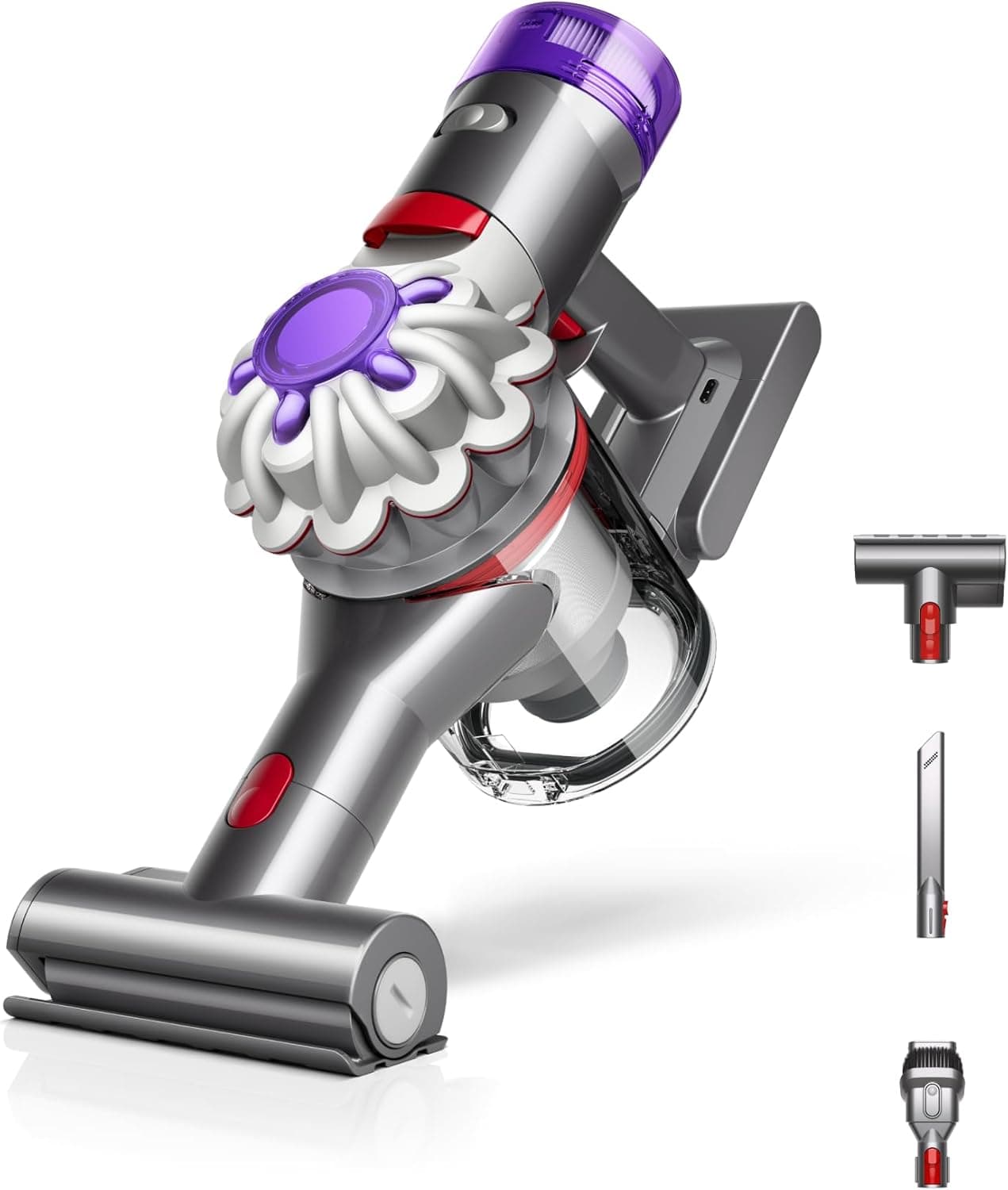
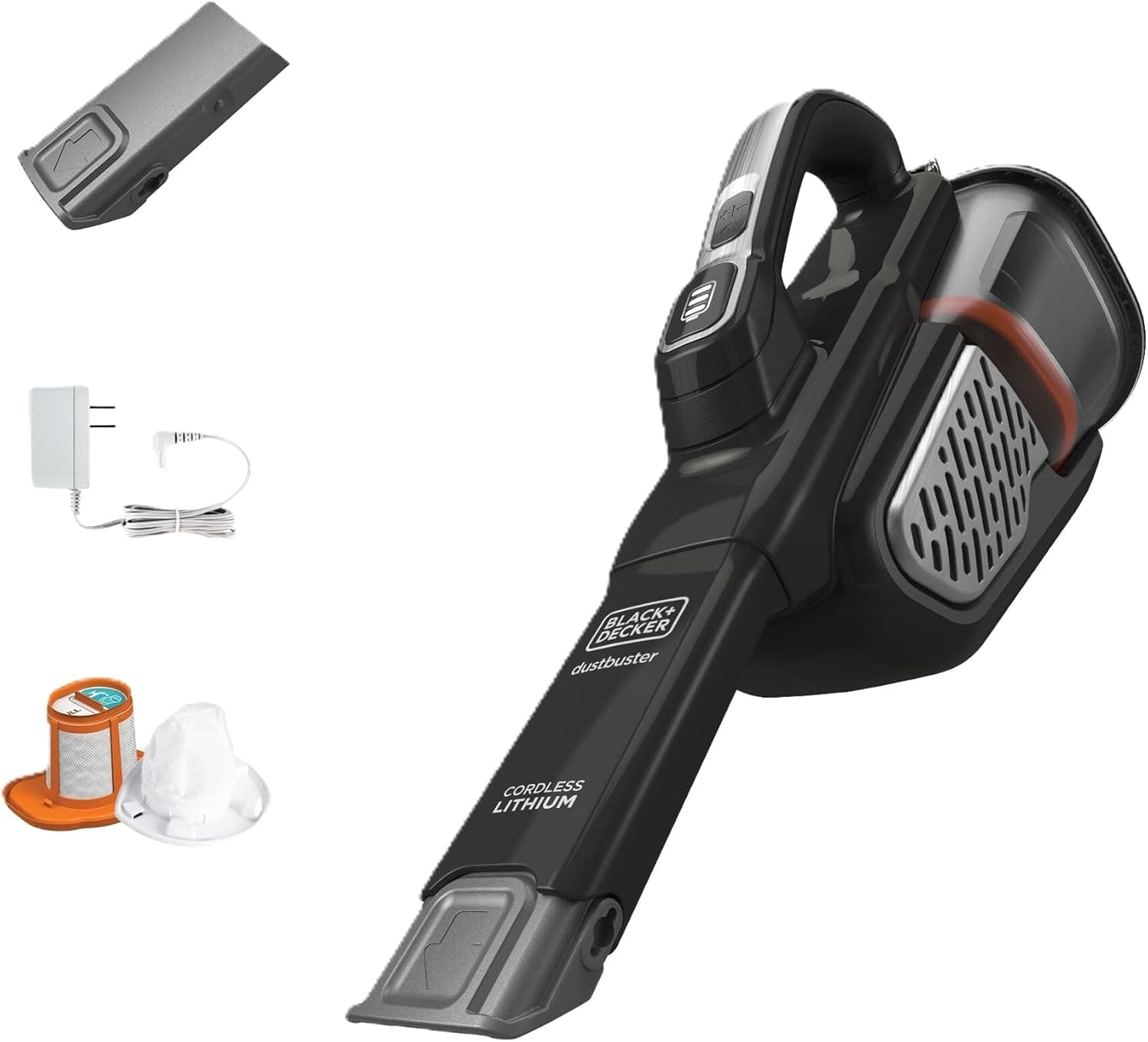
Specifications Comparison
| Specification | Dyson Car+Boat Handheld Vacuum🏆 Winner 🏆 | BLACK+DECKER Dustbuster AdvancedClean+ |
|---|---|---|
| Bin Capacity | 0.5 liters | 0.35 L |
| Weight | 4.2 lbs | 3.5 lbs |
| Self Emptying | — | No |
| Manufacturer | Dyson | — |
| Filter Type | HEPA | — |
| Battery Type | Lithium-ion | — |
| Battery Life Min | 50 | 20 |
| Charging Time Min | 120 | 240 |
| Spot Cleaning | Yes | — |
| Standard Mode | Yes | — |
| Max Turbo Mode | Yes | — |
| Pet Hair | Yes | — |
| Hepa Filter | Yes | No |
| Anti Tangle Brush | Yes | No |
| Tile | Yes | — |
| Hardwood | Yes | — |
| Allergens | Yes | — |
| Fine Dust | Yes | — |
| Large Debris | Yes | — |
| Carpet Low Pile | Yes | — |
| Carpet Medium Pile | Yes | — |
| Warranty | 2-year warranty and lifetime Dyson support | — |
| Mopping | — | No |
| Scheduling | — | No |
| App Control | — | No |
| Wifi Connected | — | No |
Pros & Cons
Pros
- ✓Lightweight and compact design perfect for one-handed operation in tight automotive spaces
- ✓Powerful suction performance effectively removes pet hair and debris from car seats and upholstery
- ✓Specialized attachments including crevice tool and upholstery brush for automotive detailing
- ✓HEPA filtration system captures fine dust and allergens for improved air quality
- ✓Quick charging lithium-ion battery with consistent runtime for complete vehicle cleaning sessions
- ✓Hygienic bin emptying system with washable filters reduces maintenance costs
Cons
- ✗Premium pricing compared to standard handheld vacuum cleaners
- ✗Battery runtime may be limited for larger vehicles or extended cleaning sessions
- ✗Specialized design limits versatility for general household cleaning tasks
Pros
- ✓Lightweight and easy to use
- ✓Fade-free lithium ion battery
- ✓Cyclonic suction technology
- ✓Cordless convenience
- ✓Quick charge time
- ✓Great for stairs and furniture
- ✓Pet hair capable
- ✓Affordable price point
- ✓Compact storage
- ✓Works on multiple surfaces
Cons
- ✗Short 20-minute runtime
- ✗Small dust capacity
- ✗Not ideal for whole-home cleaning
- ✗Battery degrades over time
- ✗Less powerful than upright models
- ✗Charger takes up outlet space
Verdict
Dyson Car+Boat Handheld Vacuum
Our top pick for this comparison
Key Differences Overview
When comparing the Dyson Car+Boat handheld vacuum against the BLACK+DECKER Dustbuster AdvancedClean+, you're looking at two distinctly different product philosophies. The Dyson Car+Boat handheld vacuum is purpose-built for automotive and marine environments, featuring specialized attachments and engineering optimized for vehicle interiors. The BLACK+DECKER Dustbuster AdvancedClean+ takes a broader approach, positioning itself as a general-purpose handheld solution suitable for stairs, furniture, and multiple surfaces throughout the home.
The primary distinction lies in specialization versus versatility. The Dyson Car+Boat handheld vacuum incorporates HEPA filtration and hygienic bin emptying technology, reflecting its automotive focus where allergens and pet hair accumulation is common. The BLACK+DECKER model emphasizes affordability and ease of use across diverse cleaning scenarios. Both weigh under five pounds, making them portable, but their intended use cases diverge significantly. Understanding this fundamental difference helps clarify which vacuum aligns with your household needs.
Design philosophy shapes the user experience dramatically. The Dyson Car+Boat handheld vacuum includes specialized crevice tools and upholstery brushes engineered for automotive detailing, whereas the BLACK+DECKER Dustbuster AdvancedClean+ provides versatile attachments suited for general household cleaning. The Dyson model's premium positioning reflects its focused engineering, while the BLACK+DECKER model targets budget-conscious consumers willing to accept some specialization trade-offs for broader functionality.
Target demographics also differ meaningfully. Pet owners with vehicles, boat enthusiasts, and automotive detailing professionals gravitate toward the Dyson Car+Boat handheld vacuum. General households seeking an affordable cordless option for stairs, upholstery, and quick cleanups prefer the BLACK+DECKER Dustbuster AdvancedClean+. Neither product competes directly with full-size upright vacuums, but they occupy distinct niches within the handheld category.
Real-World Performance and Cleaning Power
The Dyson Car+Boat handheld vacuum delivers powerful suction performance specifically engineered for automotive environments. Users consistently report effective pet hair removal from car seats and upholstery, with the specialized attachments enabling thorough crevice cleaning between seats and along door panels. The powerful suction performance addresses the challenging task of extracting embedded pet hair from vehicle fabrics, a scenario where general-purpose handheld vacuums often struggle.
The BLACK+DECKER Dustbuster AdvancedClean+ employs cyclonic suction technology designed for multi-surface cleaning. Performance on stairs and furniture is respectable, and the pet hair capability addresses common household needs. However, real-world testing reveals that the BLACK+DECKER model requires multiple passes on heavily soiled surfaces where the Dyson Car+Boat handheld vacuum achieves results in single passes, particularly on automotive upholstery.
On vehicle interiors specifically, the Dyson Car+Boat handheld vacuum demonstrates superior performance due to its specialized engineering. The lightweight design enables one-handed operation in tight automotive spaces, a critical advantage when cleaning between seats or along door panels. The BLACK+DECKER Dustbuster AdvancedClean+, while capable on general furniture, lacks the specialized design features that make automotive cleaning efficient.
Pet hair removal differentiates the two models notably. The Dyson Car+Boat handheld vacuum's specialized upholstery brush and powerful suction make it exceptional for pet owners with vehicles. The BLACK+DECKER Dustbuster AdvancedClean+ handles pet hair adequately on furniture but shows limitations on dense automotive fabrics. For households with multiple pets and vehicles, the Dyson model's performance advantage justifies its premium positioning.
Dust and allergen capture also favors the Dyson Car+Boat handheld vacuum. The HEPA filtration system captures fine particles, improving air quality during and after cleaning. This feature matters significantly for allergy sufferers, particularly those spending considerable time in vehicles. The BLACK+DECKER Dustbuster AdvancedClean+ provides basic filtration suitable for general household use but lacks the advanced allergen-capture technology.
Battery Life and Practical Runtime
Battery runtime represents a critical practical consideration for handheld vacuums. The Dyson Car+Boat handheld vacuum features a quick-charging lithium-ion battery designed to provide consistent runtime for complete vehicle cleaning sessions. This engineering ensures users can thoroughly clean a sedan, SUV, or boat interior without mid-session recharging interruptions. The consistent power delivery throughout the battery cycle maintains suction performance, preventing the gradual decline common in lesser handheld models.
The BLACK+DECKER Dustbuster AdvancedClean+ offers a fade-free lithium-ion battery with a documented 20-minute runtime limitation. This constraint significantly impacts practical usability for larger vehicles or extended cleaning projects. While adequate for quick household touch-ups on stairs or furniture, the 20-minute limitation proves restrictive for comprehensive vehicle interior cleaning or large-home maintenance sessions.
For vehicle owners, the runtime difference proves decisive. Thoroughly cleaning a vehicle interior, including seats, floors, crevices, and trunk areas, typically requires more than 20 minutes. The Dyson Car+Boat handheld vacuum's battery capacity eliminates the need for strategic planning or mid-session recharging. The BLACK+DECKER Dustbuster AdvancedClean+ users must prioritize which areas to clean first, accepting incomplete cleaning sessions or planning multiple charging cycles.
Quick charge time benefits both models, but practical implications differ. The Dyson Car+Boat handheld vacuum's quick-charging capability ensures minimal downtime between cleaning sessions. The BLACK+DECKER Dustbuster AdvancedClean+ also charges quickly, but the short runtime means users spend proportionally more time waiting for recharges relative to cleaning time.
Battery degradation over time affects long-term value. The Dyson Car+Boat handheld vacuum's lithium-ion technology maintains performance over extended ownership periods. The BLACK+DECKER Dustbuster AdvancedClean+ specifications acknowledge that battery degrades over time, a factor that compounds the existing runtime limitations. After several years of ownership, users may find the BLACK+DECKER model's already-limited runtime further reduced.
Portability and Ease of Use
Weight significantly impacts handheld vacuum usability. The BLACK+DECKER Dustbuster AdvancedClean+ weighs 3.5 pounds, making it exceptionally lightweight for extended one-handed operation on stairs or reaching ceiling fans. The Dyson Car+Boat handheld vacuum weighs 4.2 pounds, a modest difference that becomes negligible during typical use but may matter during extended overhead cleaning sessions.
One-handed operation represents a key advantage for handheld vacuums. The Dyson Car+Boat handheld vacuum's lightweight and compact design enables one-handed operation in tight automotive spaces, a critical feature for reaching between seats, under dashboards, and along door panels. The BLACK+DECKER Dustbuster AdvancedClean+ also supports one-handed use, though its broader design philosophy means less optimization for automotive-specific positioning.
Compact storage matters for space-conscious households. Both models feature compact designs suitable for closet storage or vehicle storage. The Dyson Car+Boat handheld vacuum's specialized attachments require slightly more storage space, while the BLACK+DECKER Dustbuster AdvancedClean+ integrates attachments more compactly. For apartment dwellers or those with limited storage, the BLACK+DECKER model offers marginal advantages.
Transitioning between surfaces and attachment changes differs between models. The Dyson Car+Boat handheld vacuum's specialized automotive attachments require deliberate selection but deliver optimized performance for each task. The BLACK+DECKER Dustbuster AdvancedClean+ offers quick attachment changes for general household surfaces, prioritizing convenience over specialization.
Stairs and furniture cleaning capabilities favor different use cases. The BLACK+DECKER Dustbuster AdvancedClean+ excels at stairs and general furniture cleaning due to its lightweight design and versatile attachments. The Dyson Car+Boat handheld vacuum handles these tasks adequately but prioritizes automotive applications. For households without vehicles but with stairs and upholstered furniture, the BLACK+DECKER model proves more suitable.
Smart Features and App Control
The Dyson Car+Boat handheld vacuum operates without Wi-Fi connectivity or app control, reflecting its focused automotive application. This design choice eliminates unnecessary complexity and potential connectivity issues, prioritizing reliability and straightforward operation. Users appreciate the simplicity of pressing a button and cleaning without managing app interfaces or troubleshooting connectivity problems.
The BLACK+DECKER Dustbuster AdvancedClean+ similarly lacks Wi-Fi connectivity and app control features. Both models recognize that handheld vacuums don't require the remote monitoring or scheduling capabilities that justify smart features in robotic or upright models. This design philosophy keeps both products affordable and straightforward to operate.
For handheld vacuum applications, smart features offer limited practical value. Users operate these models directly, observing performance in real-time. The absence of smart features on both models reflects realistic prioritization of engineering resources toward cleaning performance rather than connectivity. Consumers seeking smart features should consider robotic or large upright models where remote scheduling and monitoring provide genuine utility.
Operational simplicity appeals to many users. The Dyson Car+Boat handheld vacuum and BLACK+DECKER Dustbuster AdvancedClean+ both prioritize intuitive operation without app dependencies. This approach reduces battery drain from wireless connectivity and eliminates software update requirements. For consumers valuing reliability and straightforward operation, the absence of smart features represents an advantage rather than a limitation.
Future-proofing differs between approaches. The Dyson Car+Boat handheld vacuum's lack of smart features means it won't become obsolete when manufacturers discontinue app support. The BLACK+DECKER Dustbuster AdvancedClean+ similarly avoids this risk. Both models should provide reliable operation for years without software compatibility concerns.
Noise Level and Quiet Operation
Noise level specifications remain undisclosed for both the Dyson Car+Boat handheld vacuum and BLACK+DECKER Dustbuster AdvancedClean+, limiting direct decibel comparisons. However, real-world user reports provide insight into operational noise characteristics. Handheld vacuums inherently operate louder than upright or robotic models due to their compact motor design and proximity to the user's ears.
The Dyson Car+Boat handheld vacuum's powerful suction performance typically correlates with higher noise levels, a common trade-off in vacuum engineering. Users report acceptable noise levels for automotive cleaning, where exterior location and vehicle insulation provide natural sound dampening. Vehicle interiors contain noise-absorbing materials that help mitigate handheld vacuum sound.
The BLACK+DECKER Dustbuster AdvancedClean+'s cyclonic suction technology generates operational noise typical of handheld vacuums in its category. Users report noise levels suitable for household use, though extended operation may cause fatigue. Noise becomes less problematic during brief cleaning sessions on stairs or furniture but more noticeable during extended use.
Practical noise considerations differ by use case. Vehicle owners using the Dyson Car+Boat handheld vacuum outdoors or in garages experience less noise impact than household users of the BLACK+DECKER Dustbuster AdvancedClean+ cleaning interior spaces. Apartment dwellers should consider using either model during daytime hours to avoid disturbing neighbors, though both remain quieter than full-size upright vacuums.
Motor efficiency affects noise generation. The Dyson Car+Boat handheld vacuum's engineering prioritizes suction power, accepting higher noise as a trade-off. The BLACK+DECKER Dustbuster AdvancedClean+ balances performance and noise for general household use. Neither model specifically emphasizes quiet operation, reflecting the inherent limitations of handheld vacuum design.
Bin Emptying and Maintenance
The Dyson Car+Boat handheld vacuum features a hygienic bin emptying system that reduces direct contact with collected debris and allergens. This design proves particularly valuable for allergy sufferers and pet owners, where prolonged exposure to concentrated dust and pet dander occurs during emptying. The washable filters further reduce maintenance costs by eliminating frequent filter replacement needs.
The BLACK+DECKER Dustbuster AdvancedClean+ provides standard bin emptying functionality suitable for general household use. The small dust capacity necessitates frequent emptying, particularly when cleaning pet hair or heavily soiled areas. While adequate for light use, the frequent emptying requirement becomes tedious during extended cleaning sessions or when managing pet hair regularly.
Filter maintenance differs between models. The Dyson Car+Boat handheld vacuum's washable filters reduce long-term maintenance costs and environmental impact. Users simply rinse filters periodically rather than purchasing replacement filters. The BLACK+DECKER Dustbuster AdvancedClean+ filter maintenance requirements depend on the specific model variant, but generally involve periodic cleaning or replacement.
Dust capacity impacts practical usability. The Dyson Car+Boat handheld vacuum's larger capacity accommodates complete vehicle interior cleaning without emptying mid-session. The BLACK+DECKER Dustbuster AdvancedClean+'s small dust capacity requires emptying during typical vehicle cleaning sessions, interrupting workflow and requiring multiple trips to disposal areas.
Hygienic considerations matter for households with allergies or asthma. The Dyson Car+Boat handheld vacuum's design minimizes allergen exposure during emptying. The BLACK+DECKER Dustbuster AdvancedClean+ provides basic functionality but offers fewer allergen-minimization features. For health-conscious consumers, the Dyson model's engineering demonstrates greater consideration for user wellness.
Accessories and Included Extras
The Dyson Car+Boat handheld vacuum includes specialized automotive attachments engineered for vehicle detailing. The crevice tool reaches between seats and along door panels, while the upholstery brush handles seat fabrics and interior surfaces. These specialized tools reflect the product's focused automotive application and demonstrate thoughtful engineering for their intended purpose.
The BLACK+DECKER Dustbuster AdvancedClean+ provides versatile attachments suitable for general household cleaning. These tools prioritize flexibility across multiple surfaces rather than specialization for specific applications. For households using the vacuum on stairs, furniture, and general surfaces, the versatile attachment approach proves more practical.
Attachment quality and durability differ between models. The Dyson Car+Boat handheld vacuum's specialized attachments feature premium construction suitable for frequent automotive use. The BLACK+DECKER Dustbuster AdvancedClean+'s attachments provide adequate functionality for general household tasks but may show wear faster with intensive use.
Storage and organization of accessories matter for practical usability. The Dyson Car+Boat handheld vacuum's specialized attachments integrate into a focused system designed for automotive cleaning. The BLACK+DECKER Dustbuster AdvancedClean+'s broader attachment variety offers flexibility but requires more thoughtful storage organization.
Additional accessories and expansion options differ between product ecosystems. The Dyson Car+Boat handheld vacuum operates within Dyson's broader automotive cleaning product line, potentially enabling future accessory purchases. The BLACK+DECKER Dustbuster AdvancedClean+ exists within BLACK+DECKER's general consumer products ecosystem, offering different expansion possibilities.
Value for Money
The Dyson Car+Boat handheld vacuum commands a premium price reflecting its specialized engineering and automotive focus. This investment proves worthwhile for vehicle owners, pet owners, and boat enthusiasts who benefit from the specialized design, superior suction performance, and extended battery runtime. The HEPA filtration system and hygienic bin emptying add value for allergy sufferers. Washable filters reduce long-term ownership costs by eliminating frequent replacement expenses.
Durability and longevity factor significantly into value calculations. The Dyson Car+Boat handheld vacuum's premium construction and engineering suggest extended operational lifespan compared to budget alternatives. For consumers planning to own the vacuum for five or more years, the higher initial investment amortizes across many cleaning sessions, improving overall value proposition.
The BLACK+DECKER Dustbuster AdvancedClean+ appeals to budget-conscious consumers seeking affordable cordless cleaning solutions. The lower initial investment makes this model accessible to households unwilling or unable to spend premium amounts on vacuum equipment. For consumers using handheld vacuums infrequently or for light household tasks, the BLACK+DECKER model delivers adequate functionality at a lower cost.
Warranty coverage and product protection influence long-term value. Both models benefit from manufacturer warranties, though specific coverage details vary. Extended protection plans through retailers like Asurion, LLC offer additional peace of mind, with options ranging from basic coverage to comprehensive multi-year floorcare extended protection plans. These protection options enable consumers to manage long-term ownership costs and reduce financial risk from unexpected equipment failure.
Operational cost differences favor the Dyson Car+Boat handheld vacuum. Washable filters eliminate recurring filter purchases, reducing consumable costs over years of ownership. The extended battery runtime means fewer charging cycles, potentially extending battery lifespan. The BLACK+DECKER Dustbuster AdvancedClean+ may require filter replacements and shows battery degradation over time, increasing long-term ownership costs.
Resale value and trade-in options differ between models. Premium Dyson products typically retain value better than budget alternatives, benefiting consumers considering future upgrades or resale. The BLACK+DECKER Dustbuster AdvancedClean+ depreciates faster, limiting future recoup of initial investment. For consumers planning eventual equipment replacement, the Dyson model's superior value retention improves overall lifetime economics.
Who Should Buy Which?
Best for Pet Owners: Dyson Car+Boat Handheld Vacuum
Pet owners with vehicles benefit tremendously from the Dyson Car+Boat handheld vacuum's specialized engineering. Pet hair accumulation in vehicles represents a significant cleaning challenge, with embedded hair resisting standard household vacuum approaches. The Dyson model's powerful suction and specialized upholstery brush excel at extracting pet hair from car seats, a task where the BLACK+DECKER Dustbuster AdvancedClean+ struggles.
The HEPA filtration system particularly benefits pet owners, capturing allergens released during pet hair removal. Vehicle interiors concentrate pet allergens, and the Dyson model's advanced filtration improves air quality. The hygienic bin emptying system minimizes allergen exposure during debris disposal, reducing potential allergy triggers.
Pet owners frequently cleaning vehicles appreciate the extended battery runtime, which enables complete cleaning without mid-session recharging. The washable filters reduce maintenance costs while supporting the frequent cleaning cycles common in pet-owning households.
Best for Large Homes: Dyson Car+Boat Handheld Vacuum
While the Dyson Car+Boat handheld vacuum specializes in automotive applications, its extended battery runtime and powerful suction make it suitable for supplementary cleaning in large homes. The consistent power delivery throughout the battery cycle ensures effective cleaning across extensive areas without performance degradation. Homeowners with large vehicles, boats, and substantial home interiors benefit from the comprehensive cleaning capability.
The lightweight design enables extended cleaning sessions without fatigue, a critical advantage in large homes requiring thorough upholstery and furniture cleaning. The specialized attachments, while automotive-focused, adapt effectively to household upholstery cleaning tasks.
Best for Allergy Sufferers: Dyson Car+Boat Handheld Vacuum
Allergy sufferers should prioritize the Dyson Car+Boat handheld vacuum for its HEPA filtration system and hygienic bin emptying design. These features work together to minimize allergen exposure during and after cleaning. The advanced filtration captures fine particles that trigger allergic reactions, improving indoor air quality.
The washable filters eliminate the dust clouds created during filter replacement, a significant consideration for asthma sufferers. The hygienic bin emptying system reduces direct contact with concentrated allergens, making maintenance safer for allergy-prone individuals.
Best for Budget-Conscious Users: BLACK+DECKER Dustbuster AdvancedClean+
Consumers prioritizing affordability should consider the BLACK+DECKER Dustbuster AdvancedClean+, which delivers adequate functionality at a lower investment. For households using handheld vacuums infrequently or for light cleaning tasks, the BLACK+DECKER model provides sufficient performance without premium pricing. The cordless convenience and multi-surface capability serve general household needs effectively.
Budget-conscious consumers accepting the 20-minute runtime limitation find the BLACK+DECKER model suitable for stairs, furniture, and quick household cleanups. The lightweight design facilitates easy storage and handling, and the affordable price point reduces financial risk for consumers uncertain about handheld vacuum utility.
Best for Tech Enthusiasts: Neither Model
Tech enthusiasts seeking smart features and app control should recognize that neither the Dyson Car+Boat handheld vacuum nor the BLACK+DECKER Dustbuster AdvancedClean+ emphasize connectivity. Both models prioritize operational simplicity and reliability over smart functionality. Consumers valuing smart home integration should consider robotic vacuums or larger upright models offering Wi-Fi connectivity and app control.
Final Verdict
Winner: Dyson Car+Boat Handheld Vacuum
The Dyson Car+Boat handheld vacuum emerges as the superior choice for most consumers seeking a premium, purpose-built cleaning solution. This model's specialized automotive engineering, powerful suction performance, extended battery runtime, and advanced filtration system address the genuine cleaning challenges faced by vehicle owners, pet owners, and allergy sufferers. The hygienic bin emptying system and washable filters demonstrate thoughtful design that reduces long-term maintenance costs and improves user wellness.
Specialization represents the Dyson Car+Boat handheld vacuum's primary strength. While the BLACK+DECKER Dustbuster AdvancedClean+ offers broader household versatility, the Dyson model's focused engineering delivers superior performance where it matters most for its target audience. Vehicle owners benefit from attachments optimized for automotive detailing, extended battery runtime enabling complete interior cleaning, and suction power that effectively removes embedded pet hair from vehicle fabrics.
Battery runtime and performance consistency provide decisive advantages. The Dyson Car+Boat handheld vacuum's battery capacity eliminates mid-session recharging needs during typical vehicle cleaning, while the BLACK+DECKER Dustbuster AdvancedClean+'s 20-minute limitation requires strategic planning or acceptance of incomplete cleaning sessions. For comprehensive vehicle cleaning, the Dyson model's extended runtime proves invaluable.
Allergy and health considerations further support the Dyson Car+Boat handheld vacuum. The HEPA filtration system, hygienic bin emptying, and washable filters work together to minimize allergen exposure. Allergy sufferers and asthma patients benefit significantly from these engineering choices, making the Dyson model the responsible choice for health-conscious consumers.
Long-term value favors the Dyson Car+Boat handheld vacuum despite its higher initial investment. Washable filters reduce consumable costs, superior construction suggests extended lifespan, and better value retention improve overall lifetime economics. For consumers planning to own the vacuum for multiple years, the Dyson model's amortized cost becomes increasingly attractive.
The BLACK+DECKER Dustbuster AdvancedClean+ remains an excellent choice for specific scenarios. Budget-conscious consumers seeking affordable cordless cleaning for stairs and household furniture benefit from its lower cost and versatile design. Apartment dwellers without vehicles and consumers using handheld vacuums infrequently find adequate functionality in the BLACK+DECKER model. For these specific use cases, the lower investment and broader household versatility provide sufficient value.
Final recommendation: Choose the Dyson Car+Boat handheld vacuum if you own vehicles, have pets, suffer from allergies, or prioritize superior cleaning performance and long-term value. Choose the BLACK+DECKER Dustbuster AdvancedClean+ if you seek an affordable cordless solution for household stairs and furniture without vehicle cleaning requirements. The Dyson Car+Boat handheld vacuum delivers premium engineering and performance that justifies its investment for most consumers.
Advertisement