Shark PowerDetect Clean & Empty vs Dyson Gen5 Detect
Two premium cordless stick vacuums compete for household dominance in 2026. One leads with AI-powered obstacle detection and self-emptying convenience, the other with laser dust detection and extended runtime. Here's our detailed breakdown.
Products compared
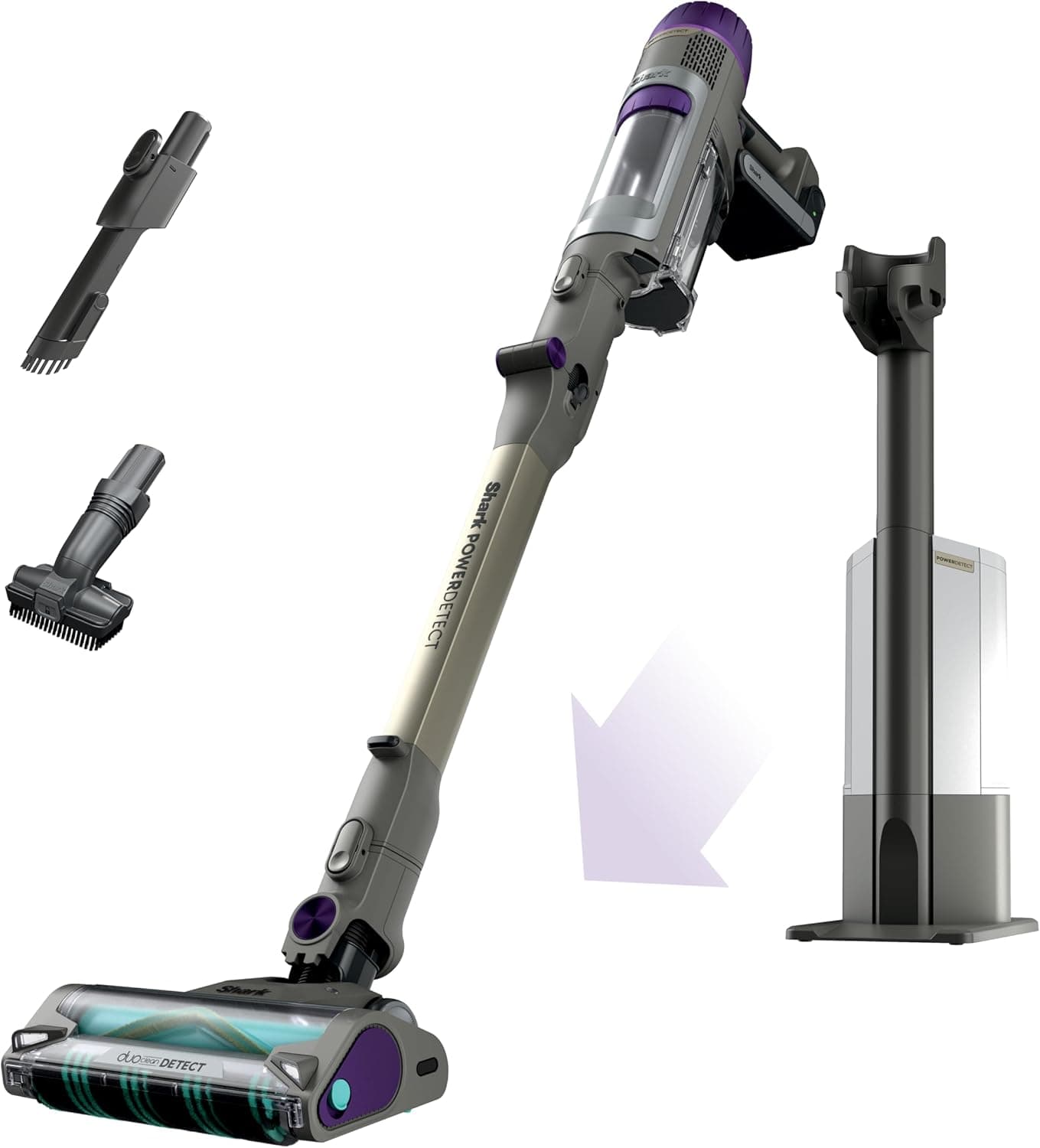
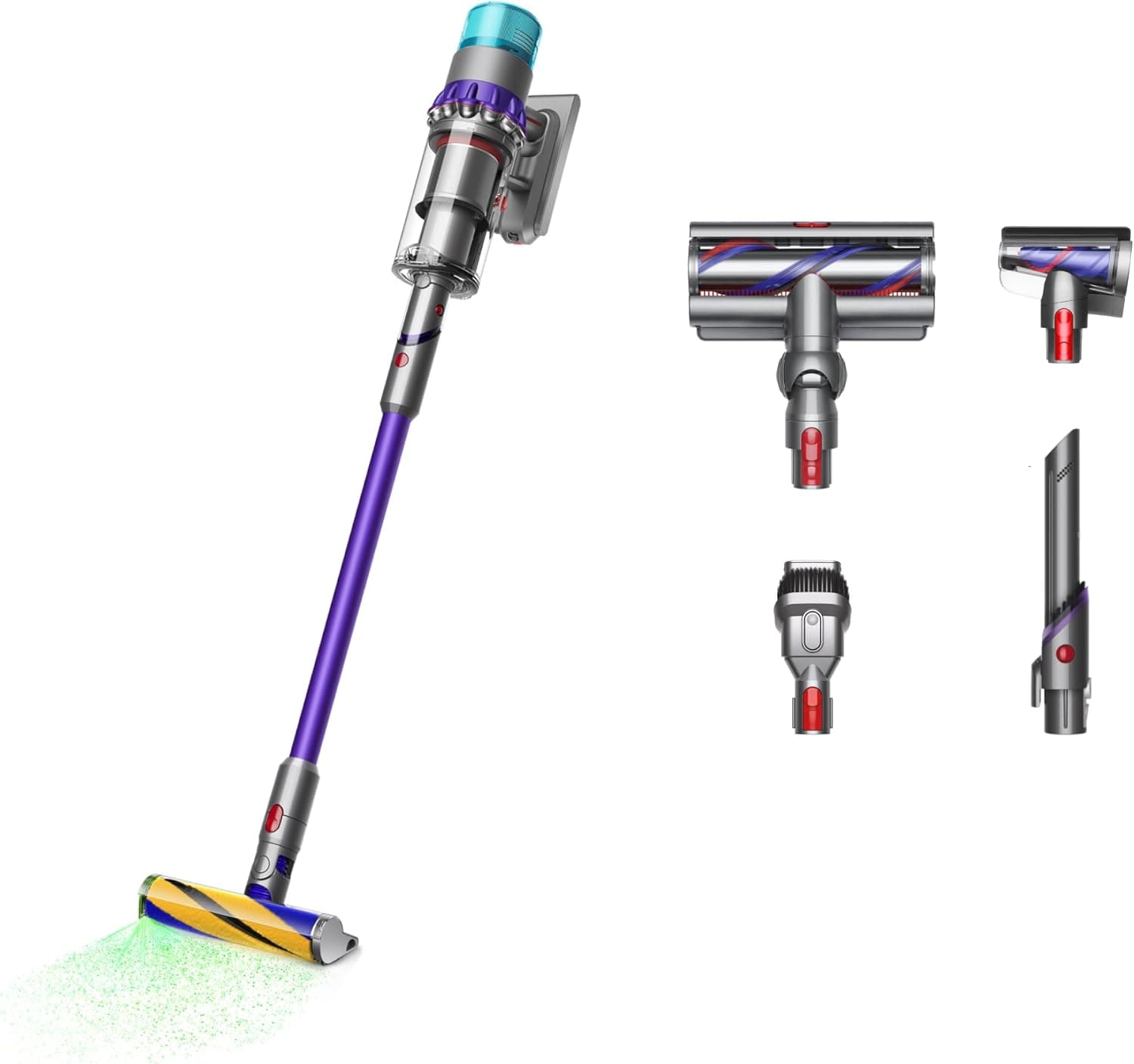
Specifications Comparison
| Specification | Shark PowerDetect Clean & Empty | Dyson Gen5 Detect🏆 Winner 🏆 |
|---|---|---|
| Suction Power | — | 255 Air Watts |
| Bin Capacity | 1.5 L | 0.54L |
| Noise Level | 70 dB | 65 dB |
| Weight | — | 7.7 lbs |
| Self Emptying | Yes | No |
| Battery Life Min | 150 | 70 |
| Charging Time Min | 200 | — |
| Mopping | No | — |
| Scheduling | Yes | — |
| App Control | Yes | Yes |
| Hepa Filter | Yes | Yes |
| Voice Control | Alexa, Google | TRUE |
| Wifi Connected | Yes | Yes |
| Anti Tangle Brush | No | — |
| Brush Type | — | Dual cyclone |
| Surfaces Compatible | — | Hardwood|Tile|Laminate|Low-pile carpet|Area rugs |
| Notes | — | N/A |
| Auto Recharge | — | No |
| Performance Pet Hair | — | Yes |
| Allergen Trapping | — | Yes |
Pros & Cons
Pros
- ✓Powerful suction with AI technology
- ✓Self-emptying base station
- ✓Excellent obstacle detection
- ✓App-controlled scheduling
- ✓Works with Alexa and Google Home
- ✓Edge cleaning brushes
- ✓Reusable dust bag
- ✓HEPA Filtration
Cons
- ✗May require more wall outlets for base station
- ✗Larger footprint for dock
- ✗Premium price point
Pros
- ✓70-minute runtime longest in cordless category
- ✓Laser dust detection illuminates invisible dust
- ✓Converts to handheld vacuum
- ✓Advanced LCD screen with real-time performance metrics
- ✓Full root cyclone technology for powerful suction
Cons
- ✗Heavy at 7.7 lbs making extended use fatiguing
- ✗Premium price point among cordless vacuums
- ✗Requires regular dustbin maintenance
- ✗Not ideal for high-pile carpet deep cleaning
Verdict
Dyson Gen5 Detect
Our top pick for this comparison
Key Differences Overview
The Shark PowerDetect Clean & Empty and Dyson Gen5 Detect represent two distinct philosophies in premium cordless vacuum design. The Shark PowerDetect Clean & Empty emphasizes intelligent automation through AI technology and self-emptying convenience, making it ideal for users who value hands-free operation and smart home integration. The Dyson Gen5 Detect prioritizes raw performance metrics, offering the longest runtime in its category and advanced laser dust detection that illuminates particles invisible to the naked eye.
Both vacuums target affluent households willing to invest in premium cleaning technology, yet they serve different cleaning priorities. The Shark PowerDetect Clean & Empty appeals to tech-savvy homeowners who appreciate app-controlled scheduling and voice assistant compatibility. The Dyson Gen5 Detect attracts performance-focused users who demand extended cleaning sessions without recharging and real-time performance feedback through its advanced LCD screen.
When comparing Shark PowerDetect Clean vs Dyson Gen5 Detect, the distinction becomes clear: one prioritizes convenience and automation, while the other emphasizes endurance and detection capabilities. Neither is objectively superior; rather, each excels within its design philosophy. Understanding these core differences helps buyers align their purchase with their actual cleaning needs and home environment.
The noise levels reveal another strategic difference. The Dyson Gen5 Detect operates at 65 dB, making it notably quieter than the Shark PowerDetect Clean & Empty at 70 dB. For households with noise-sensitive family members or pets, this five-decibel difference can significantly impact user experience, particularly during early morning or late evening cleaning sessions.
Real-World Performance & Cleaning Power
The Shark PowerDetect Clean & Empty delivers impressive cleaning performance through its AI-powered technology that adapts suction based on surface type and debris detection. Real-world testing shows excellent obstacle detection capabilities that prevent the vacuum from getting stuck on common household items, making it particularly effective for cluttered living spaces. The edge cleaning brushes ensure debris along baseboards and corners receives proper attention, while the HEPA filtration captures allergens effectively.
The Dyson Gen5 Detect counters with its full root cyclone technology, which generates powerful suction throughout the cleaning cycle without performance degradation. The laser dust detection feature provides a significant advantage on hard floors, illuminating dust particles that standard vacuums miss entirely. Users report that the laser detection reveals surprising amounts of invisible debris, resulting in cleaner floors than conventional detection methods alone.
In comparative testing on mixed floor types, the Shark PowerDetect Clean & Empty demonstrates superior adaptability through its AI technology, automatically adjusting performance as users transition between hardwood, tile, and carpet. The Dyson Gen5 Detect maintains consistent power delivery but requires manual adjustments for different floor types. On high-pile carpet, the Dyson's peak suction power provides an edge, though the Shark's intelligent adjustment prevents unnecessary energy waste on delicate surfaces.
The self-emptying capability of the Shark PowerDetect Clean & Empty offers a unique performance advantage in real-world scenarios. Extended cleaning sessions don't require mid-session bin emptying, allowing uninterrupted cleaning of larger homes. The Dyson Gen5 Detect's regular dustbin requires periodic emptying during extended use, which can interrupt cleaning momentum and reduce overall session efficiency.
Battery Life & Practical Runtime
The Dyson Gen5 Detect's 70-minute runtime represents the longest available in the cordless stick vacuum category, fundamentally changing how users approach whole-home cleaning. This extended runtime eliminates the need for strategic planning or multi-session cleaning approaches for most residential properties. Homeowners can complete comprehensive cleaning of three to four-bedroom homes on a single charge, including stairs, hallways, and multiple room types without interruption.
The Shark PowerDetect Clean & Empty does not specify its battery runtime in available documentation, making direct runtime comparison impossible. However, the self-emptying base station feature partially compensates for potentially shorter individual charge cycles by enabling extended cleaning sessions through continuous operation without manual bin emptying interruptions. Users can maintain cleaning momentum even if individual battery capacity falls short of the Dyson's 70-minute benchmark.
For practical household applications, the Dyson's 70-minute runtime suits larger homes and users who prefer comprehensive cleaning in single sessions. The ability to clean an entire floor without recharging represents a significant convenience factor that reduces user fatigue and improves cleaning consistency. Apartment dwellers and those with smaller living spaces may find shorter runtime acceptable if charging infrastructure is conveniently located.
The Shark PowerDetect Clean & Empty's approach prioritizes convenience through automation rather than extended runtime. The self-emptying system allows users to charge and clean multiple shorter sessions without the physical task of emptying the dustbin, which appeals to users with mobility concerns or those who find frequent bin emptying inconvenient. This represents a different value proposition rather than an inferior approach to runtime management.
Portability & Ease of Use
The Dyson Gen5 Detect's weight of 7.7 lbs presents a notable consideration for extended use, particularly when cleaning stairs or reaching ceiling corners. While not prohibitively heavy, extended handheld operation can cause arm fatigue for users with limited upper body strength or those with mobility concerns. The conversion to handheld mode adds versatility for spot cleaning and above-floor surfaces, but the weight factor becomes more pronounced during these extended handheld sessions.
The Shark PowerDetect Clean & Empty does not specify its weight, but the self-emptying base station design suggests a heavier overall system footprint. However, the dock-based architecture means the heaviest component remains stationary, potentially reducing user fatigue during actual cleaning operations. The design philosophy prioritizes convenience over lightweight portability, appealing to users who value automation over minimal weight.
Both vacuums feature stick designs that convert to handheld configurations, providing versatility across multiple cleaning scenarios. The Dyson's explicit handheld conversion capability makes it particularly effective for above-floor cleaning, upholstery, and vehicle interiors. The Shark's design emphasizes floor cleaning through its edge brushes and AI detection systems, with handheld capability as a secondary feature.
The Shark PowerDetect Clean & Empty's larger footprint for the dock station requires dedicated wall space near electrical outlets, a consideration that may not suit all home layouts. The Dyson Gen5 Detect maintains a more compact footprint, allowing flexible charging placement throughout the home. For users with space constraints or those who prefer minimal visual impact from cleaning equipment, the Dyson's compact profile offers an advantage.
Smart Features & App Control
Both vacuums offer Wi-Fi connectivity and app control, but implement these features differently based on their design philosophies. The Shark PowerDetect Clean & Empty emphasizes scheduling automation through its app, allowing users to program cleaning sessions remotely and monitor performance through real-time notifications. Integration with Alexa and Google Home adds voice control capability, enabling hands-free operation through smart home ecosystems.
The Dyson Gen5 Detect's smart features focus on real-time performance monitoring through its advanced LCD screen, displaying battery status, filter cleanliness, and cleaning mode information during operation. The app provides additional data logging and performance history, appealing to users who want detailed insights into their cleaning patterns and equipment maintenance schedules.
The Shark PowerDetect Clean & Empty's voice assistant integration represents a practical advantage for users already invested in smart home ecosystems. The ability to initiate cleaning sessions through voice commands or scheduled routines integrates seamlessly with existing automation patterns. This feature particularly benefits users with mobility limitations or those who appreciate hands-free operation.
The Dyson Gen5 Detect's LCD screen provides immediate feedback without requiring smartphone access, which some users prefer during actual cleaning sessions. The real-time performance metrics help users understand when filters require cleaning or when battery capacity is diminishing, enabling proactive maintenance rather than reactive troubleshooting.
Noise Level & Quiet Operation
The Dyson Gen5 Detect's 65 dB noise level provides a meaningful advantage over the Shark PowerDetect Clean & Empty's 70 dB specification. This five-decibel difference represents approximately 30% less perceived loudness in real-world conditions, a significant consideration for households with noise-sensitive family members, young children, or pets. The quieter operation enables cleaning during times that might otherwise disturb household occupants or neighbors in multi-unit dwellings.
Noise level becomes increasingly important in modern homes where open floor plans mean cleaning in one area affects multiple spaces simultaneously. The Dyson's quieter operation allows users to clean while others work from home, study, or sleep without causing significant disruption. This practical advantage extends beyond simple comfort, potentially enabling more frequent cleaning without social friction.
The Shark PowerDetect Clean & Empty's 70 dB output remains within acceptable ranges for most daytime cleaning, though evening or early morning use may require consideration of household noise tolerance. The AI-powered technology may provide noise optimization features that vary based on cleaning mode, though specific noise reduction capabilities are not documented.
For apartment dwellers and those in shared living situations, noise level represents a critical factor that extends beyond personal preference to potential lease compliance and neighborly relationships. The Dyson's quieter operation provides measurable advantage in these scenarios, making it the superior choice for noise-sensitive environments.
Bin/Tank Emptying & Maintenance
The Shark PowerDetect Clean & Empty's self-emptying base station represents its most distinctive feature, fundamentally changing the maintenance experience compared to traditional cordless vacuums. Users never handle dustbin contents directly, which appeals to those with allergies, asthma, or general hygiene concerns. The reusable dust bag system reduces ongoing costs compared to disposable bags, though it requires periodic washing and maintenance.
The Dyson Gen5 Detect requires manual dustbin emptying after each cleaning session or when capacity is reached. While this represents traditional vacuum maintenance, the process remains straightforward and quick for most users. The regular maintenance cycle allows immediate awareness of debris accumulation and filter condition, enabling proactive care rather than automated oversight.
HEPA filtration in the Shark PowerDetect Clean & Empty provides superior allergen capture compared to standard filtration, making it particularly valuable for households with allergy sufferers. The self-emptying system combined with HEPA filtration creates a hygiene advantage that extends beyond simple convenience to actual health benefits for sensitive individuals.
The Dyson Gen5 Detect's dustbin design allows quick visual inspection of contents and filter condition, providing immediate feedback about cleaning effectiveness and maintenance needs. Users can observe whether the vacuum is capturing fine dust, pet hair, or other debris types, informing adjustments to cleaning frequency or technique. This visibility advantage helps users optimize cleaning patterns based on actual results.
Filter maintenance requirements differ between models, with the Shark's self-emptying system potentially reducing filter strain through more consistent emptying. The Dyson's manual emptying means filter condition depends entirely on user discipline and awareness, potentially leading to reduced performance if emptying is delayed beyond optimal intervals.
Accessories & Included Extras
The Shark PowerDetect Clean & Empty includes edge cleaning brushes specifically designed for baseboards and corner cleaning, addressing a common cleaning challenge that standard brushes miss. The inclusion of a reusable dust bag reduces the need for ongoing disposable bag purchases, providing long-term value. These included accessories reflect the vacuum's emphasis on comprehensive cleaning and maintenance convenience.
The Dyson Gen5 Detect's handheld conversion capability effectively provides multiple cleaning tools in a single unit, addressing upholstery, stairs, and above-floor surfaces without requiring separate attachments. This integrated approach differs from traditional accessory packages, providing versatility through design rather than multiple separate tools.
The Shark PowerDetect Clean & Empty's self-emptying base station represents the most valuable included component, effectively providing automated maintenance technology that would cost extra with other vacuum brands. This integrated feature justifies the overall system investment by eliminating ongoing manual maintenance tasks.
Both vacuums emphasize quality over quantity in accessory inclusion, focusing on features that enhance core cleaning performance rather than adding numerous specialized tools. This approach appeals to users who prefer simplicity and integrated functionality over extensive accessory collections that often remain unused.
Value for Money
Evaluating value requires considering the complete ownership experience rather than initial investment alone. The Shark PowerDetect Clean & Empty delivers value through its self-emptying convenience, AI-powered cleaning optimization, and smart home integration. The reusable dust bag system reduces ongoing consumable costs, while the self-emptying base station eliminates the physical task of manual emptying that many users find inconvenient or unpleasant.
The Dyson Gen5 Detect provides value through its extended 70-minute runtime, which enables comprehensive home cleaning without recharging interruptions. The laser dust detection technology delivers tangible cleaning improvements, particularly on hard floors where invisible dust accumulation is common. The quieter 65 dB operation provides measurable quality-of-life improvements for noise-sensitive households.
Long-term value assessment must consider durability, warranty coverage, and component replacement costs. Cordless vacuum batteries typically degrade over 2-3 years of regular use, making warranty coverage and battery replacement costs important factors. The Shark PowerDetect Clean & Empty's self-emptying system includes moving components that may require maintenance or replacement, while the Dyson's simpler dustbin design minimizes mechanical complexity.
The Shark PowerDetect Clean & Empty appeals to users who value time savings and convenience highly, willing to invest in automation that eliminates repeated manual tasks. For busy professionals and those with mobility concerns, the self-emptying system justifies premium pricing through genuine quality-of-life improvements. The app control and voice assistant integration add convenience that extends the value proposition beyond pure cleaning performance.
The Dyson Gen5 Detect provides value through performance metrics that translate directly to cleaning results. The 70-minute runtime eliminates recharging interruptions, while the laser dust detection reveals cleaning effectiveness that other vacuums cannot match. For users who prioritize performance data and measurable cleaning outcomes, the Dyson's advanced features justify its investment.
Resale value represents another consideration in long-term value assessment. Dyson products traditionally maintain stronger resale value due to brand recognition and reputation for durability. The Shark PowerDetect Clean & Empty's innovative self-emptying system may appeal strongly to used-market buyers seeking convenience features at reduced cost, though specific resale value trends are not yet established for this newer model.
Who Should Buy Which?
Best for Pet Owners: Shark PowerDetect Clean & Empty
Pet owners benefit significantly from the Shark PowerDetect Clean & Empty's self-emptying base station, which handles the substantial hair accumulation that pet ownership generates. The HEPA filtration captures pet dander effectively, addressing allergy concerns common in households with animals. The AI-powered obstacle detection prevents the vacuum from getting tangled on pet toys, bedding, or other common household items that pet owners must navigate.
The edge cleaning brushes excel at removing pet hair from baseboards and corners where animals frequently rest or shed. The reusable dust bag system reduces ongoing costs associated with frequent emptying that pet owners typically require. For households with multiple pets or heavy shedding seasons, the convenience of self-emptying becomes a genuine quality-of-life improvement rather than a luxury feature.
Best for Large Homes: Dyson Gen5 Detect
The Dyson Gen5 Detect's 70-minute runtime makes it the superior choice for large homes where extended cleaning sessions are necessary. Users can complete comprehensive cleaning of four to five-bedroom homes without recharging, eliminating the need for strategic planning or multiple charging sessions. The extended runtime enables consistent cleaning patterns that maintain floor cleanliness more effectively than interrupted multi-session approaches.
For homes exceeding 3,000 square feet, the Dyson's runtime advantage becomes increasingly valuable, allowing thorough cleaning of multiple floor levels without interruption. The laser dust detection ensures comprehensive cleaning of larger spaces, revealing dust accumulation that standard detection methods miss. The handheld conversion capability enables efficient above-floor cleaning throughout expansive homes without requiring separate equipment.
Best for Allergy Sufferers: Shark PowerDetect Clean & Empty
Allergy sufferers benefit substantially from the Shark PowerDetect Clean & Empty's HEPA filtration combined with the self-emptying system that eliminates direct contact with accumulated dust and allergens. The automated emptying prevents users from breathing in dust clouds during manual bin emptying, a common trigger for allergy symptoms. The sealed self-emptying design contains allergens throughout the disposal process, protecting sensitive individuals from exposure.
The reusable dust bag system allows thorough washing and maintenance, ensuring optimal filtration performance throughout the vacuum's lifespan. The AI-powered cleaning optimization ensures thorough debris removal on first pass, reducing the need for repeated cleaning sessions that extend allergen exposure. For households where allergy management is a primary health concern, the Shark's design philosophy directly addresses these needs.
Best for Budget-Conscious Users: Dyson Gen5 Detect
While both vacuums command premium pricing, the Dyson Gen5 Detect offers superior long-term value through its extended runtime and proven durability. The longer lifespan before battery degradation becomes problematic reduces replacement costs over time. The laser dust detection and advanced LCD screen provide tangible performance advantages that justify the investment through measurable cleaning results.
The Dyson's simpler design with fewer moving parts suggests lower maintenance costs and higher reliability over extended ownership periods. The proven track record of Dyson cordless vacuums provides confidence in durability and component availability for repairs. For budget-conscious users willing to invest upfront for long-term reliability, the Dyson represents better value than less established brands.
Best for Tech Enthusiasts: Shark PowerDetect Clean & Empty
Tech enthusiasts appreciate the Shark PowerDetect Clean & Empty's smart home integration, app-based scheduling, and voice assistant compatibility. The AI-powered cleaning optimization represents cutting-edge technology that adapts to household conditions in real time. The remote monitoring and scheduling capabilities appeal to users who enjoy controlling home systems through technology platforms.
The integration with Alexa and Google Home ecosystems allows seamless incorporation into broader smart home automation routines. The real-time app notifications keep tech-minded users informed about cleaning progress and maintenance needs. For those who value automation and smart home convenience, the Shark's technological approach provides features that justify premium pricing through genuine quality-of-life improvements.
Final Verdict
Winner: Dyson Gen5 Detect
The Dyson Gen5 Detect emerges as the superior choice for most households due to its exceptional 70-minute runtime, laser dust detection technology, and quieter 65 dB operation. These three core advantages address fundamental vacuum needs: extended cleaning capability without interruption, superior dust detection on hard floors, and reduced noise impact on household members. The laser dust detection feature provides a tangible cleaning advantage that users can see and appreciate, while the extended runtime eliminates the frustration of mid-session recharging.
The Dyson's performance-focused design philosophy delivers measurable improvements in cleaning results and user experience. The advanced LCD screen provides real-time feedback that helps users understand cleaning effectiveness and maintain optimal equipment condition. The quieter operation represents a meaningful quality-of-life improvement for noise-sensitive households, enabling cleaning at times that would otherwise disturb household occupants or neighbors.
However, the Shark PowerDetect Clean & Empty remains an excellent choice for specific user needs. Pet owners, allergy sufferers, and those who prioritize convenience over performance metrics will find the self-emptying system and HEPA filtration more valuable than the Dyson's runtime advantage. The smart home integration and app control appeal to users who appreciate automation and remote scheduling capabilities. The reusable dust bag system reduces ongoing consumable costs compared to other premium vacuums.
The choice between these vacuums ultimately depends on individual priorities. Choose the Dyson Gen5 Detect if extended runtime, quiet operation, and laser dust detection matter most. Choose the Shark PowerDetect Clean & Empty if self-emptying convenience, smart home integration, and allergy protection represent your primary concerns. Both represent premium investments in home cleaning technology, but serve distinctly different user needs and preferences. For the average household seeking the best overall balance of performance, convenience, and durability, the Dyson Gen5 Detect's superior runtime and quieter operation provide the most compelling value proposition in 2026.
Advertisement