DeWalt 20V MAX Handheld vs Bissell Pet Hair Eraser 2390A
Two handheld vacuums compete for cleaning supremacy, each targeting different user priorities. The DeWalt 20V MAX offers professional-grade power and versatility, while the Bissell Pet Hair Eraser specializes in pet hair removal with consumer-friendly design. Here's our detailed comparison.
Products compared
Specifications Comparison
| Specification | DeWalt 20V MAX Handheld | Bissell Pet Hair Eraser 2390A🏆 Winner 🏆 |
|---|---|---|
| Suction Power | Not specified - 20V system | Not specified |
| Battery Life | 19 minutes (4Ah battery) | 17 minutes |
| Bin Capacity | 0.5 Gallons | 0.18 gallons |
| Noise Level | 80dB | 70dB |
| Weight | 4.5 lbs | 3 lbs |
| Charging Time | 90 minutes | 4 hours |
| Filtration | — | Triple Level Filtration |
Pros & Cons
Pros
- ✓DeWalt 20V MAX compatibility
- ✓Powerful suction for tool battery vac
- ✓Wet/dry capability
- ✓HEPA filter included
- ✓Durable construction
Cons
- ✗Expensive
- ✗Battery and charger sold separately
- ✗Heavy
- ✗Overkill for home use
Pros
- ✓#1 handheld for pet hair removal
- ✓Motorized rubber nozzle for upholstery
- ✓Contoured nozzle for edges and corners
- ✓Large 500ml capacity
- ✓Excellent value for pet owners
Cons
- ✗Only 17 minutes runtime
- ✗Long 4-hour charging time
- ✗Not as powerful as Shark UltraCyclone
- ✗Heavier than some competitors
Verdict
Bissell Pet Hair Eraser 2390A
Our top pick for this comparison
Key Differences Overview
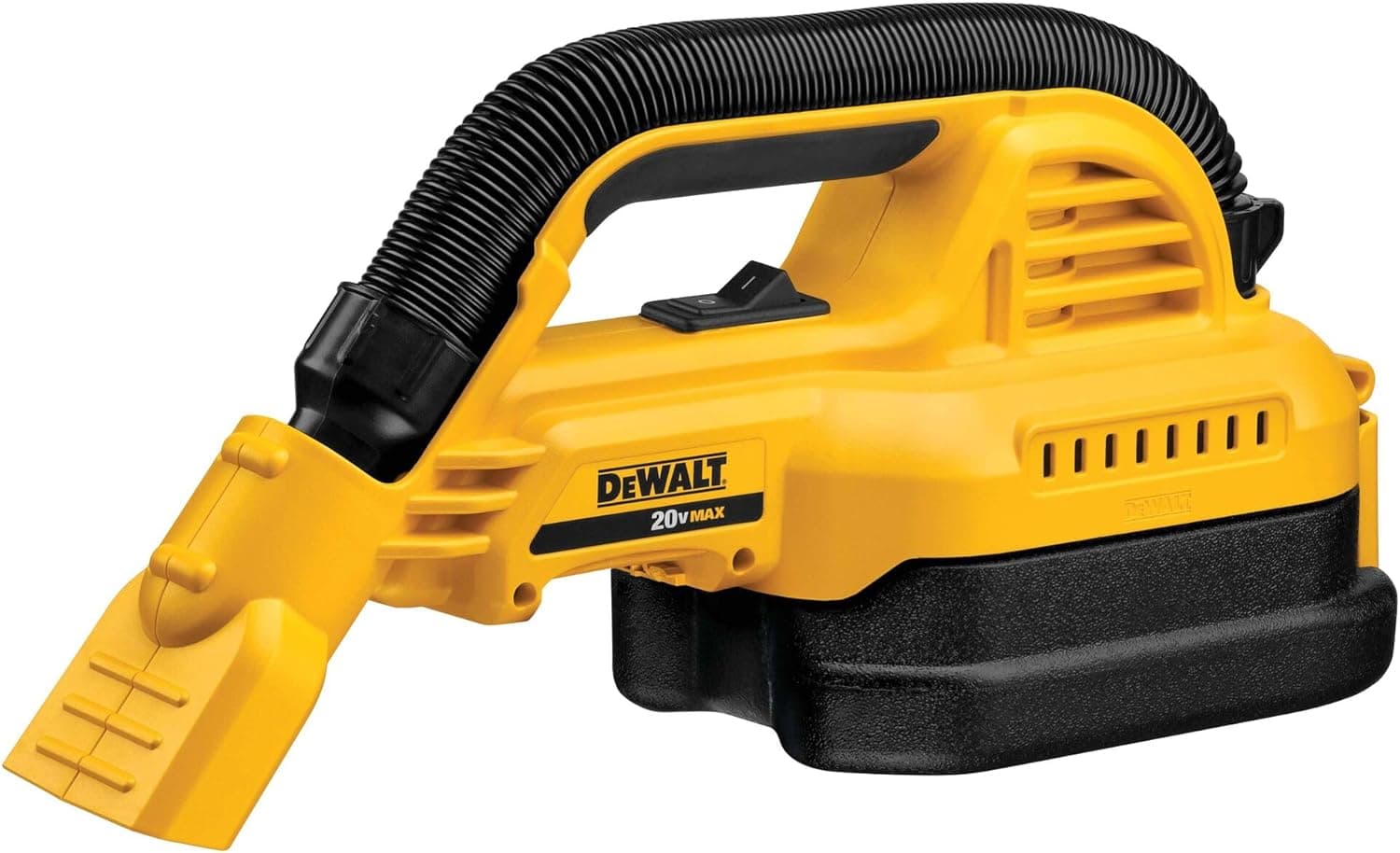
When comparing the DeWalt 20V MAX Handheld versus the Bissell Pet Hair Eraser 2390A, you're looking at two fundamentally different philosophies in handheld vacuum design. The DeWalt 20V MAX represents the professional tool crossover category, leveraging the massive ecosystem of DeWalt's 20V MAX battery platform to deliver wet-dry cleaning capability in a handheld form factor. This approach appeals to users who already own DeWalt power tools and want to extend their existing battery investment into household cleaning.
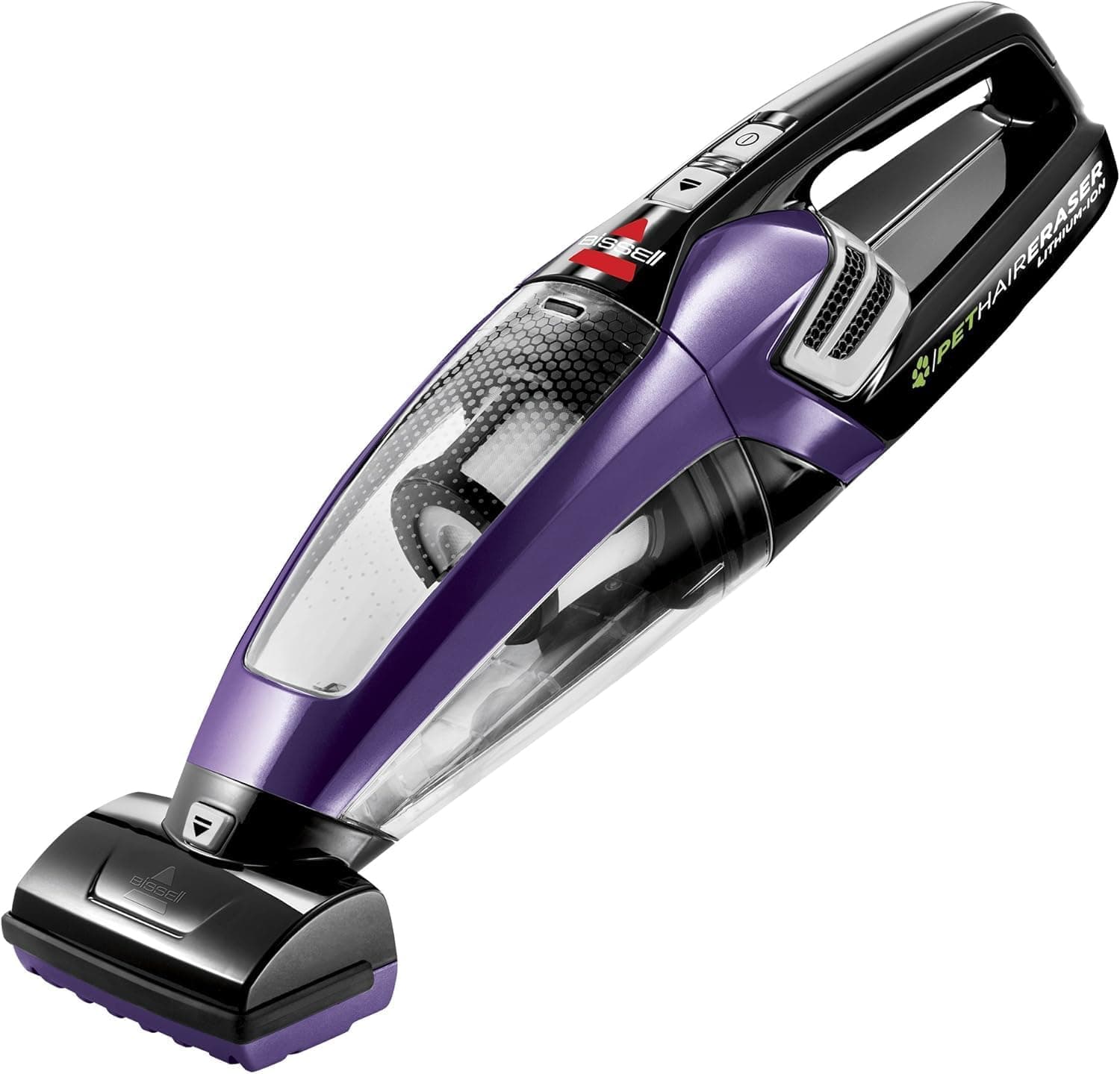
The Bissell Pet Hair Eraser 2390A, by contrast, is purpose-built for a specific consumer need: removing pet hair from upholstery, furniture, and car interiors. It's engineered with pet owners in mind, featuring a motorized rubber nozzle designed specifically to lift and remove stubborn pet hair that traditional vacuum heads struggle with. The Bissell positions itself as the number one handheld for pet hair removal, a claim backed by dedicated design features rather than raw power specifications.
These two vacuums serve different markets and use cases. The DeWalt 20V MAX appeals to professionals, serious DIYers, and homeowners with existing DeWalt tool collections who need a multipurpose cleaning solution. The Bissell targets pet owners who prioritize specialized performance over versatility, and who want a lighter, more maneuverable device specifically optimized for pet-related messes.
Understanding these positioning differences is crucial before making a purchase decision. Neither product is objectively superior across all metrics - each excels within its intended market segment. The key is matching the right vacuum to your specific cleaning needs and existing tool ecosystem.
Real-World Performance and Cleaning Power
The DeWalt 20V MAX Handheld delivers impressive suction performance thanks to its integration with the professional-grade 20V MAX battery system. This platform is engineered for demanding tool applications, meaning the motor and power delivery systems are built to handle serious work. In practice, this translates to powerful suction that handles both dry debris and wet messes effectively. The wet-dry capability is a significant advantage for garage floors, workshop spaces, and situations where liquid spills need immediate cleanup.
The Bissell Pet Hair Eraser 2390A takes a different approach to cleaning performance, prioritizing targeted pet hair removal over raw suction power. The motorized rubber nozzle is the star feature here - it actively agitates upholstery and carpet fibers to dislodge embedded pet hair rather than relying solely on suction. This design philosophy means the Bissell excels specifically at pet-related cleaning tasks where traditional vacuum heads often underperform. For pet owners, this specialized approach often delivers superior results on the surfaces they care most about.
On upholstered furniture, the Bissell's motorized nozzle creates a clear performance advantage for pet hair removal. Users consistently report that the rubber nozzle lifts hair that other handheld vacuums miss, making it particularly effective on couches, car seats, and pet beds. However, for general household debris on hard floors, the DeWalt's more powerful suction system may prove more efficient.
The contoured nozzle design on the Bissell also provides benefits for edge and corner cleaning, allowing it to reach tight spaces where pet hair accumulates. This attention to detail in nozzle engineering reflects the product's specialized purpose. The DeWalt, being a general-purpose tool, uses a more conventional nozzle design that prioritizes power over specialized surface adaptation.
For most pet owners, the Bissell's specialized performance on their primary cleaning challenge outweighs the DeWalt's broader power advantage. However, for users who need both pet hair removal and wet-dry versatility, the DeWalt's more powerful motor provides better flexibility across diverse cleaning scenarios.
Battery Life and Practical Runtime
The DeWalt 20V MAX Handheld operates on the company's extensive 20V MAX battery ecosystem, which includes multiple capacity options and rapid charging solutions available separately. This modular approach means runtime varies depending on which battery you pair with the vacuum - a significant consideration for potential buyers. Users can extend runtime by purchasing additional batteries or higher-capacity options from DeWalt's lineup of 20V MAX batteries, though these represent additional investment beyond the vacuum itself.
The Bissell Pet Hair Eraser 2390A provides 17 minutes of runtime on a full charge, a specification that defines the device's practical use case. Seventeen minutes is sufficient for spot cleaning pet messes, clearing upholstery, and handling car interior cleaning, but falls short for whole-home cleaning sessions. The tradeoff is that this limited runtime allows Bissell to keep the unit lightweight at 3 pounds, a crucial advantage for handheld operation.
For apartment dwellers and those with smaller homes, the Bissell's 17-minute runtime proves adequate. Most pet owners use handheld vacuums for targeted cleanup rather than comprehensive floor cleaning, so the limited runtime aligns well with actual usage patterns. The vacuum handles the typical use case of removing pet hair from furniture and spot-cleaning spills without requiring extended operation.
The DeWalt's runtime advantage comes with the caveat that you must already own compatible 20V MAX batteries, or purchase them separately. This creates a hidden cost that isn't immediately apparent. Users evaluating the DeWalt should factor in the battery and charger purchase, which represents significant additional investment compared to the Bissell's all-in-one approach.
The four-hour charging time on the Bissell is longer than many modern handheld vacuums, requiring overnight charging between uses. This limitation is offset by the device's intended use pattern - most users don't need the vacuum charged multiple times daily. For those who do require frequent use throughout the day, the Bissell's long charging time could prove frustrating.
Portability and Ease of Use
The Bissell Pet Hair Eraser 2390A's 3-pound weight represents a significant advantage for handheld operation. At just 3 pounds, the vacuum feels light and maneuverable during extended cleaning sessions, whether you're holding it overhead to clean upholstery or reaching into car interiors. This lightweight design reduces fatigue during the typical 15-20 minute cleaning sessions that handheld vacuums are designed for.
The DeWalt 20V MAX Handheld, at 4.5 pounds, is noticeably heavier despite being a handheld device. While not excessively heavy, the additional 1.5 pounds becomes noticeable when operating overhead or holding the vacuum at awkward angles to clean upholstery. For users with limited upper body strength or those who clean frequently throughout the day, this weight difference accumulates in terms of fatigue and strain.
The Bissell's lighter weight also improves maneuverability for reaching tight spaces, cleaning stairs, and transitioning between different surfaces. The motorized nozzle, while adding some complexity, doesn't significantly impact the overall handling characteristics. Users report that the Bissell feels like a natural extension of the arm during cleaning, rather than a tool that requires conscious effort to position.
The DeWalt's heavier weight is partially justified by its more robust construction and wet-dry capability. The added weight reflects the professional-grade materials and motor systems built into the device. However, for handheld operation, this extra durability comes at the cost of user comfort during extended use.
One-handed operation is easier with the Bissell due to its lighter weight, though neither handheld vacuum is truly designed for sustained one-handed use. The Bissell's ergonomic design and lighter profile make it the clear winner for portability and ease of use during typical cleaning sessions.
Smart Features and App Control
Neither the DeWalt 20V MAX Handheld nor the Bissell Pet Hair Eraser 2390A offers Wi-Fi connectivity, app control, or smart features. This represents a fundamental difference from robot vacuums or high-end cordless stick vacuums, but it's appropriate for the handheld category. Handheld vacuums are designed for immediate, hands-on cleaning rather than scheduled or remote operation.
The absence of smart features keeps both devices simple and reliable. There's no app to crash, no connectivity issues to troubleshoot, and no battery drain from constant wireless communication. For handheld vacuums, this simplicity is actually an advantage - the devices do one job and do it well without unnecessary technological complexity.
Users should not expect smart mapping, lidar navigation, or intelligent scheduling from handheld vacuums. These features are reserved for robot vacuums and autonomous systems. The DeWalt and Bissell focus on direct cleaning performance rather than technological convenience features.
If smart features and app control are important to your purchasing decision, you should consider cordless stick vacuums or robot vacuums instead of handhelds. Neither of these products is designed for the connected home ecosystem, and that's appropriate given their intended use case and market positioning.
The lack of smart features also means lower prices for both devices compared to connected alternatives. Users pay for cleaning performance rather than technological bells and whistles, which aligns well with the practical nature of handheld vacuum ownership.
Noise Level and Quiet Operation
The Bissell Pet Hair Eraser 2390A operates at 70 decibels, while the DeWalt 20V MAX Handheld produces 80 decibels during operation. This 10-decibel difference represents a significant distinction in real-world noise levels, as decibel scale is logarithmic. The Bissell is noticeably quieter, making it more suitable for use during morning cleaning sessions, in homes with sleeping family members, or in noise-sensitive environments.
At 70 decibels, the Bissell produces sound equivalent to a typical vacuum cleaner or busy office environment. Most users can operate the Bissell without disturbing others in adjacent rooms, particularly if doors are closed. This noise level is acceptable for daytime use in apartments and homes with shared walls.
The DeWalt's 80-decibel output is typical of professional-grade tools and more powerful vacuums. While not extremely loud, it's noticeable enough that early morning or late evening use might disturb household members or neighbors. Users should plan DeWalt use during times when noise is less of a concern.
For pet owners who frequently clean throughout the day, the Bissell's quieter operation provides a significant quality-of-life advantage. You can clean pet messes without creating a disruptive noise event. The quieter motor also suggests a more refined engineering approach optimized for consumer comfort rather than raw power output.
The noise difference reflects the fundamental design philosophies of each product. The Bissell prioritizes consumer-friendly operation including noise reduction, while the DeWalt focuses on professional-grade power and capability, accepting higher noise as a tradeoff. For residential use, the Bissell's quieter operation is generally preferable.
Bin and Tank Emptying and Maintenance
The Bissell Pet Hair Eraser 2390A features a 500-milliliter capacity tank, providing reasonable storage for pet hair and debris before requiring emptying. The larger capacity reduces how frequently you need to empty the tank during typical cleaning sessions, improving the user experience. For pet owners, the ability to handle multiple furniture cleaning sessions before emptying is valuable.
The DeWalt 20V MAX Handheld's tank capacity is unavailable in available documentation, which makes direct comparison difficult. However, the wet-dry design suggests a more robust tank system capable of handling both dry debris and liquid spills without degradation.
The Bissell's HEPA filter inclusion is a significant maintenance advantage, particularly for allergy sufferers. The HEPA filter captures fine particles including pet dander, dust mites, and allergens that standard filters miss. This feature makes the Bissell particularly suitable for homes with asthma or allergy concerns related to pet ownership.
The DeWalt also includes a HEPA filter, matching the Bissell in this important specification. Both devices prioritize air quality and allergen containment, which is appropriate for home use. The HEPA filters require regular cleaning and periodic replacement to maintain effectiveness.
Neither device offers self-emptying capability, a feature reserved for premium robot vacuums and high-end cordless models. Users must manually empty both tanks, though the Bissell's larger capacity means less frequent emptying. For handheld vacuums, manual emptying is standard and expected.
Maintenance on both devices is straightforward - emptying the tank, cleaning or replacing the filter, and occasionally checking the nozzle for hair wraparound. The Bissell's motorized nozzle requires slightly more attention to prevent hair from tangling, but this is a minor consideration. Overall, both devices are easy to maintain with basic care.
Accessories and Included Extras
The DeWalt 20V MAX Handheld includes a HEPA filter as standard, which is valuable for allergen control. However, the device notably requires separate purchase of both battery and charger, which are not included in the base package. This represents a significant additional cost and complexity for users without existing DeWalt tool collections. You cannot use the vacuum immediately upon purchase without these separate acquisitions.
The Bissell Pet Hair Eraser 2390A arrives as a complete, ready-to-use system. The battery and charger are included, allowing immediate use out of the box. This all-in-one approach significantly improves the user experience and eliminates hidden costs that might surprise buyers after purchase.
The motorized rubber nozzle on the Bissell is a specialized accessory that comes standard with the device. This nozzle is specifically engineered for pet hair removal and represents significant added value compared to standard vacuum nozzles. The contoured nozzle for edges and corners is another included feature that enhances versatility.
The DeWalt's wet-dry capability implies inclusion of appropriate tanks and systems for handling liquid spills, though specific accessory details are limited. The professional-grade construction suggests robust included components, but the lack of battery and charger in the box means you're not getting a complete package.
For most consumers, the Bissell's complete inclusion of all necessary components provides better value and eliminates the frustration of discovering additional required purchases after opening the box. The specialized pet hair removal accessories also provide tangible benefits for the intended user base.
Value for Money
Evaluating value for money requires considering the total cost of ownership and what you receive in return. The DeWalt 20V MAX Handheld presents a complex value proposition because the advertised price doesn't include essential components. The battery and charger are sold separately, meaning actual total cost significantly exceeds the base unit price. For users without existing DeWalt tool collections, this represents substantial additional investment beyond the vacuum itself.
However, for users who already own DeWalt 20V MAX tools, the value calculation changes dramatically. If you already have compatible batteries and chargers, the DeWalt vacuum becomes a cost-effective addition that leverages existing investments. The wet-dry capability and professional-grade construction provide genuine utility for those who need such functionality. For this specific user segment, the DeWalt offers excellent value as an addition to an existing tool ecosystem.
The Bissell Pet Hair Eraser 2390A delivers comprehensive value as a complete, ready-to-use system. The included battery, charger, HEPA filter, and specialized pet hair removal nozzles represent substantial included value. There are no hidden costs or required additional purchases to make the device functional. For pet owners, the specialized engineering focused on their specific cleaning challenge provides tangible benefits that justify the investment.
The Bissell's motorized rubber nozzle technology is engineered specifically for pet hair removal, a feature that directly addresses the primary pain point for pet owners. This specialized design reflects thoughtful engineering rather than generic handheld vacuum design. Users consistently report that this feature delivers results that more powerful but less specialized vacuums cannot match.
Long-term value also favors the Bissell for pet owners. The device is purpose-built for their needs, meaning it will likely remain functional and relevant longer than a more generic handheld. The specialized features won't become obsolete as cleaning priorities remain consistent for pet owners. The DeWalt's value depends heavily on whether you actually use the wet-dry capability and whether you maintain an active collection of DeWalt tools.
Durability and build quality appear strong in both devices. The DeWalt's professional-grade construction suggests excellent longevity, while the Bissell's engineering focus on pet hair removal suggests robust nozzle systems designed to withstand frequent use. Both devices appear built to last, making them reasonable long-term investments.
For pure value-for-money assessment, the Bissell emerges as the stronger choice for pet owners because it delivers a complete, specialized system without hidden costs. The DeWalt offers better value only for users with existing 20V MAX tool collections who need wet-dry capability.
Who Should Buy Which?
Best for Pet Owners: Bissell Pet Hair Eraser 2390A
Pet owners represent the ideal customer for the Bissell Pet Hair Eraser 2390A. The motorized rubber nozzle is specifically engineered to lift and remove embedded pet hair from upholstery, furniture, and car interiors - the primary pain point for households with dogs and cats. This specialized design delivers superior results compared to general-purpose vacuums that rely solely on suction.
The Bissell's lightweight 3-pound design makes it easy to maneuver around furniture and hold overhead for cleaning upholstery, a critical factor when dealing with pet hair on couches and chairs. The 500-milliliter tank capacity is sufficient for handling multiple pet-related messes before requiring emptying, improving the user experience during typical pet owner cleaning sessions.
The HEPA filter provides additional value for pet owners, particularly those with allergy concerns. Pet dander, hair, and associated allergens are captured effectively, improving air quality in the home. For families with both pets and allergies, this feature becomes especially valuable.
Best for Large Homes: DeWalt 20V MAX Handheld
The DeWalt 20V MAX Handheld suits users with large homes who need more powerful suction and extended runtime capabilities. The professional-grade motor delivers impressive suction power for handling substantial debris loads and deep cleaning. Users with large floor areas benefit from the raw power advantage, particularly on hard floors where the DeWalt's suction excels.
For large homes with multiple levels, the DeWalt's more powerful motor reduces the number of passes required to achieve thorough cleaning. While the 17-minute runtime limitation applies to the Bissell, the DeWalt's runtime depends on battery capacity, potentially offering longer operation with higher-capacity 20V MAX batteries. Users with large homes can extend runtime by using multiple batteries throughout cleaning sessions.
The wet-dry capability provides additional value for large homes where spills are more likely and where garage or workshop spaces might benefit from liquid cleanup capability. The robust construction suggests durability for frequent use across large floor areas.
Best for Allergy Sufferers: Bissell Pet Hair Eraser 2390A
Both devices include HEPA filters, making them suitable for allergy sufferers. However, the Bissell's complete system approach and focus on allergen control through the motorized nozzle design makes it the stronger choice. The motorized rubber nozzle removes pet dander and hair more effectively than standard vacuums, reducing allergen accumulation in the home.
For households with both pets and allergies, the Bissell's specialized design addresses both concerns simultaneously. The HEPA filter captures fine allergen particles, while the motorized nozzle prevents allergen accumulation by more effectively removing pet hair and dander from upholstery.
The quieter 70-decibel operation is also beneficial for allergy sufferers who might be managing asthma or respiratory conditions. Less disruptive noise during cleaning sessions reduces stress and allows for more frequent cleaning without creating household disruption.
Best for Budget-Conscious Users: Bissell Pet Hair Eraser 2390A
While neither device is inexpensive, the Bissell offers better value for budget-conscious users because it's a complete system requiring no additional purchases. The included battery, charger, and specialized accessories eliminate hidden costs that might surprise budget-conscious buyers.
The DeWalt's requirement for separate battery and charger purchases makes total cost significantly higher than the base unit price suggests. For users watching their budget carefully, this hidden cost is a significant disadvantage. The Bissell's transparent, all-in-one pricing is more predictable and budget-friendly.
The Bissell's specialized design also means better performance on the specific task pet owners care about, reducing the need for supplementary cleaning tools. This focus delivers better value per dollar spent compared to more generic solutions.
Best for DeWalt Tool Users: DeWalt 20V MAX Handheld
Users with existing DeWalt 20V MAX tool collections represent the ideal market for the DeWalt vacuum. If you already own compatible batteries and chargers, the vacuum becomes a cost-effective addition that leverages existing infrastructure. The ability to use the same batteries across your entire tool collection provides genuine convenience and efficiency.
For serious DIYers and professionals who use DeWalt tools regularly, the wet-dry capability provides valuable functionality for workshop and garage cleaning. The professional-grade construction aligns with the quality standards of other 20V MAX tools, ensuring consistency across your tool collection.
The DeWalt vacuum extends the utility of your battery investment, allowing you to use existing batteries for additional household tasks. This ecosystem approach appeals to users who value tool compatibility and integrated systems.
Final Verdict
Winner: Bissell Pet Hair Eraser 2390A
The Bissell Pet Hair Eraser 2390A emerges as the superior choice for the majority of handheld vacuum users, particularly those with pets. The specialized motorized rubber nozzle design delivers superior pet hair removal performance that general-purpose vacuums cannot match. This focused engineering approach directly addresses the primary pain point for pet owners, delivering tangible cleaning benefits that justify the investment.
The complete, all-in-one system approach provides significant advantages over the DeWalt's modular design. The Bissell includes battery, charger, HEPA filter, and specialized pet hair removal accessories, eliminating hidden costs and allowing immediate use out of the box. This transparency and completeness appeal to consumers who want straightforward purchasing without discovering additional required expenses after purchase.
The Bissell's 3-pound weight and 70-decibel noise level make it more suitable for typical household use. The lightweight design reduces fatigue during extended cleaning sessions, while the quieter operation allows for flexible scheduling without disturbing household members. These practical advantages accumulate into a significantly better user experience for most consumers.
The 500-milliliter tank capacity and HEPA filter provide solid functionality for allergen control and debris management. For pet owners specifically, the combination of motorized nozzle technology and HEPA filtration addresses both cleaning performance and air quality concerns simultaneously.
However, the DeWalt 20V MAX Handheld remains an excellent choice for specific user segments. Users with existing DeWalt 20V MAX tool collections benefit from the ability to leverage compatible batteries and chargers, eliminating the hidden cost disadvantage. The wet-dry capability and professional-grade construction provide genuine value for those who need such functionality, particularly in workshop or garage environments.
For users without pets who prioritize raw suction power and wet-dry capability, the DeWalt represents a more appropriate choice. The more powerful motor and robust construction suit large homes and demanding cleaning applications where the Bissell's specialized pet hair focus becomes less relevant.
For the vast majority of consumers - particularly pet owners seeking specialized performance, complete systems, and user-friendly design - the Bissell Pet Hair Eraser 2390A delivers superior overall value and performance. The device is purpose-built for its intended market, with engineering focused on delivering exceptional pet hair removal rather than generic power specifications.
Advertisement