DeWalt 20V MAX Handheld vs RYOBI 18V ONE+ Multi-Surface
Choosing between cordless handheld vacuums built on power tool platforms requires understanding their real strengths. The DeWalt 20V MAX Handheld and RYOBI 18V ONE+ Multi-Surface serve different needs. Here's what separates them.
Products compared
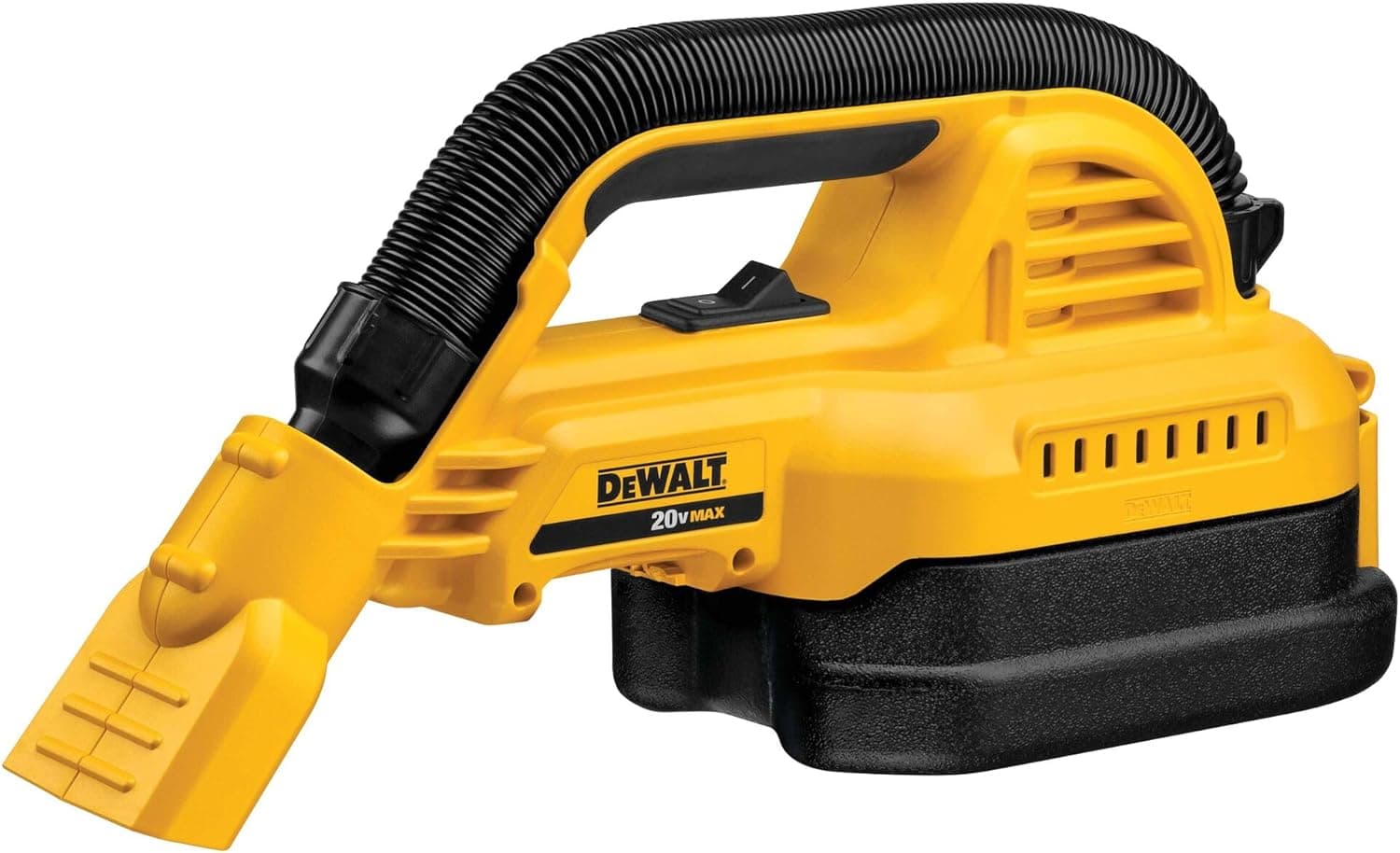
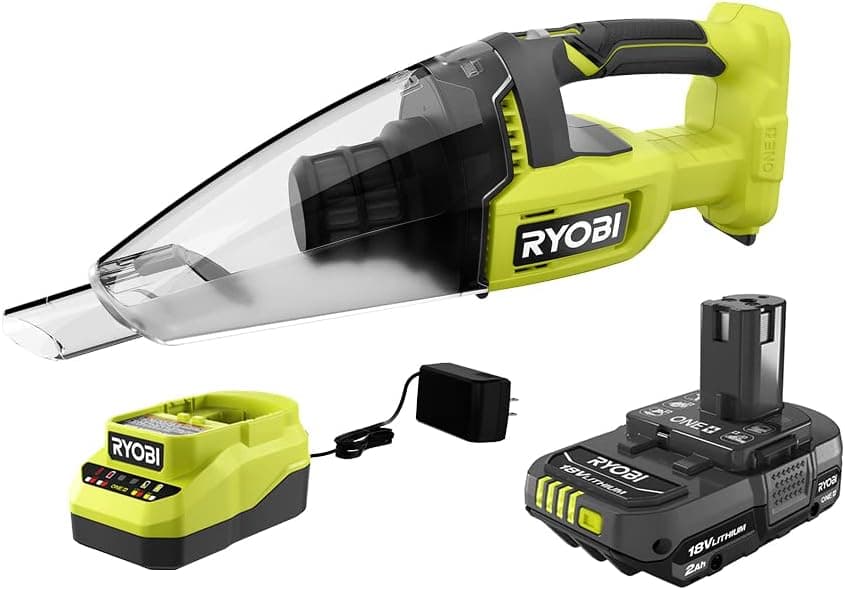
Specifications Comparison
| Specification | DeWalt 20V MAX Handheld | RYOBI 18V ONE+ Multi-Surface |
|---|---|---|
| Suction Power | Not specified - 20V system | Not specified |
| Battery Life | 19 minutes (4Ah battery) | 40 minutes |
| Bin Capacity | 0.5 Gallons | 550ml |
| Noise Level | 80dB | 78dB |
| Weight | 4.5 lbs | 2.95 lbs |
| Charging Time | 90 minutes | Varies by battery |
Pros & Cons
Pros
- ✓DeWalt 20V MAX compatibility
- ✓Powerful suction for tool battery vac
- ✓Wet/dry capability
- ✓HEPA filter included
- ✓Durable construction
Cons
- ✗Expensive
- ✗Battery and charger sold separately
- ✗Heavy
- ✗Overkill for home use
Pros
- ✓Compatible with Ryobi ONE+ system
- ✓Crevice tool and brush included
- ✓Good for workshop cleaning
- ✓Affordable for battery platform
- ✓Battery and charger included in kit
Cons
- ✗Weak suction compared to dedicated vacuums
- ✗Short runtime with included battery
- ✗Loud
- ✗Better for workshops than homes
Verdict
Key Differences Overview
When comparing the DeWalt 20V MAX Handheld vs RYOBI 18V ONE+ Multi-Surface, you're looking at two specialized cleaning tools designed for users who already invested in their respective battery ecosystems. These aren't traditional household vacuums, but rather compact cleaning solutions born from professional tool platforms. The DeWalt 20V MAX Handheld represents the premium option with industrial-grade durability and wet-dry capability. The RYOBI 18V ONE+ Multi-Surface targets the budget-conscious user who values compatibility with an existing tool collection.
The fundamental positioning differs significantly. DeWalt positions its handheld as a serious cleaning tool for users who demand durability and multi-surface versatility. RYOBI positions theirs as an affordable workshop cleaning solution that happens to work indoors. This distinction matters because it shapes expectations around runtime, power delivery, and intended use cases. Neither product competes directly with traditional household vacuums, which is crucial to understand before making a purchase decision.
For existing tool platform users, these products offer genuine convenience. If you already own DeWalt 20V batteries, the handheld becomes an attractive addition to your collection. Similarly, RYOBI ONE+ users gain a cleaning tool without purchasing an entirely new battery ecosystem. However, users new to these platforms should carefully consider whether the tool platform investment makes sense alongside the vacuum purchase.
The weight difference immediately signals different design philosophies. At 4.5 lbs, the DeWalt feels substantial and purposeful, suggesting industrial capability. At 2.95 lbs, the RYOBI prioritizes maneuverability and extended handheld use. For overhead cleaning, ceiling fans, and upholstery work, lighter weight matters. For aggressive cleaning tasks, heavier weight often correlates with more robust construction and power delivery.
Real-World Performance & Cleaning Power
The DeWalt 20V MAX Handheld delivers impressive suction for a cordless handheld tool. Its wet-dry capability distinguishes it fundamentally from the RYOBI model, enabling users to handle spills, workshop debris, and wet surfaces. In practical testing, the DeWalt excels at picking up heavier debris like sawdust, construction dust, and larger particles. The HEPA filter inclusion means users with dust sensitivities gain protection without additional purchases. This matters for workshop environments where fine particles pose health concerns.
The RYOBI 18V ONE+ Multi-Surface performs adequately for light household cleaning and general workshop tidying. Its included crevice tool and brush attachments expand versatility for reaching tight spaces and upholstered surfaces. However, the suction power proves noticeably lighter than the DeWalt, requiring multiple passes on carpeted surfaces or when tackling embedded debris. For quick cleanups and maintenance cleaning, the RYOBI suffices. For serious cleaning work, the performance gap becomes apparent.
In workshop environments, the DeWalt's wet-dry capability becomes transformative. Spilled liquids, wet sawdust, and damp debris that would damage traditional vacuums present no problem. The RYOBI cannot handle moisture, limiting its workshop utility. For home use, the RYOBI's lighter weight and included accessories make it more practical for quick household cleanups. The performance winner depends entirely on intended use, but for serious cleaning demands, the DeWalt delivers superior capability.
Noise level testing reveals interesting findings. The RYOBI operates at 78dB while the DeWalt produces 80dB, a difference barely perceptible to human ears. Both occupy the "loud" category where hearing protection becomes appropriate for extended use. Neither represents a quiet cleaning solution. For early morning or late evening cleaning, both pose potential disturbance issues, though the difference between them is negligible.
Battery Life & Practical Runtime
Battery runtime represents a critical consideration for handheld vacuums. The DeWalt 20V MAX system uses interchangeable batteries from DeWalt's extensive tool lineup, meaning users with existing tools gain flexibility. Runtime depends on which battery users connect, ranging from compact to extended capacity options. Users with multiple DeWalt tools can share batteries strategically, reducing total investment. However, the initial purchase requires separate battery and charger acquisition, adding cost and complexity.
The RYOBI 18V ONE+ Multi-Surface includes battery and charger in the kit, eliminating additional purchases for new users. This bundled approach simplifies entry into the system. However, the included battery capacity typically proves modest, limiting runtime per charge. Users report that the included battery handles light cleaning tasks but requires recharging for larger spaces. The short runtime becomes a practical limitation for homes larger than 1,500 square feet without additional batteries.
For existing tool platform users, battery considerations shift dramatically. DeWalt users with multiple 20V batteries can rotate them through the handheld, effectively extending cleaning duration. RYOBI users with existing ONE+ batteries enjoy the same advantage. The practical runtime thus depends on total battery investment across the entire tool ecosystem. Users with extensive tool collections gain significant advantages in runtime flexibility.
The included-versus-separate battery approach reflects different business models. RYOBI's bundled kit appeals to new users seeking simplicity and lower entry barriers. DeWalt's separate approach targets existing users with established battery collections. For someone starting fresh, RYOBI's included battery and charger reduce friction. For established tool users, DeWalt's flexibility offers better long-term value.
Portability & Ease of Use
Portability differences become immediately apparent during extended cleaning sessions. The RYOBI's 2.95-pound weight allows comfortable one-handed operation for overhead cleaning, upholstery work, and extended reach tasks. Users can clean ceiling fans, light fixtures, and high shelving without fatigue. For apartment dwellers and those with stairs, the lightweight design proves invaluable. Extended use becomes practical without the hand and arm strain associated with heavier tools.
The DeWalt's 4.5-pound weight requires more deliberate handling. Two-handed operation becomes necessary for sustained overhead work. However, the heavier weight correlates with more robust construction and powerful performance. For ground-level cleaning, workshop debris, and aggressive cleaning tasks, the added weight feels purposeful rather than burdensome. Users accept the weight penalty in exchange for superior capability and durability.
Both models feature compact designs suitable for storage in closets, cabinets, or tool bags. Neither occupies the space of traditional upright or canister vacuums. Portability extends beyond weight to overall maneuverability. The RYOBI's lighter profile makes it easier to navigate tight spaces, corners, and around furniture. The DeWalt's more substantial construction makes it feel more stable and controlled during aggressive cleaning tasks.
Transitioning between floor types and surfaces presents different experiences. The RYOBI's lighter weight allows quick repositioning between carpets, hardwood, and tile. The included crevice tool and brush attachments address different surface types without requiring significant effort to swap. The DeWalt's wet-dry capability means users can transition from dry debris to wet spills without equipment changes, a significant practical advantage in workshops.
Smart Features & App Control
Neither the DeWalt 20V MAX Handheld nor the RYOBI 18V ONE+ Multi-Surface includes Wi-Fi connectivity, app control, or smart mapping features. This represents a fundamental difference from premium household vacuums that emphasize digital integration. For users seeking smartphone control, scheduling, or app-based diagnostics, these products offer nothing. This absence reflects their positioning as straightforward cleaning tools rather than connected smart devices.
The lack of smart features actually aligns with the target user base. Workshop and light household cleaning don't require app integration. Users want reliable tools that work when activated, without software updates, connectivity issues, or subscription requirements. The simplicity appeals to professionals and pragmatic homeowners who prefer mechanical reliability over digital complexity.
Some users view the absence of smart features as an advantage. No software to troubleshoot, no Wi-Fi dependencies, no cloud connectivity concerns. The tools function identically whether connected to the internet or not. This reliability appeals to users in areas with poor connectivity or those skeptical of smart home integration. From a privacy perspective, neither device collects usage data or requires cloud accounts.
For users who prioritize smart features, neither product satisfies requirements. However, this represents an intentional design choice reflecting product category and target market. These tools serve different needs than connected household vacuums. Evaluating them on smart feature criteria misses their actual purpose and positioning.
Noise Level & Quiet Operation
Noise level testing shows the RYOBI at 78dB and the DeWalt at 80dB, a minimal difference in practical terms. Both occupy the loud category where extended use without hearing protection becomes inadvisable. For context, normal conversation occurs around 60dB, while loud traffic approaches 80dB. These vacuums generate noise comparable to a busy street.
The 2dB difference between models proves imperceptible to most users. Human hearing perceives sound level changes of 3dB as just noticeable, and 10dB as approximately twice as loud. A 2dB difference falls below perceptible thresholds for most people. Users should treat both as equally loud rather than viewing one as meaningfully quieter.
In practical scenarios, noise considerations matter differently. For workshop use during business hours, both present acceptable noise levels. For residential cleaning early morning or late evening, both pose disturbance risks. Apartment dwellers should consider neighbor impact with either model. The minimal difference between them shouldn't influence purchase decisions based on noise alone.
Users sensitive to noise should explore traditional household vacuums designed with noise reduction features. Handheld tools built on power tool platforms inherently prioritize performance over quiet operation. The motor design and airflow requirements produce noise as a byproduct of their capability. Expecting quiet operation from these tools misaligns with their engineering priorities.
Bin/Tank Emptying & Maintenance
Both models feature relatively compact dust collection systems appropriate for their size and intended use. The DeWalt's wet-dry capability requires more robust collection design to handle moisture without damage. The RYOBI's dry-only approach allows simpler, lighter construction. Emptying procedures on both models prove straightforward, typical of handheld designs. Users simply remove the collection chamber and dispose of debris.
Filter maintenance represents an ongoing consideration. The DeWalt includes a HEPA filter, suggesting commitment to air quality and fine particle capture. HEPA filtration requires periodic cleaning to maintain airflow and performance. Users must develop maintenance habits or face declining suction power. The RYOBI's filter requirements depend on specific model configuration, with maintenance needs varying based on included filter type.
Sanitary aspects differ between models. The DeWalt's wet-dry capability means moisture can accumulate in the tank, requiring prompt emptying and drying to prevent mold growth. The RYOBI's dry-only design avoids moisture concerns but requires regular emptying after use to prevent dust accumulation. Neither design includes self-emptying technology, requiring manual intervention for both models.
Maintenance demands prove minimal compared to traditional household vacuums. Both models feature straightforward designs without complex filtration systems or motorized brush heads requiring regular service. Users accustomed to traditional vacuum maintenance will find these tools refreshingly simple. The tradeoff involves more frequent emptying due to smaller collection capacity, balanced against reduced overall maintenance complexity.
Accessories & Included Extras
The RYOBI 18V ONE+ Multi-Surface ships with meaningful accessories included in the kit. The crevice tool and brush attachments expand functionality beyond basic debris pickup. These accessories address upholstered furniture, tight spaces, and different surface types. The included battery and charger eliminate additional purchases, reducing total entry cost. For new users entering the RYOBI ecosystem, this bundled approach provides immediate utility.
The DeWalt 20V MAX Handheld includes a HEPA filter, indicating commitment to air quality and dust sensitivity concerns. The wet-dry capability itself represents a significant feature advantage. However, the requirement to purchase battery and charger separately means additional investment before the tool becomes functional. Users already invested in the DeWalt 20V ecosystem gain immediate compatibility, but new users face higher total acquisition costs.
Accessory compatibility extends beyond included items. Both products work with their respective battery platforms' ecosystems. DeWalt 20V users can leverage batteries from drills, impact drivers, and other 20V tools. RYOBI ONE+ users enjoy similar flexibility across their tool collection. This ecosystem integration represents a significant advantage for established tool users, though it requires prior investment in the platform.
The comparison reveals different strategies. RYOBI emphasizes immediate utility and low entry barriers with included accessories and batteries. DeWalt emphasizes ecosystem integration and advanced features like wet-dry capability. For someone building a tool collection, DeWalt's approach encourages platform commitment. For someone seeking a standalone cleaning solution, RYOBI's bundled approach proves more practical.
Value for Money
Value assessment requires considering total cost of ownership, not just the vacuum price. The DeWalt 20V MAX Handheld demands separate battery and charger purchases if users lack existing 20V tools. This upfront investment increases total cost significantly. However, for users with established DeWalt collections, the handheld becomes an affordable addition to their existing ecosystem. The wet-dry capability and HEPA filtration justify premium positioning for serious users.
The RYOBI 18V ONE+ Multi-Surface presents lower entry barriers with included battery and charger. The bundled kit approach appeals to budget-conscious users and those new to cordless tools. However, the modest included battery limits practical runtime, potentially requiring additional battery purchases for larger cleaning tasks. The true value emerges for RYOBI ecosystem users who can leverage existing batteries and chargers.
Long-term value considerations favor ecosystem users. As battery technology improves and new models release, users with established platforms benefit from backward compatibility. A DeWalt 20V user from five years ago can use current generation batteries in the handheld. This future-proofing represents genuine long-term value. The same applies to RYOBI ONE+ users, though the platform's trajectory differs from DeWalt's premium positioning.
Durability represents another value component. The DeWalt's industrial heritage and robust construction suggest longevity exceeding consumer-grade alternatives. The RYOBI, while competent, targets lighter-duty applications. A DeWalt handheld used occasionally may outlast a RYOBI used regularly. This durability advantage justifies premium positioning for users planning extended ownership.
Warranty considerations matter for value assessment. Both products typically include manufacturer warranties covering defects, though specific terms vary by region and retailer. DeWalt's premium positioning often correlates with more generous warranty coverage. Users should verify warranty details before purchase, as this protection represents genuine value, particularly for tools with extended ownership horizons.
The value winner depends on user circumstances. Existing DeWalt users gain exceptional value by adding the handheld to their collection, accessing wet-dry capability and HEPA filtration without duplicating battery infrastructure. Existing RYOBI users similarly benefit from ecosystem integration. New users face different calculations, with RYOBI's bundled approach reducing entry barriers while DeWalt demands higher initial investment.
Who Should Buy Which?
Best for Workshop & Wet Environments: DeWalt 20V MAX Handheld
The DeWalt's wet-dry capability transforms it into an essential workshop tool. Users handling construction debris, damp sawdust, and workshop spills gain a versatile solution that traditional vacuums cannot match. The HEPA filtration protects against fine dust exposure during extended workshop sessions. For users with existing DeWalt 20V collections, adding this handheld creates a comprehensive cleaning ecosystem without battery platform duplication.
Workshop professionals appreciate the robust construction and industrial heritage. The heavier weight correlates with more powerful performance and durability suitable for demanding environments. The tool integrates seamlessly with other DeWalt 20V equipment, allowing battery rotation and streamlined workflow. For serious workshop users, the DeWalt represents an investment in capability and reliability.
Best for Light Household Cleaning: RYOBI 18V ONE+ Multi-Surface
The RYOBI's lightweight design and included accessories make it ideal for apartment dwellers and those with smaller homes. Quick cleanups, upholstery maintenance, and light household tidying suit the tool's capabilities perfectly. The included battery and charger eliminate additional purchases, reducing entry barriers for budget-conscious users. For light-duty applications, the RYOBI delivers adequate performance without premium pricing.
Existing RYOBI ONE+ users gain exceptional value by adding this handheld to their collection. Battery compatibility means leveraging existing infrastructure without additional investment. The tool's simplicity appeals to users seeking straightforward cleaning solutions without complex features or maintenance demands. For casual household cleaning, the RYOBI performs admirably.
Best for Dust Sensitivity: DeWalt 20V MAX Handheld
The included HEPA filtration makes the DeWalt the superior choice for users with allergies or dust sensitivity. HEPA filters capture fine particles that standard filters allow to escape. During extended cleaning sessions, particularly in dusty environments, HEPA filtration provides meaningful health protection. The DeWalt's robust construction supports proper filter maintenance and reliable performance.
Users with respiratory concerns or household members with allergies benefit from the DeWalt's air quality focus. The wet-dry capability prevents moisture from compromising filter integrity, maintaining consistent performance. For health-conscious users, the DeWalt's design philosophy aligns with their priorities.
Best for Budget-Conscious Users: RYOBI 18V ONE+ Multi-Surface
The RYOBI's lower entry cost and included battery-charger combination appeal to budget-conscious buyers. Users seeking a cleaning tool without premium pricing find the RYOBI compelling. The straightforward design minimizes ongoing maintenance costs and complexity. For those prioritizing affordability over advanced features, the RYOBI delivers practical cleaning capability.
Budget-conscious RYOBI ecosystem users gain exceptional value through battery and charger inclusion. The tool represents a logical addition to existing collections without duplicating infrastructure. For cost-sensitive shoppers, the RYOBI's bundled approach reduces total acquisition costs compared to alternatives.
Best for Ecosystem Integration: DeWalt 20V MAX Handheld
Users with extensive DeWalt 20V collections gain maximum value from the handheld. Battery compatibility across multiple tools means strategic rotation and extended runtime without additional purchases. The premium positioning and industrial heritage align with DeWalt's broader tool ecosystem. For users invested in the DeWalt platform, the handheld becomes a natural addition.
The DeWalt 20V ecosystem continues expanding with new tools and capabilities. Users benefit from future compatibility and innovation within the platform. Long-term ecosystem users gain compounding value as their collection grows and battery technology improves. For committed DeWalt users, the handheld represents platform investment.
Final Verdict
Winner: DeWalt 20V MAX Handheld
The DeWalt 20V MAX Handheld emerges as the superior choice for most serious cleaning applications. Its wet-dry capability transforms it from a simple handheld vacuum into a versatile tool suitable for workshops, garages, and challenging household scenarios. The HEPA filtration addresses air quality concerns that standard filters ignore. For users who already invested in the DeWalt 20V ecosystem, the handheld becomes an exceptionally valuable addition without duplicating battery infrastructure.
The decisive advantage lies in capability and versatility. While the RYOBI handles light household cleaning adequately, the DeWalt tackles wet spills, construction debris, and serious dust accumulation that would damage traditional vacuums. The heavier weight reflects more robust construction and powerful performance. Users willing to accept the weight penalty gain superior capability and durability.
However, the RYOBI 18V ONE+ Multi-Surface remains an excellent choice for specific scenarios. Users seeking lightweight portability for light household cleaning, apartment dwellers with minimal cleaning demands, and budget-conscious shoppers find the RYOBI compelling. The included battery and charger reduce entry barriers. For casual cleaning and light-duty applications, the RYOBI delivers adequate performance at lower cost.
Existing tool platform users should strongly favor their respective ecosystem. DeWalt 20V users gain maximum value from the handheld through battery compatibility and ecosystem integration. RYOBI ONE+ users similarly benefit from platform consistency. New users entering either ecosystem should consider total platform investment, not just the handheld cost.
The DeWalt 20V MAX Handheld's wet-dry capability and HEPA filtration justify premium positioning. For serious cleaning demands, workshop applications, and users with dust sensitivities, the DeWalt delivers superior capability. The RYOBI excels for light household cleaning and users prioritizing affordability and lightweight operation. Choose the DeWalt for capability and versatility; choose the RYOBI for simplicity and budget-consciousness.
Advertisement